Updated on
April 20, 2026
20 April 2026
Employee recognition programmes are essential for fostering a positive and productive workplace culture. When your employees feel valued and appreciated, their engagement, motivation, and loyalty to your organisation increases significantly.
However, not all recognition programmes are created equal. To truly reap the benefits, it's crucial to implement best practices that ensure recognition is personal, timely, and inclusive.
At O.C. Tanner, we’ve been in the recognition business for nearly 100 years, so we're well-versed in creating successful employee recognition programmes for a wide variety of organisations.
Here are some of the most effective strategies we've developed with our clients to design and maintain an employee recognition programme that not only acknowledges hard work but also inspires continuous innovation and improvement.
1. Have a clear objective
Be specific with your employee recognition programme’s objectives.
- Why does your organisation want to implement an employee recognition programme?
- What are some meaningful ways you want to recognise employees?
- Which benchmarks do you want to improve with your programme? Retention, employee engagement, productivity, and/or your bottom-line are all great metrics to track.
Having solid answers to these questions will give your team a much stronger foundation on which to build and support a recognition programme. And it can lead to impressive results.
ICF, a leading consulting firm, wanted to better connect employees to ICF’s mission of helping the world solve some of the most complex challenges. The ICF team knew a peer recognition programme would help employees spotlight and reward teammates for embodying ICF’s mission and values.
With this clear objective in mind, ICF launched its You Matter recognition programme, powered by Culture Cloud, to its 9,000-employee base. “The You Matter programme helps to reinforce [ICF’s] mission and culture by recognising our people for their collaborative efforts,” shares the VP of Talent.

ICF’s programme has seen incredible results, with recognition predicting employee turnover 91% of the time. Employees are consistently recognised for “living in line with ICF values,” which is directly tied to ICF’s initial recognition goal.
Employee recognition at ICF has also doubled the likelihood an employee would stay with the company long-term.
ICF’s employee recognition programme predicts employee turnover 91% of the time.
2. Keep recognition personal and timely
Personalised recognition will always be more meaningful than something generic. When your organisation sets up its recognition programme, encourage leaders to learn and understand their employees’ recognition preferences. This will allow leaders, and your HR team, to help tailor recognition to something employees actually want to receive.
It is also important for recognition to be shared and given in a timely manner. When positive behaviours are acknowledged while they are still fresh, it reinforces those behaviours and ensures employees know exactly what they are being recognised for.
There are many opportunities to recognise employees in a personal and timely way. Here’s a few ideas to start you on the right track:
Employment milestones

Learn how to celebrate every employee milestone, from hire to retire.
Company milestones
- Product launches
- Company anniversary
- Meeting company goals
- Mergers or acquisitions

Culture Cloud by O.C. Tanner makes it easy to acknowledge employees’ collective efforts whenever your company reaches a milestone.
Life events
- Birthdays
- Graduation
- Marriage
- Birth or adoption of a child

Culture Cloud by O.C. Tanner supports recognition solutions for achievements and milestones that happen outside office hours.
Meaningful moments
- A job well done
- Achieving a goal
- Driving positive change
- A big client win
- Employee Appreciation Day
- National Boss’s Day
- Industry holidays (Manufacturing Day, Nurses and Hospital Week, etc.)
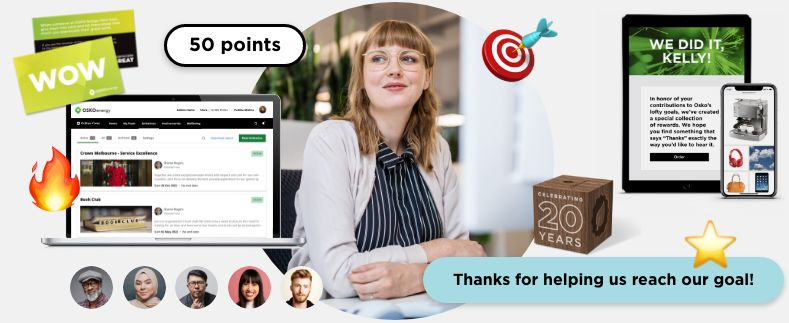
Looking for more inspiration? Check out our guide for when (and how) to give recognition to employees.
3. Ask your employees for input
Gathering employee feedback about your employee recognition programme is crucial for its continuous improvement and effectiveness.
By soliciting input from employees, you can gain valuable insights into what employees are looking for in a recognition programme. Or, if you have an existing programme, you can see what is working well and which areas need enhancement.
This feedback can be collected through surveys, focus groups, or one-on-one interviews, ensuring a diverse range of perspectives. Regularly reviewing and acting on this feedback shows your employees that their opinions are valued and that your organisation is committed to creating a recognition programme that truly meets their needs and preferences.
Employee input in action
AAA—The Auto Club Group (ACG) had a long-standing employee recognition programme, but it needed a refresh. “We’ve been doing recognition for over 40 years. We’ve seen tremendous growth. Our world has changed, our population has changed, our products and services have changed,” explains ACG’s AVP of HR Optimization.
ACG’s recognition team knew the first step they needed to take in reinventing and launching a new recognition programme was gathering employee feedback. Through surveys, the recognition team discovered two main concerns: inclusivity and accessibility for ACG’s 9,000 online and offline employee workforce.
The new programme includes physical and digital awards, access to the programme via mobile devices, and integrations with common tools like Microsoft Outlook and Teams.

These improvements in recognition inclusivity and accessibility, based on employee feedback, resulted in 97% of employees receiving recognition, and helped ACG receive Top Workplace awards 4 years in a row.
Hear all of the lessons learned from 40 years of employee recognition at AAA—The Auto Club Group.
4. Choose an employee recognition partner
It’s easy to implement, or improve, an employee recognition programme when you have the right recognition partner at your side. With the help of an experienced employee recognition partner, your organisation can:
- Test a pilot programme before opening it up to widespread use.
- Customise the platform to suit your company culture.
- Communicate the purpose of the programme.
- Train users on how (and when) to use the platform.
- Get the ball rolling by giving out incentives to recognise others.
- Regularly encourage programme use by publicly publishing achievements.
- Help managers by setting certain goals and tracking usage of the platform.
- Track and report on programme progress and successes.
- Recommend best practices and advice to enact at your organisation.
5. Measure your recognition programme’s effectiveness
Without proper measurement, you’ll never really know if your employee recognition programme is meeting its objectives.
There are many ways to measure your employee recognition programme’s effectiveness, or return on investment (ROI):
- Employee experience impact: How does recognition affect your employees’ day-to-day experience with your company?
- Company culture impact: How does recognition affect workplace culture?
- Business impact: How does recognition affect key business metrics?
Remember to think back to your original recognition objectives and keep track of them. Is your programme improving the benchmarks you initially outlined? Are your employees using the programme? Are you implementing the feedback employees have shared with you?
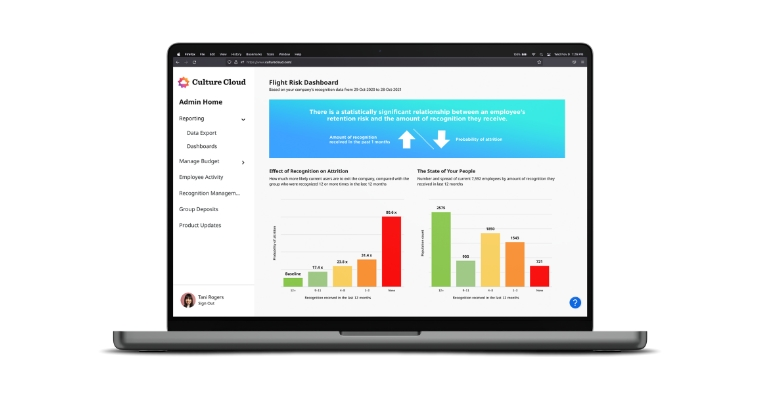
Culture Cloud by O.C. Tanner provides employee recognition reporting to measure programme effectiveness, including the Flight Risk Dashboard: a view of employees at risk of leaving your organisation based on their recognition history.
Consider Culture Cloud Recognition by O.C. Tanner
The results of an effective recognition programme are impressive—78% of employees are highly engaged when they receive recognition from their organisation (compared to 34% who get weak recognition).
Culture Cloud is O.C. Tanner’s powerful employee recognition programme. This platform is inclusive to all employees, no matter where and when they work. Here’s what you can do with Culture Cloud Recognition:
- Spark participation with nudges and tips
- See great work go viral with social recognition
- Celebrate company milestones with group point deposits and custom awards
- Set team initiatives and accomplish them with aligned effort
- Celebrate life’s big events and meaningful moments
- Reward healthy habits using wellbeing incentives
- Foster face-to-face connections and co-creations that encourage ongoing progress
- Empower employees to give with a self-service budget tool
- Gather feedback to help benchmark, track, and adapt to employee sentiment
Keep great employees longer and help your culture thrive. Get started on implementing these employee recognition programme best practices and request a Culture Cloud demo today.
Turn Recognition Into Real Connection
Top