Updated on
August 5, 2026
5 August 2026
Key Takeaways:
Effective employee recognition programmes significantly enhance workplace culture and business performance by improving employee retention, engagement, and innovation.
Successful programmes avoid a "one-size-fits-all" approach by using flexible tools to recognise both small and large accomplishments through personalised rewards that appeal to a diverse workforce.
Sustainable recognition requires a strategic foundation that includes leadership support, direct employee feedback, and the consistent measurement of programme usage and return on investment.
There are many benefits of employee recognition programmes, but many organisations still struggle to do recognition well.
At O.C. Tanner, we have almost 100 years of experience in crafting employee recognition programmes. We’ve drawn on that expertise to write this comprehensive guide. If you don’t have an employee recognition programme, we hope this guide will get you started. If you do have one, we hope this guide will help you take your existing programme to the next level.
If you’d like to learn more about how O.C. Tanner can help you with your employee recognition programmes, please reach out to us.
What are employee recognition programmes?
Employee recognition programmes are initiatives designed by organisations to acknowledge and reward the contributions, achievements, and hard work of their employees. These programmes aim to boost employee morale, motivation, and retention by making employees feel valued and appreciated.
Your people work hard. An employee recognition programme lets them know you appreciate and value them.
There are many ways to build an employee recognition programme. The most successful ones have three things in common:
- They recognise accomplishments both great and small
- They appeal to a wide range of employees, and
- They meaningfully link effort, output, and recognition together.
Check out our employee appreciation guide to learn what to give, when to give, and why employee appreciation matters.
An employee recognition programme can include bonuses, awards, gifts, ceremonies, events, and other ways to say “thank you” to employees. Common examples of employee recognition are:
- Employee of the month programmes
- Awards for lengths of service
- Department- or team-specific events
- Small personal gifts
- Thank you cards
- Special lunches or other treats
- Company celebrations and events
Just as there are “no one size fits all” workers, there are no “one size fits all” employee recognition programmes. The Society for Human Resource Management says that companies should “tailor their retention and recruitment strategies around multiple elements, creating a total rewards programme.”
As you build your employee recognition programme, think about adding a social element to your programme or gamifying the experience. Consider rewarding employees for participating in team building initiatives or physical and mental wellbeing programmes—you might find that your Millennial and Gen Z workers respond especially well to these kinds of programmes.
Why are employee recognition programmes important?
Employee recognition programmes not only improve employee morale but also make a difference in your bottom line.
Let’s look at the research. Employee recognition can improve:
- Talent acquisition and employee retention
- Employee engagement
- Company culture
- Innovation and performance
- Equity, diversity, and inclusion
Talent acquisition and employee retention
Organisations are always competing to attract and retain talented employees, and high-performing workers are looking for companies that appreciate them.
Well-studied connections exist between job satisfaction and turnover — and between job satisfaction and the ease of hiring new workers. In other words, organisations with happier workers have an easier time keeping them and an easier time hiring new ones. That’s true anywhere researchers look, including the hospitality industry of Ghana, India’s steel sector, manufacturing plants in the southern United States, ecologists in China, and our own research on recognition and retention from the Global Culture Report.
Not surprisingly, one way to improve employee morale is through employee recognition programmes — especially when they are grounded in authenticity and gratitude. Employee recognition is even more important in a difficult economic climate. A recent study found that even when conditions are difficult, on-the-job appreciation contributes to job satisfaction.
Those feelings are also tied to employees staying with companies longer. O.C. Tanner’s research shows that employees at companies with well-crafted employee recognition programmes plan to stay with their organisation four years longer than employees at companies without recognition programmes. Those four extra years translate into lower turnover rates, less time and money spent recruiting and onboarding new employees, and an invaluable knowledge base of tenured teammates.
Employees at companies with recognition programmes plan to stay at their organisation 4 years longer.
—O.C.Tanner Institute
Employee engagement
HR experts found that recognition plays an important role in fostering employee engagement. Specifically, “when employees are recognised, group dynamics converge to create a sense of ownership of outcomes, workplace environment, and organisation.”
Employee engagement is often defined as the level of above and beyond effort, or discretionary effort, that employees show in their roles. And the outcome of employee engagement is great work that directly leads to better business results. When employees feel appreciated and valued for this discretionary effort, more will follow.

Company culture
In a global survey, O.C. Tanner found that employee recognition programmes improved six key components of a company’s culture. After a recognition programme was introduced, we found increases of:
- 24 points in employees' sense of opportunity
- 23 points in sense of leadership
- 22 points in sense of success
- 21 points in sense of appreciation
- 20 points in sense of purpose
- 16 points in sense of wellbeing

Innovation and performance
Employees who receive strong recognition are 33% more likely to be innovative and generate 2x as many new ideas per month. They are also more likely to work at 80% capacity or higher.
Belonging and inclusion
Inclusion and recognition are often intertwined. Employees of all backgrounds need to feel that their employer recognises and celebrates their contributions. When recognition is given and received by everyone in the organisation, employees feel strong connections to purpose, accomplishment, and one another. It creates a culture of gratitude where everyone belongs.
And recognising inclusive behaviours can help promote these actions across the organisation. For example, when someone is appreciated for speaking up for a coworker in a meeting, it shows your employees the value of these moments of teamwork and equity.
How to start an employee recognition programme
If you’ve made it here, you’re probably wondering: How do I create a recognition programme? We can help. Let's dive into the most important steps you can take to create a new employee recognition programme.

Determine your employee recognition criteria and budget
What do you want to recognise? Start by aligning employee accomplishments to your organisation’s purpose and values. Once you’ve done this, think about how you can make sure that everyone has a chance to be recognised. The criteria for recognition should be very clear and include all employees and locations no matter tenure, level, function, or area.
While you don’t need to spend money to start an employee recognition programme, our research shows that budgeting $200-$350 per employee per year on recognition helps companies achieve the greatest impact for employees.
Not sure how to budget for employee recognition? Read our recommendations in our budgeting guide.
Provide tools for employee recognition activities
Once you’ve identified the “why” it’s time to figure out “how.”
Employee recognition programmes are best supported with software: a single platform that all employees can access, send and receive recognition, celebrate peers and career milestones, and redeem for awards. Software also helps with tracking usage, budget, and recognition impact.

You may want to build and integrate recognition capabilities into the tools your employees are already using for work — so they don’t have to leave the flow of work to give and receive recognition. Employee recognition software, like Culture Cloud by O.C. Tanner, can integrate with plenty of productivity and HRIS tools to make recognition easy to use and administer.
Beware of recognition programmes with a one-size-fits-all strategy (for example, programmes that only offer gift cards or cash recognition). Not all employees have the same wants and needs. Later in this article, we share some great examples of companies using employee recognition software to deliver personalised, equitable recognition experiences for their employees.
Get commitment from senior leadership
Your programme will not succeed if executives don’t believe in it. The key to earning their continued commitment is continuously spotlighting the ROI of your efforts.
Share metrics highlighting the impact of employee recognition programmes on:
- Internal company culture
- Employee engagement
- Employee retention
- Customer service quality
- Productivity
Understanding the ROI of employee recognition helps significantly with senior leader buy-in. Learn how to speak to the top 5 questions about recognition ROI.
Once you roll out your programme, leaders can help ensure its success by modeling recognition and using these tools to recognise their people often.
Train and educate employees and managers
Communication and training are crucial in starting a recognition programme. You want employees to be excited! Give them ideas for employee appreciation that are tangible — items they can use every day.
Share ongoing communications and reminders about your programme so all employees are aware of how to access and use it.
Finally, leadership training should include why recognition is important and how to give recognition in a meaningful way.
Check out our best practices for educating and inspiring employees and leaders to share recognition.
Create an employee recognition champion network
If you work for a large company, you know how important it is to have employees across the organisation act as influencers and experts on policies and programmes. The same can apply to rolling out an employee recognition programme.
Plenty of companies use an internal network of employee recognition champions to educate and encourage employees to use recognition tools. Internal recognition champions can:
- Share stories about employee successes and how employees are recognised
- Answer questions and provide best practices on how to use recognition tools
- Ensure recognition tools are available and accessible to all
- Encourage leaders to model recognition
- Inspire and encourage employees to recognise one another
- Look for opportunities to integrate recognition into the flow of work
- Model recognition by recognising others
- Report out on metrics and successes with current recognition tools
- Collaborate with the Recognition team and other champions to improve, grow, and evolve recognition programmes
Learn how you can build your own recognition champion programme in your organisation to make your recognition programme a success.
Choose the right partner
If building a recognition programme seems daunting, find a partner to help you. Look for an established recognition provider that:
- Has proven experience working with companies and industries such as yours.
- Shares best practices in programme design, awards, communication, training, measurement, and culture consulting.
- Provides a recognition solution that has demonstrated long-term impact.
- Can grow your recognition initiatives and help you embed recognition into your workplace culture.

What are the best practices for employee recognition programmes?
Now that you know how to start an employee recognition programme, how do you keep it successful in the long-run? Here are some best practices to ensure your programme maintains momentum.
Have a clear objective
Be as specific as you can be with your recognition objectives.
- Why does your organisation want to implement a recognition programme?
- What are some meaningful ways you want to recognise employees?
- Which employee benchmarks do you want to improve with your programme?
Having solid answers to these questions will give your team a much stronger foundation on which to build and sustain employee recognition.
Ask employees for input
Employee feedback is one of the most important factors that will decide if your recognition programme will be successful or fall short. Chances are high your HR executives and employees have opinions on employee recognition.
You’ll want to know if they have buy-in on an official employee recognition programme and what types of recognition programmes resonate with them. Ask employees what they want to see in a recognition programme, what type of awards they want to receive, and the best ways for them to access the programme during their workday.
Once their feedback is gathered, see how you can tailor your employee recognition programme to meet their needs.
Follow the integrated recognition model
At O.C. Tanner, we have been in the employee recognition business for nearly 100 years. Over that time, we have researched the most impactful types of employee recognition and the behaviours that drive recognition impact. We call this the integrated recognition model:
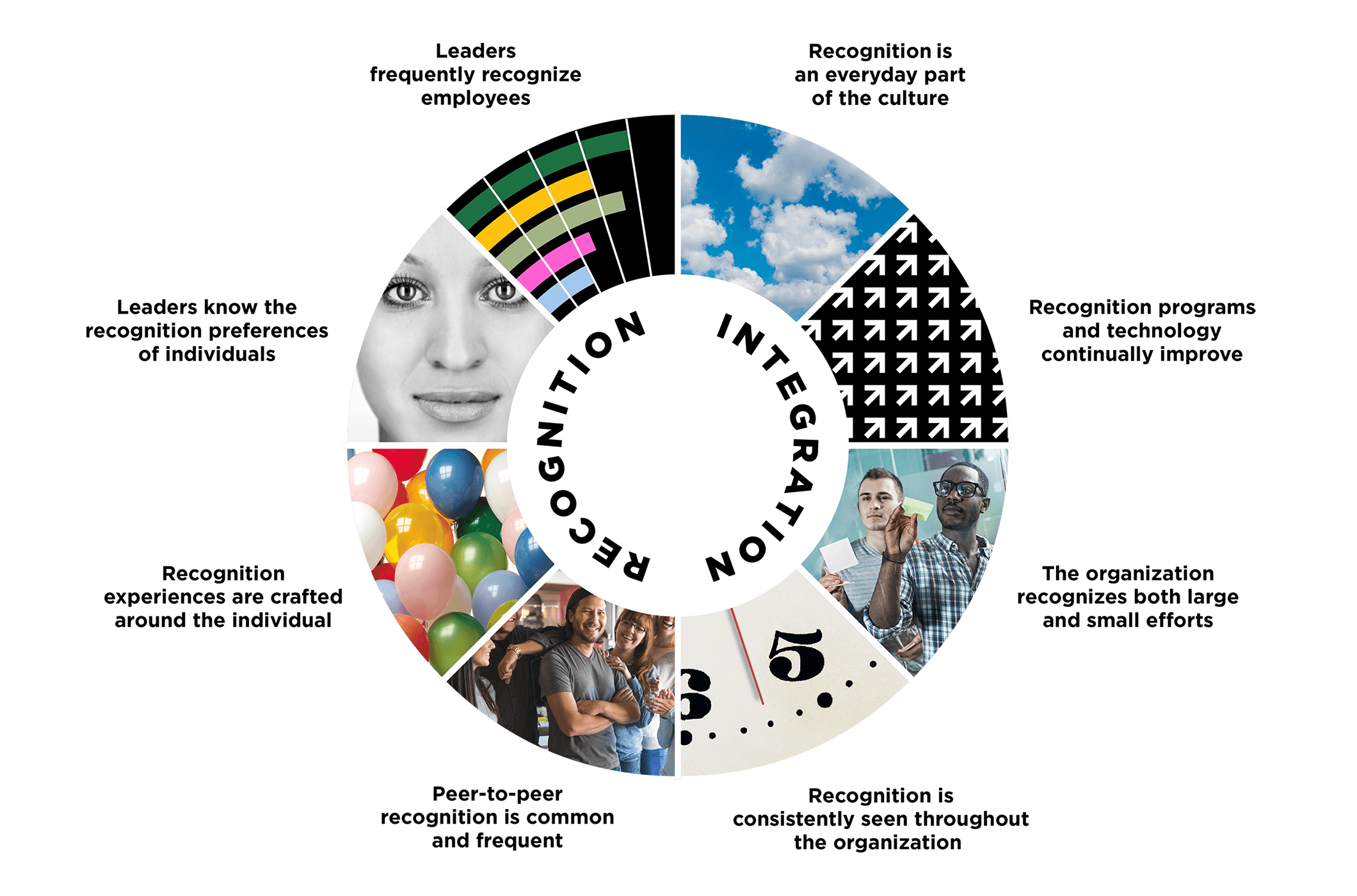
- Recognition is an everyday part of the culture
- Recognition programmes and technology continually improve
- The organisation recognises both large and small efforts
- Recognition is consistently seen throughout the organisation
- Peer-to-peer recognition is common and frequent
- Recognition experiences are crafted around the individual
- Leaders know the recognition preferences of employees
- Leaders frequently recognise employees
While some of these practices may seem basic, only 21% of companies have truly integrated these recognition practices into their company culture.
Use this model as a guide to measure your current recognition practices and see how you can continue to improve and adapt your recognition programme.
Measure recognition programme usage and ROI
Tracking the usage and ROI of employee recognition is crucial to ensure that your investment effectively enhances employee motivation and productivity, leading to improved business outcomes.
By measuring the impact, you can identify which recognition strategies are most beneficial, allowing for better allocation of resources. And understanding usage and ROI helps justify the continuation or expansion of recognition programmes to stakeholders.
Not sure where to start? Learn how you can track usage and ROI with your recognition programme in our guide to recognition ROI.
Tips for giving employee recognition
It’s always good to refresh on the basics. Here are some helpful tips for giving employees recognition. Make sure your recognition is:
1. Genuine
Employee recognition should not feel transactional, forced, or like something done just to check a box.
2. Inclusive
All employees should have an equal opportunity to give and receive recognition, no matter their level, position, title, department, or tenure. The criteria for recognition should be clear and equitable.
3. Specific
Generic statements like, “I heard you did a good job” take the meaning out of recognition. Get specific. Describe what the individual did and why it mattered.
4. Timely
Give recognition as soon as you see good work. Delaying recognition lessens its impact.
5. Frequent
People don't feel appreciated if they’re only recognised once or twice a year. Share recognition weekly — even if it's small.
6. Intentional
Tie the recognition to your organisation’s purpose, mission, and values.
7. In-person
You don’t have to interrupt their whole day, but don’t leave a gift on somebody’s desk, either. Invite their peers to participate. If the person giving or receiving the award isn’t in an office, share virtual recognition with a message or over Zoom.
8. Public
Most employees want their peers and leaders to know about their accomplishments. Public presentations not only showcase an individual’s work — they can inspire everyone in attendance. But remember, not everyone enjoys the public spotlight. Make sure your recognition is tailored to each employee.
Why do employee recognition programmes fail?
Once you have an employee recognition programme up and running, you’ll need to nurture it.
The top six reasons employee recognition programmes fail are:
- Budget constraints
- Low perceived value
- Low usage
- Misalignment on purpose and goals
- Lack of communication or awareness
- No measurement of ROI
Here are three ways to make sure your employee recognition programmes succeed:
Maintain leadership commitment
Create ongoing opportunities to share the ROI of recognition with executives and reinforce the need for their support and commitment. To gain the highest levels of budget and resources, position recognition as a company culture initiative, not just an HR tool.
Uncover the business case for investing in employee recognition to sway even the most hesitant of leaders.
Provide meaningful, easy-to-use recognition tools
If the recognition is not meaningful (with appealing awards and personal presentations) or easy to use, you’ll risk underuse of the programme.
Use this guide to inspire personal and meaningful recognition moments across your organisation.
Refresh solutions often so they don’t get stale
Use communication and reminders to maintain awareness and share the impact of the programme. Train managers on the best ways to recognise their people. Encourage peer-to-peer recognition and recognition champions — employees and leaders who are specially trained to keep the energy and excitement of recognition alive.
Read about the best strategies for reviving your employee recognition programme.
When you recognise your people for their great work and effort, you’ll build a workplace culture where employees feel appreciated and inspired — and where they’ll thrive.

What are some examples of successful employee recognition programmes?
Employee recognition can come in many forms, but employee recognition software, like Culture Cloud, provides a single solution for recognising all your employees, no matter where or how they work.
Peer-to-peer recognition is recognition sent between team members, often with an image or media and a custom message without a monetary component. It’s a quick “thank you” for everyday efforts, or encouragement to make it to the finish line.
For the bigger moments, award nominations with points are appropriate for appreciating great work. Presenting these awards to peers and leaders provides a moment for teams to come together and celebrate success and accomplishment.
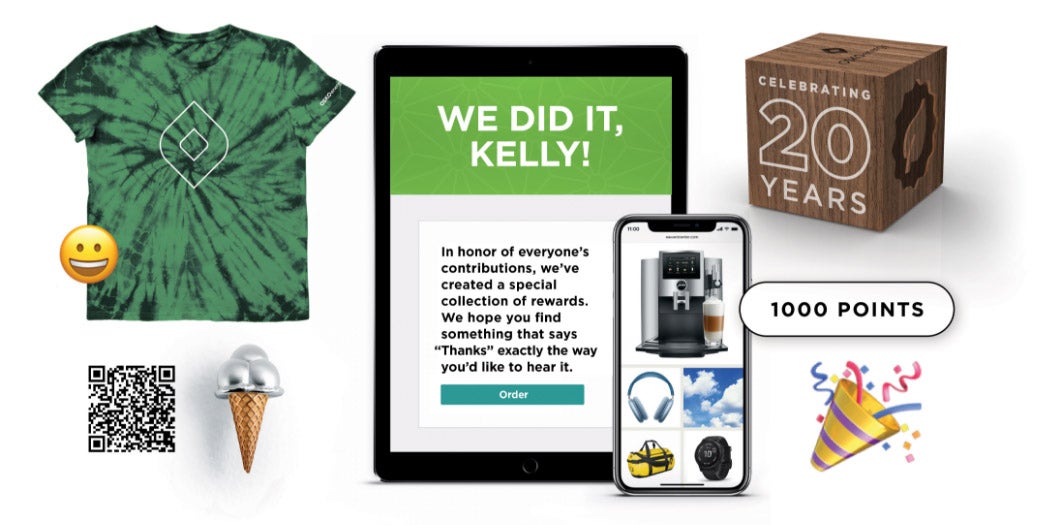
What about even bigger moments, like company-wide achievements? These call for an employee recognition experience that makes each employee feel appreciated for their contributions to your organisation. Custom awards, branded merchandise, and points allow them to choose a gift that means the most to them while also providing a symbolic award to mark the occasion.
Your people live your company’s purpose and these recognition experiences reinforce your gratitude.
Not sure how a great employee recognition programme comes together? These case studies will help you get started.
Capital One: An employee recognition programme that fuels personal and organisational success


Capital One knew they wanted to synthesise data, technology, and humanity into their company’s recognition efforts. So Capital One worked with O.C. Tanner to develop their ONEderful recognition programme, powered by Culture Cloud.
The company took an inventory of all their associate recognition programmes. They solicited employee feedback to learn what was working and what additional support they needed. Armed with this data, the team began to create a recognition strategy and vision that gained a high level of executive support.
ONEderful launched in 2010. It provides a consistent recognition experience through one platform, while still giving autonomy to the different business units. With recognition messages, awards, and custom recognition experiences, Capital One has appreciated 75% of associates in 145 different business units with its solution. And associates are feeling more motivated to contribute to the success of the company.
Capital One’s keys for recognition success:
- Recognition and appreciation as a strategy, not just a programme
- A comprehensive, thoughtful communication plan that leverages multiple channels and is tailored to each business unit
- A clear understanding of employee perspectives through ongoing associate surveys and listening
- Strong executive support
- Leveraging data and technology to make recognition easy, timely, and meaningful
CIBC: Creating employee recognition moments that matter

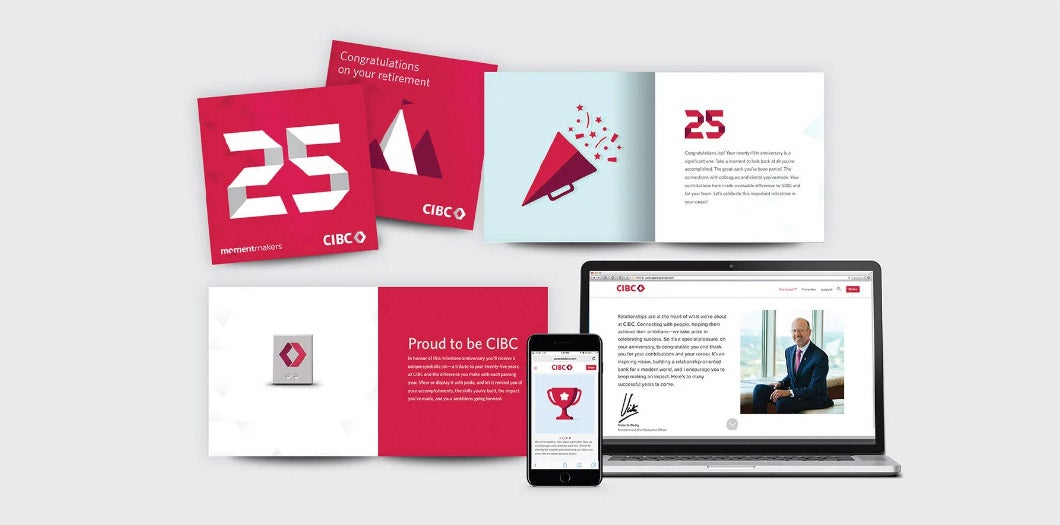
CIBC is a leading North American financial institution committed to creating recognition moments that matter for its 45,000 purpose-driven employees.
CIBC previously had a long-standing quarterly awards programme to formally recognise employees for great work and a career milestone programme to recognise years of service. The bank wanted to modernize how they recognise employees. While recognition was well-engrained in their culture, the programmes, and processes to recognise needed updating.
They wanted more options for day-to-day recognition, clearer criteria, an updated award offering that was more relevant to a diverse workforce, and a better, more sustainable nomination process. Employees also desired a points-based programme that provided personalised, timely, peer-to-peer recognition.
CIBC’s employee recognition programme, MomentMakers, includes recognition messages for all employees to recognise day-to-day great work, and an easier, more automated nomination process to recognise above-and-beyond accomplishments through Purpose Awards. There’s also an internal social wall where recognition is shared in real-time so others can see the great work team members are doing and add to the appreciation.
Custom images, recognition messages, and Purpose Awards bring CIBC’s purpose and brand to life. One year after launch, CIBC saw a shift in its recognition culture:
- 90% of employees say, “My manager gives me recognition for a job well done”, which is 6% higher than the industry benchmark and an increase of 7% from the previous year.
- 85% of employees feel “My personal contributions are recognised,” which is 8% higher than the industry benchmark.
BlueScope: Thanking everyone for a successful year


BlueScope sought to go beyond salary reviews and bonuses to show employee appreciation for the resilience, passion and purpose shown by their people during the pandemic. Within a tight timeframe, BlueScope worked with O.C. Tanner to implement a custom employee recognition initiative that resulted in a 95% uptake in recognition and positive responses from employees.
The combined virtual and physical recognition solution meets BlueScope’s 8,000 employees where they worked. It includes a BlueScope-branded online portal that features messages of appreciation from the CEO and General Manager of People, along with the opportunity for every Australia-based BlueScope employee to select five gift cards from a range of leading retail and lifestyle options (or provide a donation to charities aligned with BlueScope).
For BlueScope, it wasn’t the monetary value of the award that had a significant impact. It was about acknowledging the challenges their employees faced and recognising and appreciating every employee for the resilience they demonstrated in overcoming these challenges together.
How do you make an employee recognition programme for remote workers?
Just because workers are far away doesn’t mean they should feel disconnected from headquarters or other colleagues. So how can you craft an employee recognition programme that includes remote workers?
In some ways, it’s no different from how you are already working to include remote workers in other aspects of your business. The same communication tools you are already using — like Zoom or Slack — can easily include moments of employee recognition. But employee recognition also includes a component that can be hard to replicate virtually: the morale boost that people often receive when they come together to celebrate in person.
Here are 15 more ideas for recognising and appreciating your virtual employees.

How do you make an employee recognition programme for offline workers?
Offline or deskless workers often don’t have the same access to technology as their corporate counterparts, so it can be hard to reach them with an employee recognition programme. Luckily, it isn’t impossible.
By using break rooms, monitors across the office, physical recognition stations, and offline recognition solutions, your deskless workers can access your programme and see recognition across their daily experiences.
We have plenty of tips and strategies for involving your offline population in your recognition programme. Here are a few for you to check out:
- 6 Meaningful Ways to Recognise Offline Workers (eBook)
- Tips for Recognising Offline Employees
- 3 Things Offline Workers Need From Your Recognition Programme
Southwest Airlines is a great example of engaging offline workers with recognition. With employees in the sky and on the ground, Southwest uses recognition to connect, inspire, and thank employees for their hard work. Learn more about Southwest Airlines’ offline recognition strategy.

Ready to start? Let’s talk!
Download our step-by-step guide to building an effective recognition solution or check out Culture Cloud, our employee recognition platform that helps people all around the world thrive at work.
If you’d like to talk to the employee recognition experts at O.C. Tanner about how we can help craft a solution for you, please reach out to us.
Turn Recognition Into Real Connection
Top