How the 80% Workforce Feels Might Surprise You


Most conversations about the future of work focus on corporate and knowledge workers, and often neglect those who don’t work behind a desk and feel a lack of access and enablement at work (who we call the 80% workforce).
Some unsettling stats about the 80% workforce:
The 80% workforce lacks regular access to technology and tools that keeps them connected to their organisations, and do not have the same opportunities, autonomy, influence, or voice as others in the workplace. They work in healthcare, retail, manufacturing, transportation, hospitality, construction, etc. but nearly every organisation has employees in the 80%. These workers are essential and critical to an organisation’s success.
“They [the 80%] are the livelihood and heart of businesses, and without them, everything will come to a standstill.”
—Matt Fairhurst, CEO, Skedulo
Despite the importance of these workers, they feel ignored, unappreciated, and expendable by their organisations. Their experiences at work differ drastically from their corporate peers.
As one manufacturing employee put it, “We’re frontline, so we’re the lowest on the totem pole. We’re not selling, we’re not pushing product, so we’re not rewarded for what we do. People on the corporate side are getting branded clothing, four-day trips, etc. It’s just totally different. They get respect.”

Their perceptions are not incorrect. With only 8% of executives saying increasing support for these workers is a priority (and less than 1% of companies’ technology budgets dedicated to them), it’s no wonder turnover rates for these workers reach up to 500% per year.
How can we engage these workers? It’s not with pizza parties. To truly help the 80% thrive at work, organisations have to help them feel seen, understand their experiences, provide them support, and show they are valued and important.
All employees should have access to HR and culture-building tools at work to feel connected to the company, and be empowered to speak up about obstacles they face and how to do their jobs in the ways they feel best.
Ensure things that corporate peers receive, like flexibility at work, employee recognition, and opportunities for skill building and development are also available to the 80%.
Celebrate their accomplishments, provide rewards and awards that would benefit them, and showcase their contributions so others can see the great work they’ve done.
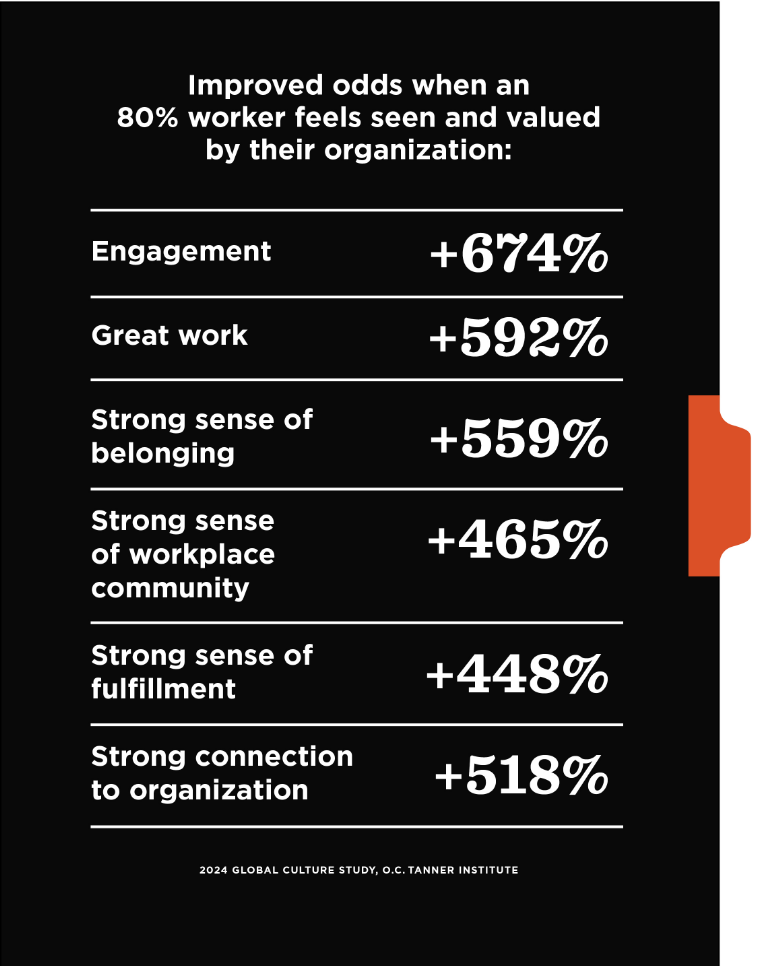
See more stats on the 80% experience and tips on how to help them thrive at work in our Global Culture Report.