Updated on
October 15, 2026
15 October 2026
The 2026 Global Culture Report by O.C. Tanner uncovers the most important trends shaping workplace culture worldwide. This regional edition focuses on India, the Middle East, and Africa (IMEA), highlighting how employees across the region are experiencing work and where culture is evolving most.
Drawing on insights from 6,934 participants across India, the Middle East, and Africa, representing 17.8% of the global study sample, this white paper explores:
- The most relevant cultural themes shaping IMEA workplaces in 2026.
- Key shifts across core cultural and engagement metrics.
- How IMEA compares with other global regions on critical culture indicators.
Together, these findings provide HR and business leaders in IMEA with a focused, data-backed view of what is driving engagement, retention, and performance locally and where leaders should pay closer attention in the year ahead.
Regional Outlook: Culture in Context
Workplace culture is shaped not only by global trends, but by the social and economic forces unique to each region. In IMEA, organisations are operating in an environment defined by rapid transformation and sustained growth. Expanding markets and rising employee expectations are reshaping how work is experienced and how culture must be intentionally designed.
As organisations scale and compete for talent, leaders are being challenged to balance performance and wellbeing, often simultaneously. Several regional dynamics are having a direct impact on employee engagement, leadership effectiveness, and long-term cultural sustainability:
- Rapid economic growth alongside persistent talent shortages
Fast-paced expansion across industries continues to intensify competition for skilled talent, increasing pressure on organisations to develop and retain their people.
- A diverse, multi-generational workforce with rising expectations
Employees across age groups and backgrounds are seeking meaningful work, equitable recognition, career growth, and inclusive cultures that reflect fairness and belonging.
- Growing demand for people-centric leadership and wellbeing support
As work becomes more complex, employees expect leaders to be empathetic and intentional about supporting wellbeing without compromising performance.
These dynamics are reshaping how employees experience work, how leaders show up, and how organisations design culture to sustain long-term success.
“Across IMEA, workplace culture is being reshaped by very different but equally powerful forces. India’s scale and digital momentum, the Middle East’s rapid diversification and investment in future industries, and Africa’s young, fast-growing workforce are all accelerating expectations around growth, opportunity, and performance. As organisations across these markets scale and modernize, the leadership challenge is no longer just about driving results, but about sustaining human connection, ensuring that wellbeing, inclusion, and hope keep pace with ambition and innovation.”
—Zubin Zack, Managing Director, IMEA, O.C. Tanner
IMEA at a Glance: Top Priorities
IMEA performs strongly on several culture indicators, including Inspiration, where 78% of employees feel inspired at work. This reflects the optimism and growth mindset present across many IMEA organisations.
However, the data also reveals clear pressure points, particularly around burnout, hope, and inclusive teams. These metrics signal emerging risks for sustained performance if left unaddressed.
The following sections dive deeper into these critical themes and what they mean for IMEA leaders in 2026.
Theme 1: Burnout
Burnout is no longer an isolated wellbeing concern; it is a systemic signal of how work is experienced. It reflects prolonged pressure and a growing mismatch between expectations and support, and a poor workplace culture. In many organisations, burnout is used to describe exhaustion, however, not feeling appreciated can accelerate burnout. Increased perception that the bottom line is more important than people, feeling stressed and overworked, not feeling connected to the team or organisation, and lack of purpose, opportunity, and success all contribute to burnout.
IMEA performance snapshot
40% of IMEA employees report feeling burned out, with no improvement in score from last year.
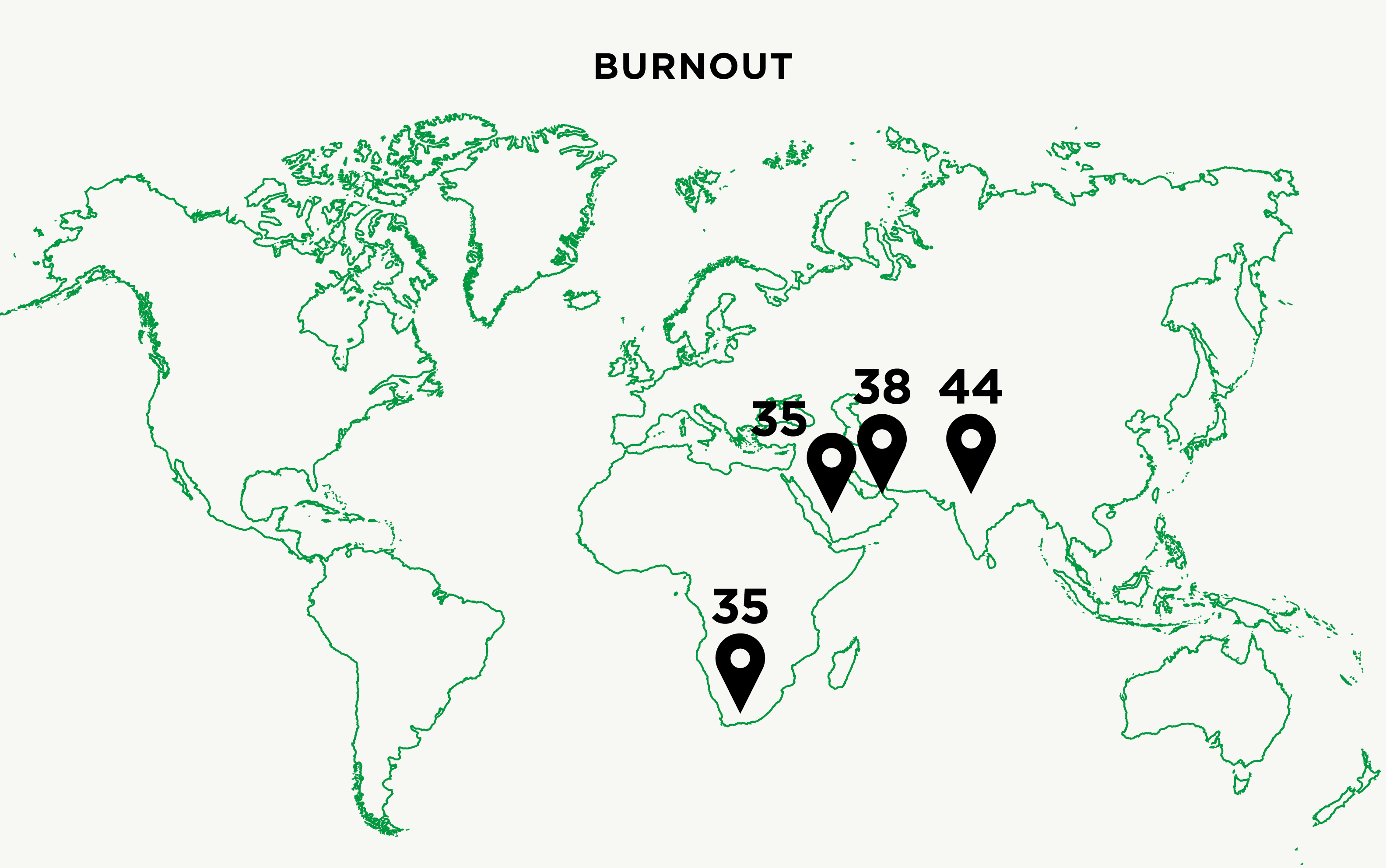
—Global Appendix, 2026 Global Culture Report
Why this matters
In IMEA, conversations around mental health are still evolving, and organisations still frame burnout as overwork and exhaustion. While familiar, those labels can obscure deeper challenges related to workplace culture and leadership styles.
Burnout can lead to disengagement and attrition. In a region defined by rapid growth and high expectations, sustained pressure without adequate support, connection, and appreciation is beginning to take its toll.
Strong cultures that provide purpose, opportunity, and recognition for efforts and successes reinforce care. Employees feel seen and valued—reducing long-term strain and strengthening resilience. Odds of burnout in IMEA decrease 93% when employees feel their supervisor is approachable and willing to help.
The lack of improvement in IMEA's burnout score suggests that efficiency and high performance are still happening at the expense of employee wellbeing. While employees remain committed and motivated, they may be operating in environments where workloads, pace, and expectation, are not always matched by sufficient support.
.png)
This shift is significant because IMEA organisations are scaling quickly, often faster than leadership models and wellbeing strategies can evolve. Employees are being asked to do more and deliver consistently, without a strong culture and sufficient resources to support employees. Unless there is intentional intervention, burnout threatens to undermine the very performance and resilience organisations are trying to build.
Theme 2: A Practice of Hope
In the workplace, hope can provide direction—but only when it's more than wishful thinking. A practice of hope is a practical framework that helps employees turn obstacles into outcomes. It is shaped by an active mindset that fosters clarity of direction and the belief that meaningful goals are achievable.
When a practice of hope is supported by peers and leaders, employees are able to tap into inspiration, overcome challenges, and achieve lasting success. Hope becomes a powerful, repeatable process that fuels performance for individuals, team, and organisations.
IMEA performance snapshot
Less than half (49%) of employees in IMEA feel they are practicing hope in the workplace.
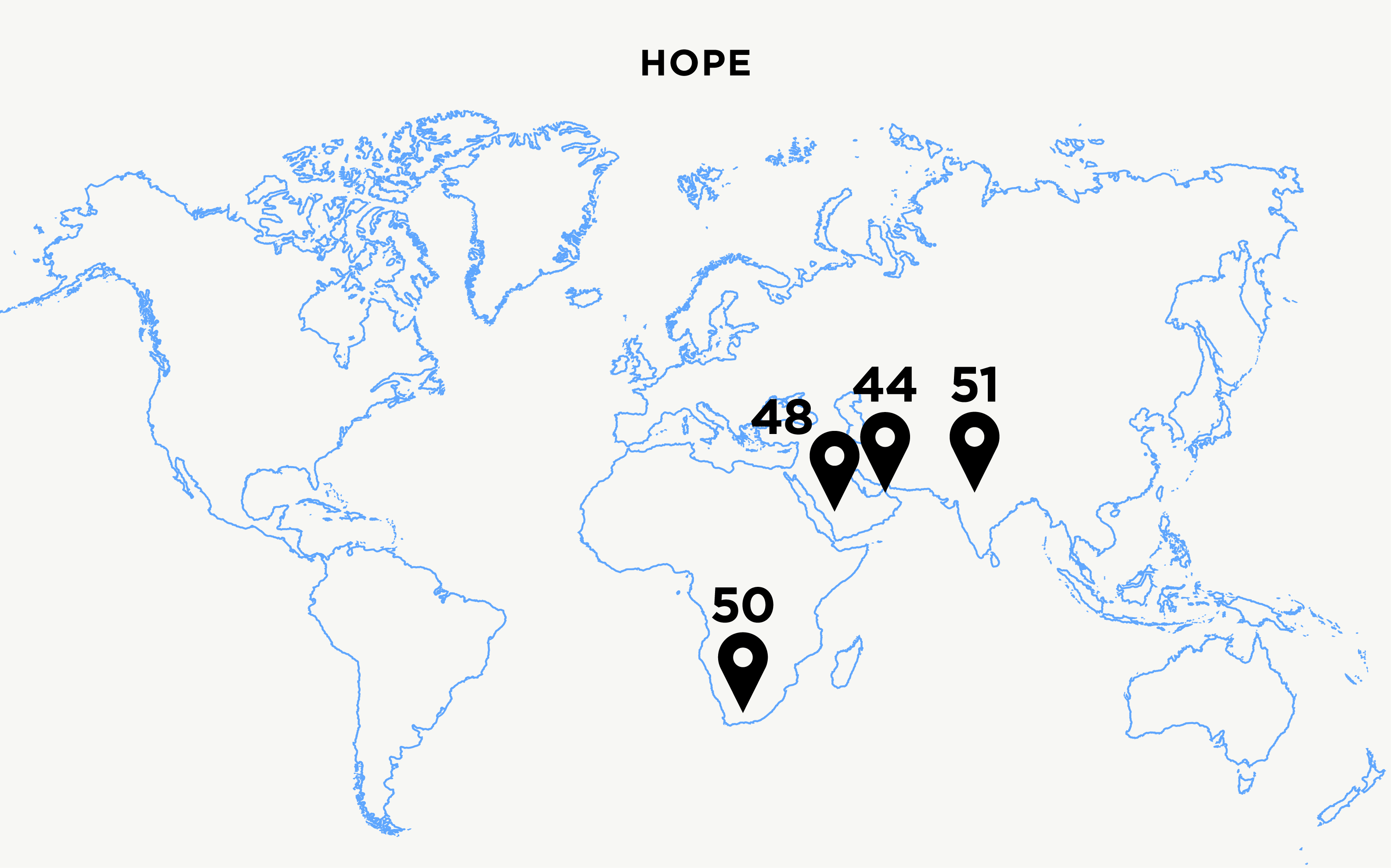
—Global Appendix, 2026 Global Culture Report
Why this matters
In many IMEA organisations, employees are meeting targets and adapting to constant change but quietly wondering what comes next. A practice of hope in action enables employees to identify goals and targets and take steps to meet those goals.
The practice of hope centers on the interaction of two active modes of thinking: pathway thinking (“I can see a path to my goal”) and agency thinking (“I believe I’m capable of following that path”). When this cycle of thinking repeats, it creates a practice of hope, motivating action and movement toward a desired outcome.
In IMEA, there is a significant opportunity to help employees do both: identify a path to a goal and believe they can reach it. Modern leadership and strong teams and workplace community brings communal encouragement and energy that has a powerful impact on their overall sense of hope.
Employees and leaders in IMEA should provide guidance and support when establishing goals, identify alternative options when confronted with obstacles, and encourage and recognise employees along the way. This transforms hope from a passive emotional state into an active practice that can be repeated to improve innovation, performance, and resilience.
Theme 3: Inclusive Teams
Inclusive teams are those where employees feel respected, heard, and valued for who they are and what they contribute. Beyond representation, inclusion is experienced in everyday interactions, where all employees are invited into conversations and people feel safe bringing their full selves to work.
In fast-growing, diverse regions like IMEA, inclusion plays a critical role in enabling collaboration, innovation, and trust. When teams operate inclusively, differences in background, perspective, and experience become strengths. Employees are 24x more likely to meet team goals when they believe their team is inclusive. When teams are not inclusive, belonging, engagement, and great work are limited.
IMEA performance snapshot
Overall, 33% of IMEA employees report working on inclusive teams.
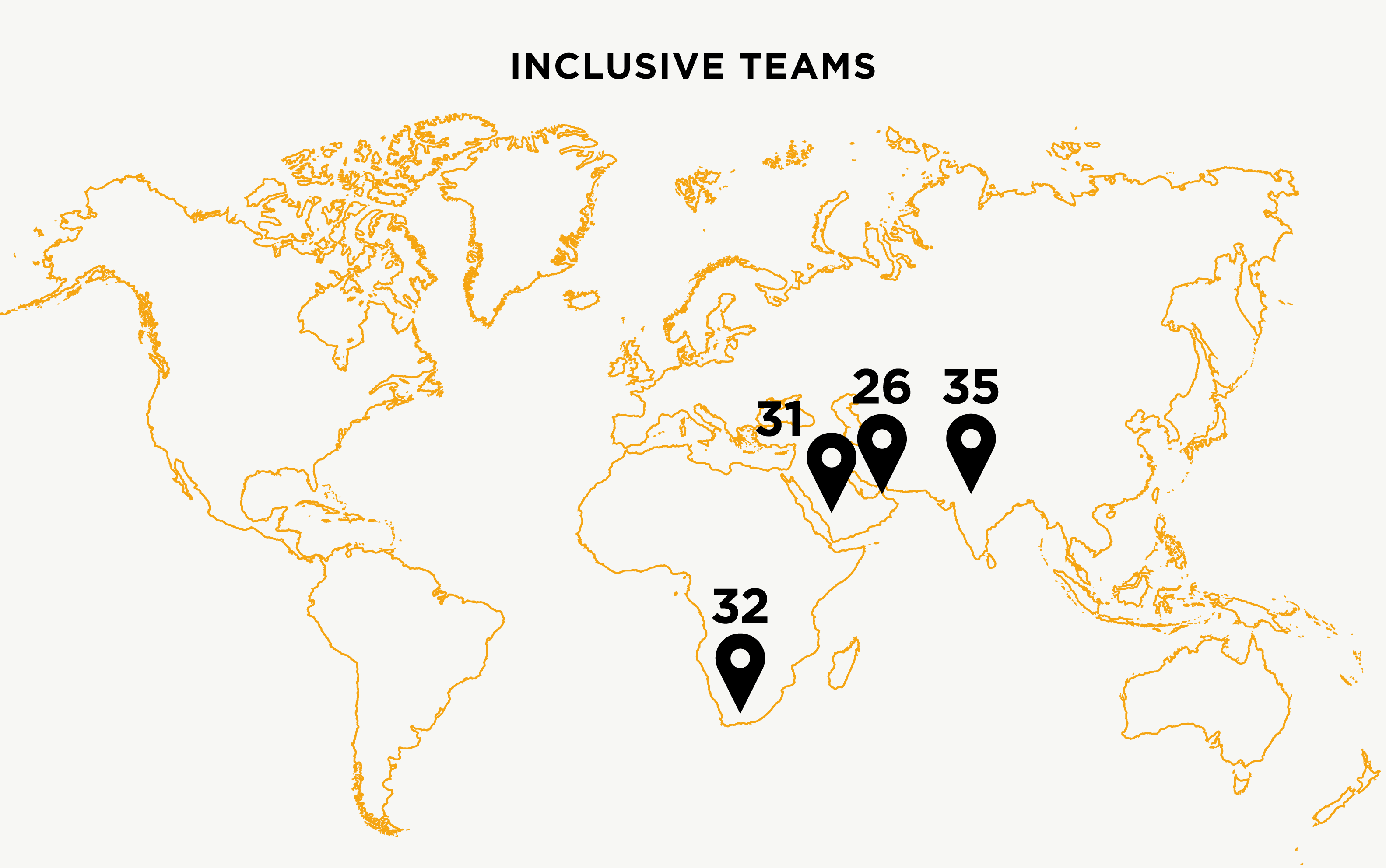
—Global Appendix, 2026 Global Culture Report
Why this matters
Across IMEA, organisations are bringing together employees from different cultures, languages, generations, and lived experiences—often within fast-growing, matrixed environments. On paper, diversity is visible. In day-to-day work, however, inclusion is shaped by whether people feel genuinely heard and feel respected on their teams.
The data suggests that while IMEA performs relatively better than some global peers, inclusion is not yet consistently experienced. Employees may be present in the room, but not always confident that their voices carry equal weight; that decisions are made equitably, or that recognition is distributed fairly across roles and backgrounds.
This matters because inclusion directly influences collaboration and trust. In high-growth organisations, where cross-functional teamwork is essential, gaps in inclusive behaviour can quietly undermine engagement, making recognition feel uneven and leadership messages less likely to resonate across the workforce.
The findings point to a clear opportunity: IMEA organisations must move beyond representation toward intentional inclusion. This requires leaders who model inclusive behaviours, teams that actively invite diverse perspectives, and recognition practices that reinforce belonging.
“In a region as vibrant and diverse as IMEA, recognition isn’t just a gesture—it’s a catalyst. When we intentionally celebrate people for who they are and the impact they create, we fuel a deeper sense of belonging across cultures, generations, and geographies. Everyday recognition reminds our people that their contributions matter, their voices matter, and they matter. When employees feel truly seen and valued, they don’t just perform better—they rise, they thrive, and they lift our entire organisation with them. Together, these findings point to a clear leadership opportunity, one that requires intentional action to sustain performance while strengthening the employee's experience.”
—Candy Fernandez, Director of People & Great Work, IMEA, O.C. Tanner
Recommendations: What This Means for IMEA Leaders in 2026
Turn inspiration into enduring performance
Inspiration in IMEA is high, leading employees to meet challenges, find new ways of working, and envision a hopeful future. However, inspiration alone is not self-sustaining. To preserve this advantage, organisations must reinforce inspiration through everyday experiences, not just moments of vision or communication.
Leaders play a critical role by reinforcing purpose in day-to-day decisions and recognising progress—not just outcomes. When employees see their contributions acknowledged and linked to broader goals, inspiration translates into sustained performance rather than short-term motivation.
Strengthen the practice of hope through achievable goals, strong community, and recognition
With only half of IMEA’s employees feeling they practice hope at work, there is an opportunity for leaders to drive progress by turning emotion into action.
Organisations can strengthen the practice of hope by setting realistic goals, celebrating incremental progress, and fostering a sense of shared success across teams. Recognition that highlights progress and collective achievement helps employees feel that the future is not only aspirational, but attainable.
Prevent burnout through culture and recognition
IMEA’s stagnant burnout levels underscore the lack of support organisations are providing employees as organisations continue to scale rapidly, and expectations continue to rise. Addressing burnout requires more than reactive wellbeing programmes; it requires cultural reinforcement.
Organisations must encourage leaders to intentionally provide purpose, opportunity, and recognition for employees to show care and appreciation. When employees feel valued and supported, recognition becomes a protective factor helping sustain resilience and long-term performance.
.png)
Embed inclusive behaviours at the team level
IMEA’s Inclusive Teams scores suggest that while diversity is present, inclusion is not always consistently experienced. Closing this gap requires leaders and teams to move beyond intent and embed inclusive behaviours into everyday interactions.
This includes inviting diverse perspectives, ensuring fairness in recognition, and creating environments where all employees feel heard and respected. When inclusion is practiced consistently at the team level, trust strengthens, collaboration improves, and recognition resonates more equitably across the organisation.
Together, these actions help organisations move from insight to impact, creating cultures that balance performance with care and growth with sustainability.
Conclusion: Leading Culture Forward in IMEA
The 2026 Global Culture Report highlights a defining moment for organisations across IMEA. Employees remain driven and inspired by opportunity, yet the data reveals growing pressure beneath the surface, impacting burnout, the practice of hope, and inclusion.
Burnout reveals the cost of sustained intensity without a supportive culture. Hope reflects whether employees can overcome obstacles to achieve their goals. Inclusion determines whether people feel seen and supported along the way. Together, these three themes tell a single story: performance in IMEA is strong, but its sustainability depends on how intentionally culture fosters belonging, wellbeing, and a shared sense of hope.
In 2026 and beyond, the organisations that thrive in IMEA will be those that treat culture not as an initiative, but as a leadership discipline, one that balances support and care with high performance.
For further insights and recommendations on these topics, please refer to the Global Culture Report.
Turn Recognition Into Real Connection
Top