Table of Contents
Table of Contents

Perspective
In most contexts, hope is a desire for something better. An aspiration that exists somewhere between a gentle wish and a bold dream, it’s rich enough to produce infinite movies and love songs but will never qualify as an effective workplace strategy. Fortunately, our research this year establishes a model that transforms hope from a passive state into an active practice, fueling growth and change. Such functional, working hope capitalizes on individual agency while at the same time drawing on the strength and support of teams and leaders. Organisations that embrace this approach don’t just help more employees reach their goals. They connect everyone to a more hopeful future.
{{report_insert_1}}
Introduction
It’s no exaggeration to say workplaces around the world are currently experiencing an epidemic of hopelessness.
A Harvard poll finds nearly half of Americans under 30 feel “down, depressed, or hopeless” at least several days a week.1 Gallup’s research shows wellbeing has declined, and 41% of employees globally are stressed “a lot of their day.”2 A study conducted in the U.K. and reported in Forbes reveals more than half (53%) of workers struggle with mental health conditions.3
According to our data, when thinking about their future at work, 35% of employees feel depressed and only 52% feel hopeful. In the face of economic uncertainty, changing market expectations, and rapidly advancing technologies, employees everywhere are struggling to feel good about the trajectory of their careers.
For many people, hope is a positive vision of the future that tends to rely on external factors such as fortune or the actions of others. In the workplace, this passive position and perceived lack of control can be a big problem. At a time when organisations are pushing to innovate in a changing business landscape, having a workforce that’s inspired and empowered to meet challenges is more important than ever. Hopelessness and even passive hope aren’t just inconvenient—they work against needed outcomes.
To be clear, the type of hope we’re discussing focuses on the practical aspects of achieving goals and navigating everyday obstacles. As such, having effective hope in the workplace is more than being optimistic. It requires acting on that optimism, giving employees something to look forward to, and enabling them to avoid or overcome setbacks.
When employees have a strong sense of hope, the odds of several key outcomes improve:
- Great work (8x)
- Engagement (7x)
- Innovation (5x)
- Connection to organisation (5x)
- Belonging (5x)
- Retention (4x)
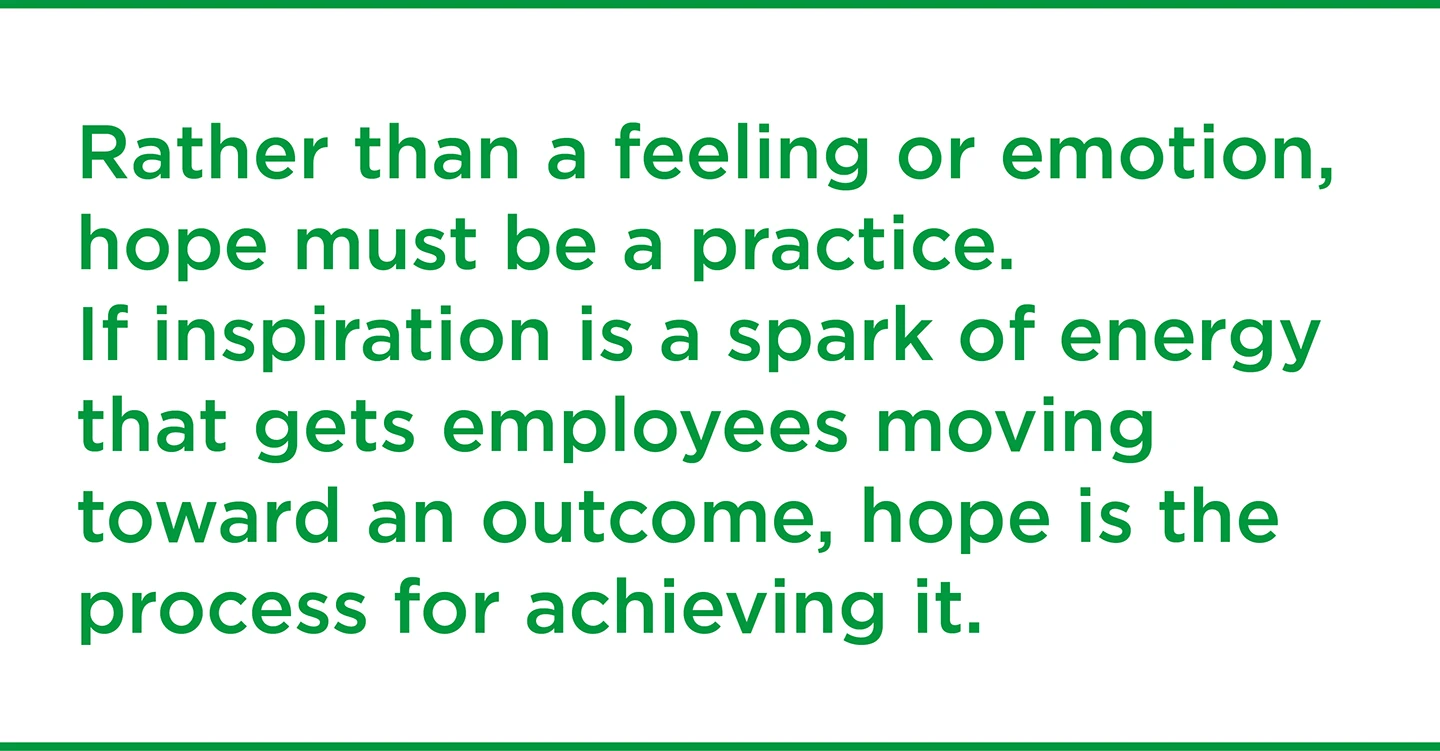
As our understanding of hope in the workplace moves from a wish to a practice, it transforms hope from an inert state into a dynamic part of the employee experience.
A Working Model for Hope
“I hope things work out.” “I hope the weather stays nice.” “I hope my team wins.” Typically, the word hope reflects a positive picture of a future state, but one that lacks personal influence—we can’t change the weather or influence a sporting event. Our desired outcome depends on factors outside our control.
When we asked employees what hope meant in the workplace, we heard them intuitively link it to more active elements like motivation, achieving goals, and overcoming obstacles:
“Hope is something you’re moving toward and believing you can get there.”
“Hope is overcoming obstacles because there’s always going to be something in your way. But as long as there’s something out there, that keeps you moving forward.”
A practice of hope also recognises that obstacles are part of the process. In the workplace, these take many forms, from a lack of support or resources to personal anxiety. Our research finds that five factors consistently present the biggest barriers to hope at work:
- Competing priorities
- Worry about doing well on projects
- Mental exhaustion
- Fear of missing deadlines
- Feeling anxious or on edge
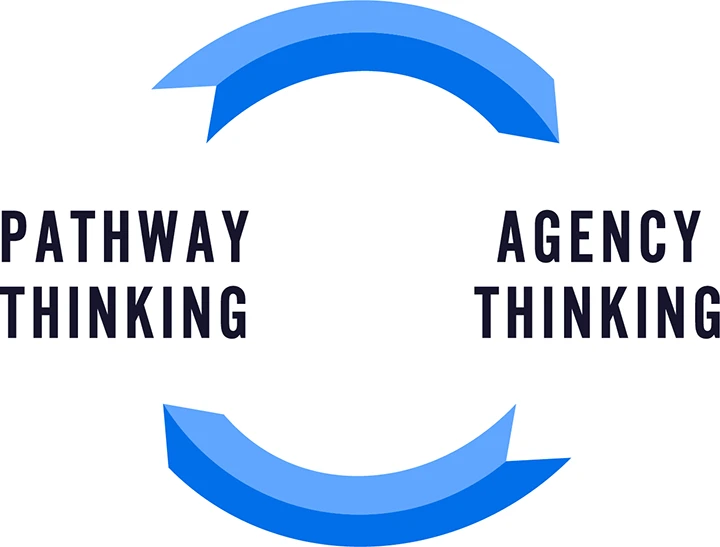
For many employees, hope is already a way of thinking and acting that animates them toward a goal. The practice of hope centers on the interaction of two active modes of thinking: first, pathway thinking (“I can see a path to my goal”); and second, agency thinking (“I believe I’m capable of following that path”).4 In a practice of hope, this cycle of thinking repeats, motivating action and movement toward a desired outcome.
With the exception of competing priorities, employees’ biggest obstacles are not operational but rather related to their mental wellbeing. And, as the following table shows, mental health challenges can significantly impact an individual’s sense of hope.
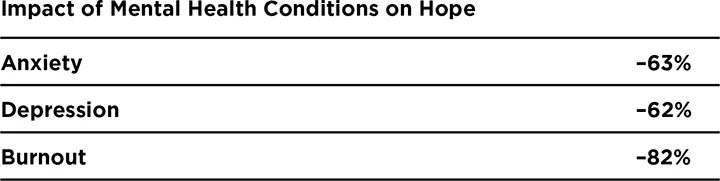
These challenges can derail progress and risk undermining agency thinking. Each one forces an employee to start the cycle again by identifying a new path forward and recommitting to the belief that they can successfully follow that path to completion. The most notable of the mental health challenges is burnout, a condition that results from chronic workplace stress that hasn’t been successfully managed, and is characterized by feelings of exhaustion, avoidance, and futility.
Regardless, hope in practice propels employees forward. Organisations can help employees most by resolving competing priorities and offering resources and systems to help employees overcome the other common obstacles to hope.
“When we apply agentic and pathways thinking toward our goals, and thereafter meet these goals, we experience the full array of positive emotions. These emotions, as well as the negative ones that appear when we do not meet our goals, add an experiential richness to our lives.”
—C. R. Snyder, Professor of Clinical Psychology, University of Kansas
The Role of Achievable (and Inspiring) Goals
Before the cycle of thinking, navigating obstacles, and acting toward an outcome, there’s a goal that helps employees know where they are and connect to an aspirational future.
For goals to drive a practice of hope, they must connect with something bigger. When we asked employees to identify the most important qualities of a successful workplace goal, they listed several, ranked in the following table.
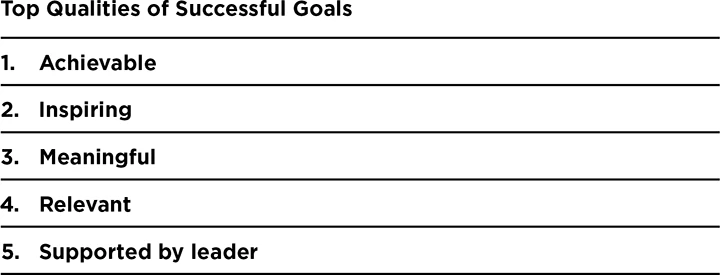
First, goals need to be achievable—specific, measurable, and realistic. Large initiatives will only succeed if they consist of smaller goals employees can reach along the way. Next, goals must be inspiring. As discussed in the previous chapter, a goal that’s inspiring connects people to a larger vision or set of values. An inspired employee acts with energy and purpose and is open to new and innovative solutions. When goals are inspiring, the odds of workers having a strong sense of hope increase 85%.
Goals also have more impact when they’re meaningful and relevant, connected to the needs and values of the individual. This could be something that helps them grow in their career, improves their financial security, or aligns with their personal values.
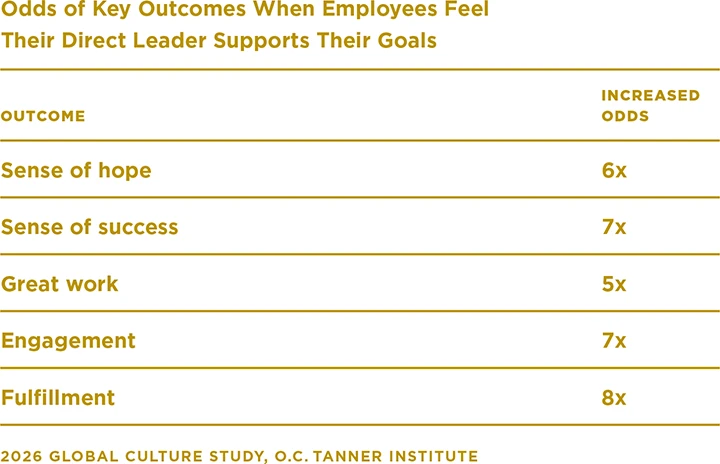
Finally, leader support is critical in developing employee goals. Employees need to know they have the buy-in and backing of their leaders. Leaders can show this support by checking in on employees and giving recognition as they make progress. Encouraging effort reinforces that a goal is achievable. And having this support not only increases employees’ sense of hope but also impacts other aspects of the employee experience, as shown in the following table.
A Practice of Hope Requires a Community
Most current models of hope focus on the individual experience. However, as our research has shown for years, the employee experience doesn’t happen in a vacuum. A thriving workplace culture requires the healthy interaction of coworkers, teams, and leaders. No one fully thrives on their own, and this is just as true for hope in practice.
While leader interaction remains a powerful influence on an employee’s connection to a meaningful vision of the future, a supportive team brings communal encouragement and energy that has a powerful impact on their overall sense of hope.
As the following table shows, hope increases for employees when they interact positively with their teams and leaders.
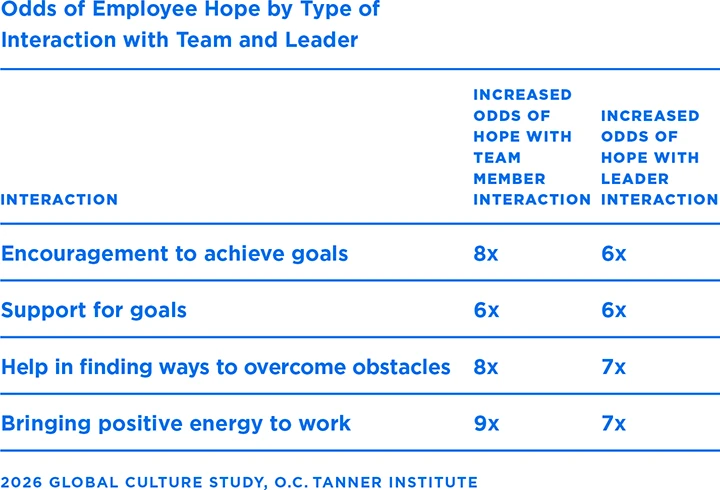
These powerful interactions with coworkers and leaders should happen at every stage of a process that includes:
- Guidance and support when establishing goals
- Help identifying alternative paths when confronted with obstacles
- Encouragement and recognition along the way
As with leaders, recognition from team members validates the progress an employee makes toward their goals. Even on projects that don’t go as planned, the odds of a strong sense of hope increase when leaders support employees (6x) and when team members support each other (7x). Peer-to-peer recognition is a powerful way for organisations to build and sustain this community.
A Practice That Perpetuates Itself
When employees achieve meaningful goals, it positively reinforces pathway and agency thinking and fuels a cycle of desire for new goals and greater achievement. Recognising employees when they meet their goals amplifies this desire, creating even more momentum and empowering them to succeed. As one focus group participant put it, “It’s like hurdles. Once you get over the first one, you could do the next one and the next one and the next one after that.”
A practice of hope transforms how individuals perceive their capabilities and their future. Among employees who achieve their goals, 73% feel more confident about setting new goals, 71% find it easier to see pathways to those goals, and 75% feel more positive about their future. Hope enables employees to thrive.
“Being able to find meaning in the day to day, be it through good quality connections, working together and feeling supported, having ways to express our full potential, or making a difference to the community or planet, can help to move employees forward and facilitate higher engagement and performance.”
—Amy Bradley, PhD, Professor of Leadership and Management, Hult Ashridge
Recommendations
For hope to become a practice, organisations must set achievable goals that inspire employees, build community, and leverage recognition.
1. Lay the groundwork for hope with goals that inspire
Leaders can help employees identify goals and link them to sources of inspiration that are personally relevant. These can be passion for the work, belief in company values or mission, or simply opportunities to collaborate with respected peers and leaders. Goals can be made more relevant by connecting them to individual needs and aspirations like growth, development, and security.
Goal setting also provides an opportunity to evaluate pathways to success and identify potential obstacles that may arise along the way. One-to-ones and team meetings are ideal settings to think through possible roadblocks and identify both necessary resources and alternate routes to avoid potential setbacks. This experience not only reinforces agency and pathway thinking but also strengthens connections to teams and leaders. When teams and leaders help find ways to work around obstacles, the odds of the employee having a strong connection to both their team and leader increase 5x.
{{report_insert_2}}
2. Build a supportive workplace community
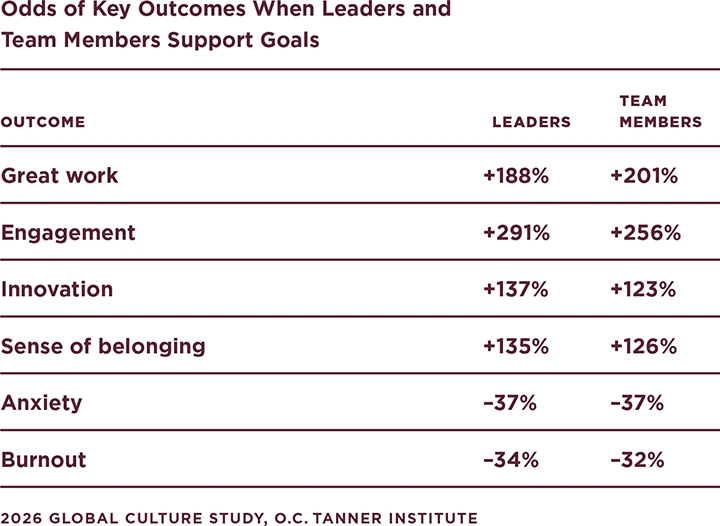
Hope needs a supportive community to thrive. Leaders, teams, and individual peers all play a critical role in employees achieving their goals and should be involved early and often. From goal setting to managing obstacles to recognising accomplishments, a strong workplace community supports the practice of hope by providing inspiration, guidance, encouragement, and validation.
Regular team and leader check-ins are opportunities for positive interactions that can help drive hope forward. As the following table shows, such support reinforces the practice of hope and enhances the employee experience across several metrics.
3. Use recognition to celebrate feats of hope
Hope in practice thrives when it includes regular encouragement and validation. Just as obstacles can disrupt the cycle of pathway and agency thinking, recognition can restore employee confidence, validate effort, and nurture progress.
That said, recognition should start before a project ends. Appreciation for effort along the way provides employees support and encouragement to overcome obstacles and continue doing great work. Similar to how cheering throughout a sporting event (not just when the game is won) helps build momentum, energy, and endurance, recognising employees for achievements and meeting goals along the way helps them keep going.
“Recognition has evolved beyond a simple tool for engagement; it is now essential emotional currency, one of the last remaining forces that keeps people connected to their work, their colleagues, and their organisations.”
—Jackie McCarthy, AVP, Experience Strategy, Northwell Health
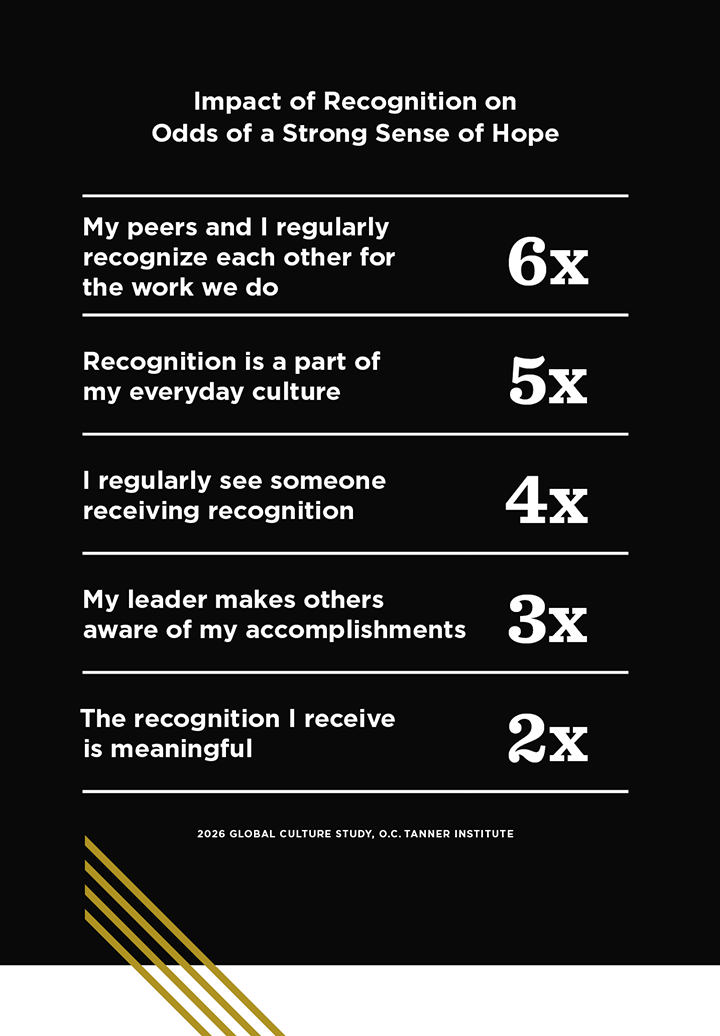
According to our research, when recognition is an integrated part of workplace culture and the employee experience, the odds employees will feel hope increase significantly.
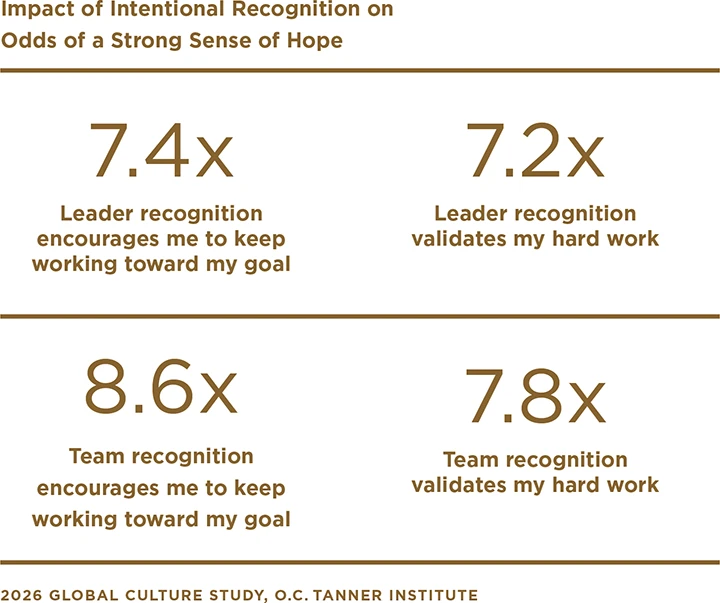
It’s also important that recognition be given in ways that are intentional. As the following table shows, by creating recognition moments that encourage and validate an individual’s hard work and effort toward goals, leaders and peers can amplify hope.
{{report_insert_3}}
Hope In Practice—Key Takeaways
Hope in the workplace is an active practice rather than a passive emotional state.
A practice of hope involves setting achievable, inspiring goals with a supportive community.
Hope is self-perpetuating, reinforcing pathway and agency thinking that fuels the desire for new goals and greater achievements.
Recognition strengthens hope by validating effort and encouraging progress.
Hope in Practice Sources
- Harvard Youth Poll, Harvard Kennedy School Institute of Politics, Spring 2023.
- State of the Global Workplace: 2025 Report, Gallup.
- “How Leaders Can Instill Hope In Their Teams,” Sally Percy, Forbes, March 5, 2024.
- “Hope theory: Rainbows in the mind,” C.R. Snyder, APA PsycNet, 2002.
- “Embracing The Universality Of Hope: Crafting A Leadership Narrative For Our Future,” Vibhas Ratanjee, Forbes, February 13, 2025.
- “Navy Federal Credit Union: Transforming Mission to Passion,” O.C. Tanner, 2024.


Case Study—Improving Connection and Care
During the global pandemic, Lenox Hill Hospital implemented “hope huddles” in their front-line workers’ daily meetings. They focused on successes like patients who came off ventilators, as well as stories of accomplishment, challenges to meet, and the positive impact of their work. Today, hope huddles provide camaraderie and ongoing communication that connect employees to their purpose and reinforce the message of hope—seeing a path forward and believing they can get there together.5

Case Study—A Mission of Recognition
Recognition at Navy Federal Credit Union (NFCU) acknowledges employees’ work and progress toward their goals with awards for daily great work, strategic projects, goals met, team success, and completed career programmes (when military members transition back to civilian life).
The institution also recognises more personal goals, like career anniversaries, volunteerism, social responsibility, and belonging. These efforts help all employees work with a sense of hope and may partly explain NFCU’s inclusion on Fortune and Forbes magazines’ annual lists of best employers.6
Turn Recognition Into Real Connection
Get Started Today
Top