Updated on
September 1, 2026
1 September 2026
Key takeaways:
When employee recognition is built into how an organisation operates, it drives measurable results across retention, revenue, wellbeing, and belonging.
Four global organisations (ICF, Wellstar Health System, CIBC, and AGL Energy) share what happens when recognition is treated as a business strategy.
The proof is in the numbers: real retention gains, real revenue impact, and real improvements to how people feel at work.
What makes recognition a real business driver?
When it comes to designating HR budget for employee recognition, it’s natural to ask what kinds of measurable results you can expect.
According to Forbes, recognised employees are 45% less likely to leave after two years. Yet only 22% of employees say they receive the right amount of recognition for their work. That gap is costing organisations more than most leaders realise.
But numbers from research only tell part of the story. What does meaningful recognition, the kind that makes a difference for employees and businesses alike, look like in practice? And what results are organisations seeing?
Here's how four large companies use O.C. Tanner's Culture Cloud platform to embed recognition into how they operate, and the outcomes they have to show for it.
How does recognition improve employee retention?
ICF is a global advisory and technology services firm with over 9,000 employees. Their people are mission-driven and work on some of the most complex challenges in health, education, energy, and climate. Keeping that talent is critical. So is making sure employees feel connected to the work they do and to each other.
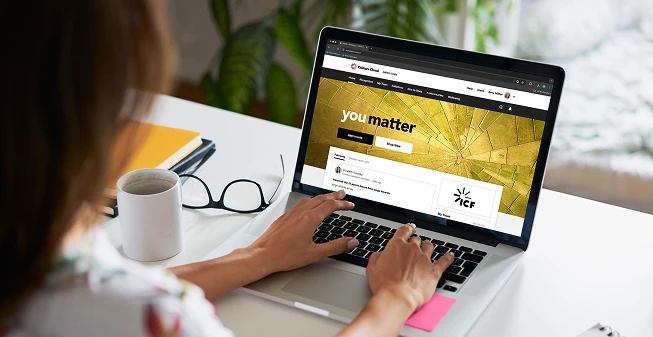
Using O.C. Tanner's platform, ICF evolved their You Matter recognition programme to reach more employees, more often, at more meaningful moments. They integrated recognition into onboarding, embedded it into weekly workflows, tied it directly to their six company values, and used O.C. Tanner's integrations to connect recognition with their Workday and Personify Health apps so recognition could happen in the flow of work.
The results were clear. In one year, 90% of employees were recognised (over 46,000 recognition moments). But the most significant finding came from their own data:
- Recognition accurately predicted whether an employee voluntarily stayed or left the company 91% of the time
- Employees recognised by leaders were 3-8x more likely to stay, depending on the seniority of the leader
- And being recognised specifically for living ICF's values almost doubled the likelihood of retention
"Recognition is really important. Someone's overall contentment with their job isn't just about the dollars, it's about their overall experience: do they feel connected to the organisation, do they have good relationships, do they feel fulfilled from the work they are doing? Feeling recognised and appreciated makes a huge impact."
—Lindsay Landry, Employee Experience Lead, ICF
Can recognition improve business performance and revenue?
Wellstar Health System is a leading healthcare network with more than 25,000 employees across 300+ locations. Healthcare organisations deal with very real operational pressures: aging accounts receivable, complex workqueue management, and teams that need to stay motivated through demanding conditions.
Wellstar used recognition to address one of those pressures directly. Using O.C. Tanner's Initiatives, a feature within Culture Cloud, the team built a recognition-powered campaign focused on reducing workqueue aging, a problem with direct financial consequences. Employees who cleared backlogs and hit targets were recognised and rewarded in real time, with points they could redeem in the award store.
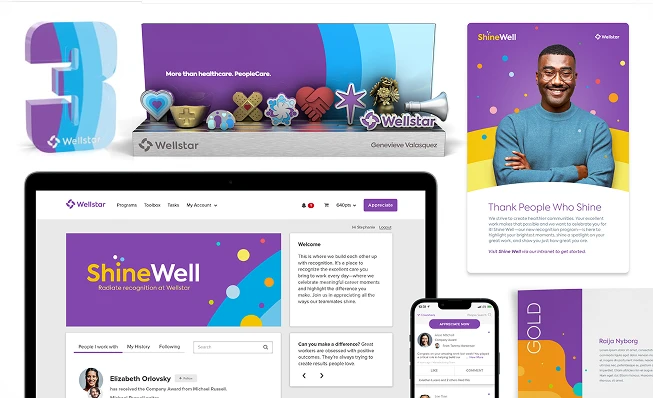
In three months, Wellstar's ShineWell programme reduced aged account balances by $13 million.
More than the financial outcome, the team saw a cultural shift: Employees who had found the work repetitive and difficult to get excited about started showing genuine enthusiasm.
"Employees are saying things like, ‘We are actually excited to work now.’ For revenue cycle streams and workqueues, it is hard to make work fun. The competition and giving employees points is a big deal, they feel the love. It gives them something fun and something to achieve. We feel their excitement about work."
—Adam Gobin, Assistant Vice President, Revenue Cycle, Wellstar
How does recognition improve employee wellbeing?
CIBC is one of Canada's leading financial institutions, with a strong commitment to its people. Their challenge was a common one: Wellbeing programmes and recognition programmes were running separately, with limited connection between them. Employees had access to resources, but those resources weren't integrated into how work was recognised and celebrated.
Using O.C. Tanner's platform integration with Personify Health, CIBC brought the two programmes together. Their MomentMakers recognition platform, built on O.C. Tanner's Culture Cloud, allows employees to be recognised for great work and for reaching wellbeing goals. Employees can redeem points in a storefront that includes Lifestyle Spending Account (LSA) options alongside traditional reward choices, giving them flexibility to invest in their own wellbeing.
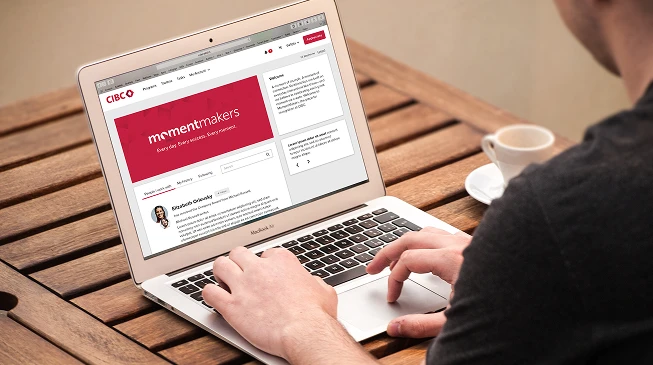
Recognition and wellbeing now live in the same place. Employees can be recognised for great work and for taking care of themselves, without switching platforms or programmes.
"The wonderful thing about MomentMakers is that it enables us to do day-to-day recognition. It is absolutely fundamental to us executing on our overall talent management strategy."
—CIBC People Leader
See how CIBC brings recognition and wellbeing together in this webinar with Personify Health.
How does recognition build a culture of belonging?
AGL Energy is one of Australia's largest electricity providers, with more than 4,000 employees across the country, navigating a major industry transformation toward renewable energy. When your organisation is changing rapidly, keeping people connected, aligned, and engaged takes deliberate effort.
AGL partnered with O.C. Tanner to launch Energise, a company-wide recognition programme built on O.C. Tanner's platform Culture Cloud. The programme was designed around AGL's core values and behaviours, with the goal of building a more inclusive and connected culture as the business evolved. Recognition options ranged from informal High Fives (non-monetary recognition messages) to formal Shoutouts and Ovations, making it easy for any employee to appreciate any colleague, at any level.
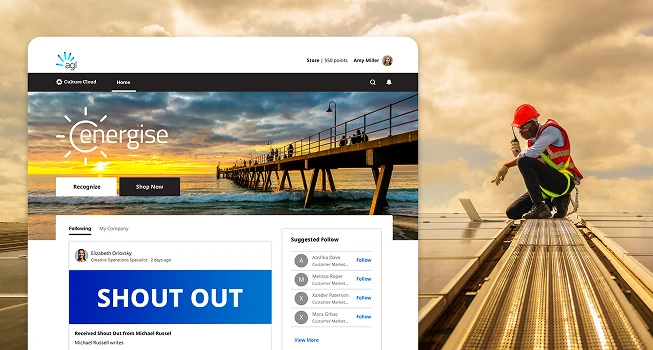
AGL also integrated Energise with Workday, and added Culture Cloud’s AI-powered Recognition Coach, which helps employees write more specific and meaningful recognition messages.
"The new AI Recognition Coach has helped make giving meaningful recognition easier for our people," says Graeme Sennett, Senior Manager, P&C Policy and Superannuation. "It's helped them feel more confident, making them more likely to give recognition again in the future."
Over a recent 12-month period, AGL saw impressive results:
- 89% of employees were recognised
- 68% of employees gave recognition (a 16% year-on-year improvement)
- 30% increase in unique monthly givers
- 41% increase in points redemption, indicating deeper engagement with the programme
Beyond that, AGL also used recognition to reward employees for participating in cross-training programmes and living company values during a period of significant change. This helped embed behaviours that will matter for AGL's future.
"Our strategic priority at the time in designing the programme was around building strong alignment to AGL's values as we transform our business and navigate the challenges and opportunities of the energy transition."
—Amanda Lee, Chief People Officer, AGL Energy

What does employee recognition ROI actually look like?
ICF, Wellstar, CIBC, and AGL: Different industries, different geographies, different challenges. But they share one thing. They stopped treating recognition as a cultural add-on and started treating it as a business strategy. And the results followed.
ICF used recognition data to predict and reduce attrition. Wellstar tied recognition to a $13M improvement in revenue cycle performance. CIBC integrated recognition and wellbeing into a single employee experience. AGL used it to build belonging through a period of major organisational change.
These outcomes don't happen by accident. They're the result of embedding recognition into how work actually gets done and then measuring what changes.
If you're evaluating employee engagement ROI or trying to make the case internally for recognition investment, the answer is in these stories. And if you're ready to see what it could look like for your organisation, explore what makes O.C. Tanner different or browse more client stories from organisations where recognition translates into measurable results.
Turn Recognition Into Real Connection
Top