How Recognition Supports Physical and Psychological Safety at Work
By Caitlin Ahne-Hawley, Marketing Manager at O.C. Tanner Australia

By Caitlin Ahne-Hawley, Marketing Manager at O.C. Tanner Australia
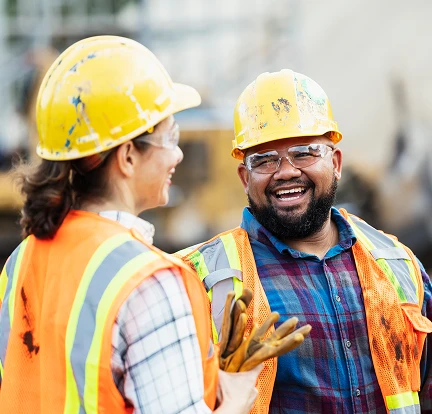
Across Australia, WHS laws are placing increased emphasis on psychosocial risk, due diligence, and preventative safety management. As a result, organisations are investing heavily in strengthening their safety systems, policies, procedures, and reporting. However, many leaders struggle to translate these commitments into actively enabling safety in day-to-day work.
The solution? Recognition. Not just typical rewards and celebrations, but a fully integrated practice that reinforces what safe and healthy performance looks like.
Timely, meaningful recognition helps create a focus on safety behaviours and supports the creation of a safe workplace over time. It helps organisations balance care and performance while reinforcing accountability across teams.
While related, safety climate and safety culture are different, and improving organisational outcomes requires focusing on both. Otherwise, organisations risk measuring sentiment without addressing the underlying systems and behaviours that influence safety over time.
Safety climate can be used as a diagnostic tool, while a safety culture is your long-term outcome. Recognition is one of the few levers that affects both, immediately and over time.

Many organisations genuinely care about employee safety and wellbeing. However, they may rely on systems that unintentionally send mixed signals.
For example, sometimes safety success is measured primarily through lagging indicators such as injury rates, time without incidents, and compliance outcomes. In this scenario, recognition for safety is often done annually, leader-controlled, and tied to incident-free streaks (e.g., “zero harm” milestones).
The unintended consequences of this approach include:
This weakens the safety climate (the lived experience of safety at work) long before incidents show up in data.
“What organisations choose to recognise sends a clear signal about what truly matters and shapes the culture that follows.”
—Nadia Beedeison, Senior Client Strategist at O.C. Tanner
Safety can be measured in two ways:
Together, they offer an overview of an organisation's safety performance. Organisations can easily over-focus on lagging indicators because they are easier to measure, however leading indicators are an equally strong measure of a safe workplace.
While recognition is often seen mainly as a morale booster, it’s also a powerful way to help manage risk in safety-critical environments.
When recognition consistently reinforces behaviours such as speaking up or verifying controls, it acts as a leading indicator of safety performance.
Effective recognition reinforces behaviours that prevent harm, including:
These behaviours help reduce risk before an incident occurs. When they are noticed and encouraged, people repeat them.
“Positive attention is 30x more powerful than negative attention... People don’t need feedback; they need attention to what they do best.”
—Marcus Buckingham, HBR

Recognition is a behavioural reinforcement infrastructure that underpins safety by:
Safety within an organisation is shaped by leadership behaviour. What leaders prioritise, tolerate, and reward is quickly interpreted by employees as what really matters. When these signals are inconsistent, culture erodes. When they are aligned, safety becomes embedded in how work gets done.
Leaders don’t just communicate expectations: they demonstrate them in real time.
Leaders should focus on responding constructively to bad news, recognising effort as well as outcomes, modelling vulnerability, and making safety visible through decisions and messaging. It’s in these everyday moments, particularly when trade-offs are required, that leaders either reinforce or unintentionally undermine a culture of safety.
Over time, these repeated signals shape team-level norms and ultimately determine whether employees feel safe to speak up, report risk, and prioritise safety.
Systems, policies, and behaviours are critical to creating a culture inclusive of safety; however, differences within these factors don’t fully explain why safety practices are sustained in some environments and erode in others. Organisations must also consider social identity and how employees see themselves in relation to safety at work.
Behaviour is shaped not just by rules, but by shared beliefs about who we are, what people like us do, and what is valued in the organisation. Cultures that are inclusive of safety are socially constructed and recognition plays a key role in communicating what gets noticed and valued.
Effective cultures that are inclusive of safety can be understood through a social identity-informed lens that links three key areas:
At this level, it’s about how a person sees themselves in relation to safety.
Individuals ask:
Psychological safety determines whether individuals act or stay silent.
Employee recognition reinforces:
Example: Recognising speaking up, raising risks, or supporting others.
Refers to identification with a group, defining what “good” looks like, and is where shared norms are formed.
Teams ask:
Misalignment at this level can create unhelpful subcultures (e.g. performance over safety, pressure to stay quiet).
The role of recognition: Reinforces team norms, not just expectations.
At this level, safety becomes part of organisational identity, determining whether it is truly important or just stated in policy.
People within organisations ask:
Inconsistency in this area risks a disconnect between messaging and lived experiences, creating cynicism (“They say safety matters, but…”).
The role of recognition:

O.C. Tanner’s 2026 State of Employee Recognition report shows that employees are 7x more likely to stay at an organisation when recognition supports strong workplace relationships. These relationships are critical. They foster the trust and confidence employees need to feel comfortable speaking up, intervening early, and acting with care under pressure.
Psychological hazards are increasingly recognised in safety regulations across the world. Organisations need practical ways to demonstrate how risk is addressed in everyday work, not just documented in policy.
When people believe they will be listened to, respected, and appreciated, they are more likely to raise concerns, admit uncertainty or mistakes, and intervene when something doesn’t feel safe.
Recognition helps create this climate by shifting safety from rules to shared responsibility and pride.
Traditionally, safety has often been owned by Safety teams operating separately from HR. However, physical and psychological safety are deeply interconnected. Safety can no longer sit within a single function. It must be enabled across the organisation.
While Safety and HR play critical and complimentary roles, team leaders ultimately shape whether safety is prioritised, practiced, and sustained in day-to-day work.
There are three layers of shared safety ownership within organisations:
When these layers operate in alignment and amplify the experience and voice of employees, safety becomes embedded into the flow of work.
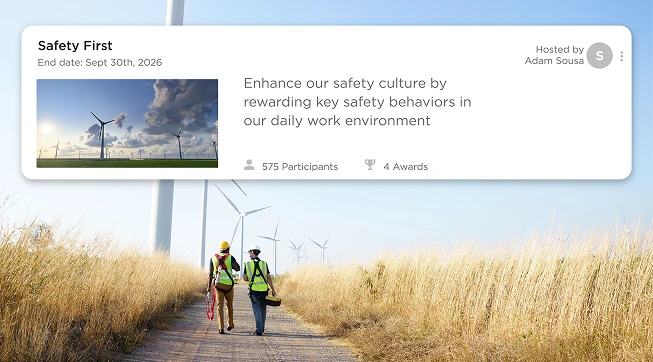
Some organisations worry that recognising care-oriented behaviours may reduce accountability, but research from O.C. Tanner’s 2026 Global Culture Report demonstrates that caring for employees is a pathway to a thriving, sustainable workforce. Mental health outcomes improve when organisations provide support, and highly supported employees see lower odds of probable depression (–47%) and burnout (–88%).
Organisations with healthy performance combine high expectations (clarity, standards, and accountability) with high support (care, recognition, trust, and resources). This balance enables sustained performance without burnout. Here, recognition becomes the mechanism that connects effort to meaningful outcomes without diluting standards.
How can recognition be used to embed safety within culture? Before you can give recognition, you need to clearly define safe behaviours, align your recognition programmes to those behaviours, and track leading indicators alongside outcomes.
From there, you can train employees and leaders to recognise effectively:
Middle managers and supervisors play a critical role in this process, translating organisational expectations into daily signals that shape how safe it feels to speak up and act with care.
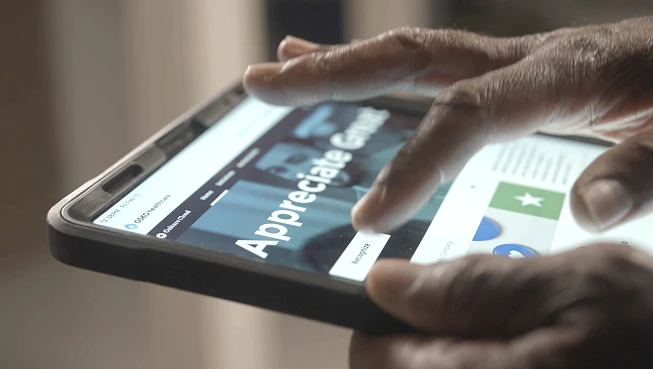
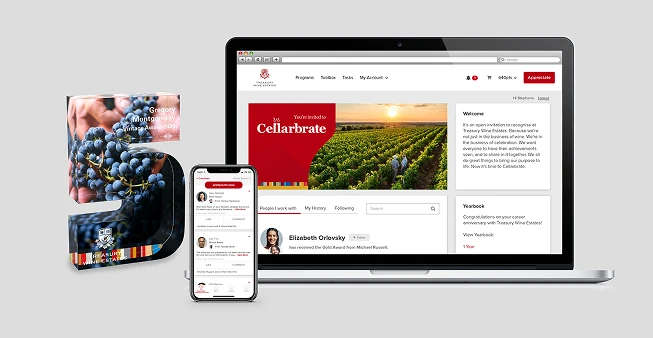
Treasury Wine Estates (TWE) uses recognition to help embed care while also maintaining a focus on safety and performance. As part of their ongoing commitment to care for their people, they:
As a result, TWE’s annual engagement and inclusion surveys have shown that safety and care are factors often rated highly. This approach demonstrates how recognition and visible care can shift safety from a compliance obligation to a shared cultural value, ensuring that proactive safety behaviours become part of everyday practice.
“It’s about creating an environment that supports both the mental and physical health of employees. In a high-performance culture, care often gets overshadowed by execution and delivery. The pandemic, for us, highlighted the need to rebalance – moving towards a culture where psychological safety and accountability coexist. When people feel safe and valued, they’re more willing to challenge the status quo, share ideas, and innovate.”
—Leon Butler, Global Manager, Performance & Reward at Treasury Wine Estates
Organisations don’t build culture through policies alone. Culture is shaped by what is noticed, reinforced, and repeated every day.
When recognition consistently highlights behaviours that protect people, it sends a powerful signal. It tells employees that safety doesn’t compete with performance, it enables it.
In environments where risk is real and pressure is constant, strategic recognition becomes more than encouragement. It becomes infrastructure, quietly embedding care into performance, and performance into care.
O.C. Tanner's Culture Cloud® employee recognition platform is a leading choice for companies across Australia and New Zealand looking to strengthen workplace culture through meaningful recognition.
.svg)