Updated on
September 15, 2026
15 September 2026
Key takeaways:
Most recognition programmes track activity, but not all of them connect the dots between activity and cultural impact.
Good recognition data shows you not just who is being recognised, but where appreciation is missing, which teams are at risk, and whether managers are showing up for their people.
Culture Cloud by O.C. Tanner gives HR leaders and managers the culture analytics dashboards and insights to move from reporting to action.
Most recognition platforms will tell you how many recognition moments happened last quarter. That number has its place. But it doesn't tell you which teams are being left out, which managers aren't recognising their people, or which employees may become flight risks.
That gap between activity data and actual insight you can act on is where most recognition programmes stall. Organisations end up with reports that show adoption rates but not what's driving them, utilisation charts that don't explain what they mean for retention, usage numbers that look fine but miss issues percolating beneath the surface.
O.C. Tanner’s Culture Cloud is built to close that gap. The dashboards and employee recognition analytics available through Culture Intelligence show you what's happening in your recognition programme, but maybe more importantly, they show you what the usage data means and what to do about it. That's a different kind of tool, one that builds on reporting to clarify next steps for leaders and managers.
Which recognition metrics should you actually be tracking?
Before getting into culture analytics dashboards, it helps to know what you're looking for. The most useful recognition reporting covers five dimensions: reach, frequency, distribution, quality, and outcomes. Together they give you a complete picture of how recognition is working, and where it isn't, including how to measure the return on your investment.
Reach: Who is participating?
Reach is the percentage of employees who've given or received recognition in a given period. Low reach is usually the first sign that something is off. It might point to a communication gap, a tool that's hard to access, or a culture where recognition hasn't yet become the norm. High reach is a good signal, but it's not the whole story.
Frequency: How often is recognition happening?
If recognition is only happening a couple times a year, that’s not a recognition culture. Frequency data shows how often employees are being appreciated and helps you spot teams where recognition is sporadic or seasonal rather than consistent. Consistent, frequent recognition is what actually shifts culture over time.
Distribution and equity: Where is your recognition experience uneven?
This is one of the most useful employee engagement metrics you can track. Distribution reporting shows whether recognition is spread evenly across your organisation, or pooling in certain teams and skipping others entirely. Recognition gaps and culture gaps tend to show up in the same places. If certain groups are consistently being overlooked, that's worth knowing sooner rather than later.
Quality: Is recognition meaningful?
Quantity and quality aren't the same thing. Quality reporting looks at whether recognition is specific, values-aligned, and genuinely tied to contribution, rather than generic or formulaic. A 90% appreciation rate means less if the recognition itself is hollow.
Outcomes: What is recognition actually changing?
This one requires the most nuanced approach to reporting and is arguably the most important.
Are people staying longer? Are they more engaged? Are they progressing along their career pathways? Outcome data connects the dots between what's happening in your recognition programme and what's happening with your people.
What do Culture Cloud dashboards help you see and do?
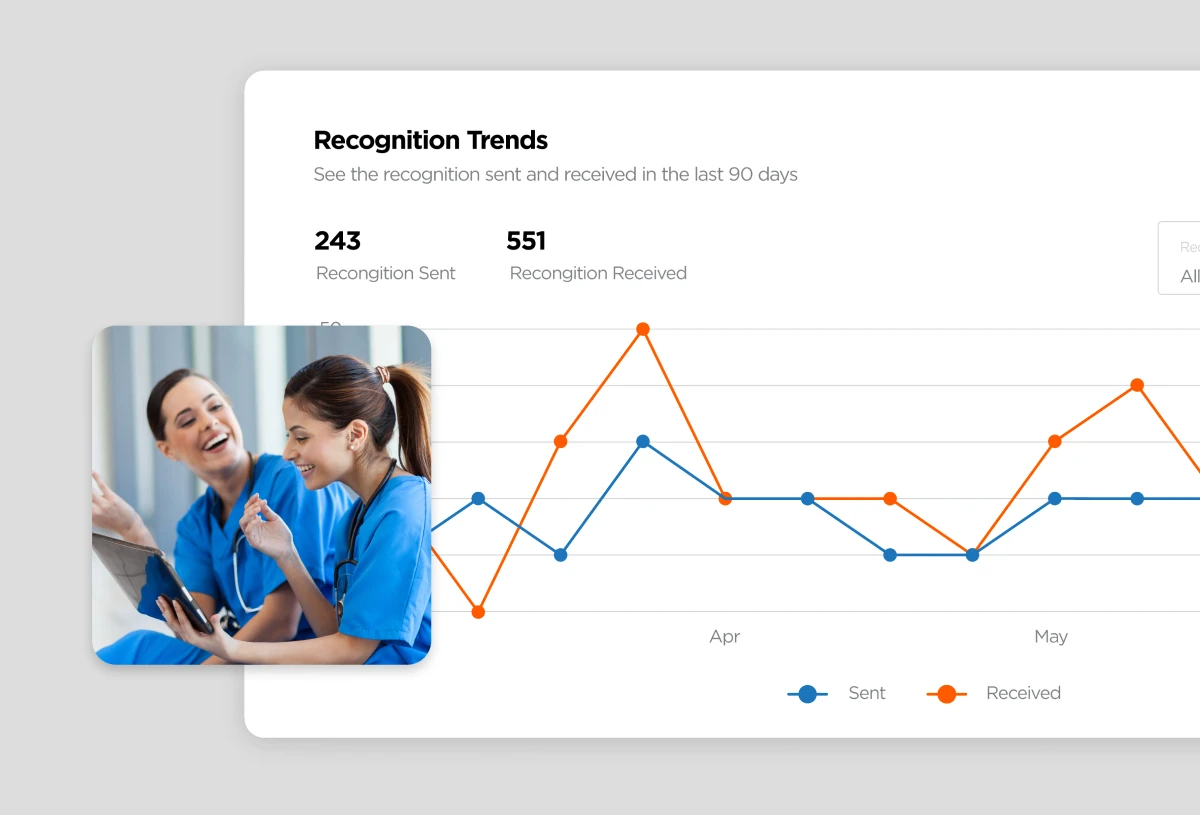
Culture Cloud gives different users different levels of visibility depending on their role. HR administrators get a broad view of programme health across the organisation while managers get specific insight into their own teams. And Culture Intelligence dashboards articulate the patterns that matter most for retention and culture. With 20+ standard reports and dashboards available out of the box, here's how each layer works.
Programme admin analytics: The full programme view
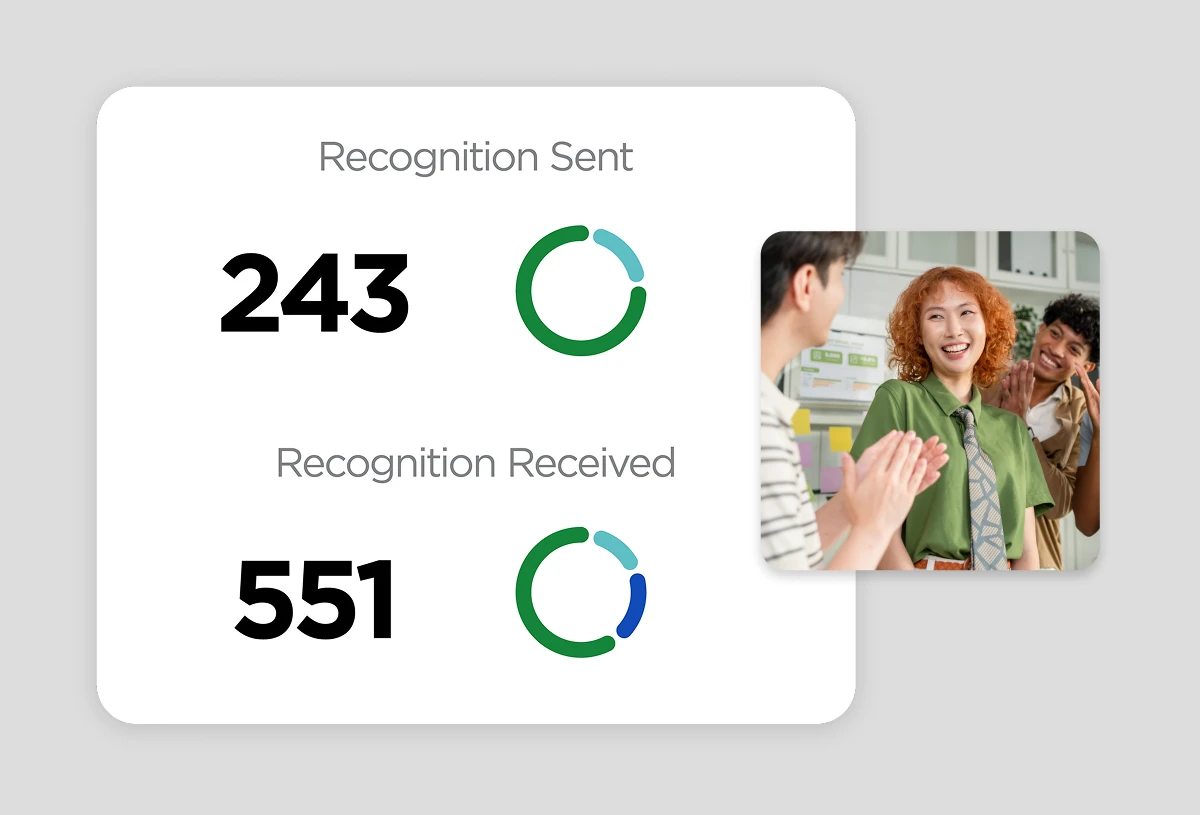
Culture Cloud gives HR and programme administrators a centralised view of recognition programme performance across the organisation. Through real-time dashboards and reports, admins can monitor participation, reach, adoption rates, recognition activity, utilisation trends, and reward redemption. They can also track budgets and spend throughout the year, helping ensure recognition funds are being used effectively and preventing over- or under-spending.
The admin view is designed to support ongoing programme management as well as executive reporting. Many organisations use monthly reporting to monitor programme health and quarterly reviews to share recognition trends, participation data, and culture insights with leadership teams. With exportable and scheduled reports, administrators can easily provide stakeholders with a clear picture of programme impact.
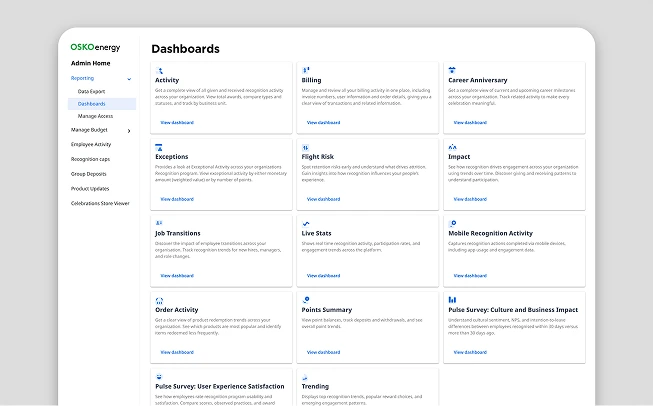
Programme admin analytics help you:
- Monitor participation, reach, and adoption
- Track recognition budgets and spending
- Identify under-engaged teams or locations
- Share programme performance with executives
- Measure long-term recognition trends
Examples of admin analytics insights:
- Recognition participation by business unit, location, or department
- Programme adoption and utilisation trends over time
- Budget allocation, spend, and redemption activity
- Recognition activity levels across teams and employee populations
- Scheduled reports and executive-ready programme summaries
My Team: The manager view
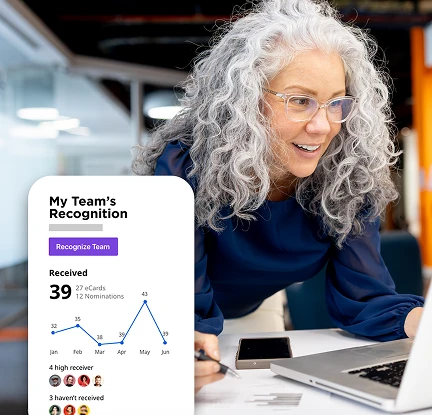
The My Team dashboard in Culture Cloud gives managers visibility into recognition activity for their direct reports. Unlike the organisation-wide admin view, My Team is permission-based and limited to the manager’s own team and reporting structure.
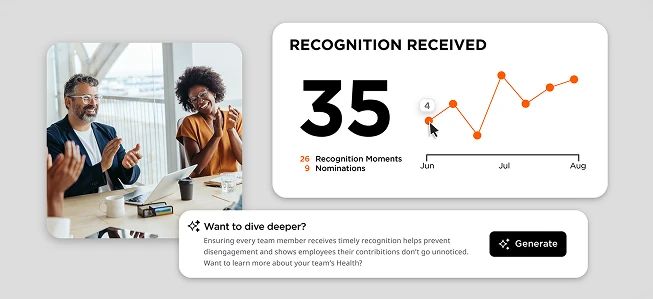
Leaders can see who is being recognised, who is recognising others, and where recognition may be lacking. Views such as Connections, Values, and Health help managers understand team collaboration, values, alignment, and whether employees are receiving appreciation regularly.
With this level of visibility, managers can identify recognition gaps before they affect engagement. Managers also receive reminders and insights that encourage timely recognition and help reinforce positive recognition habits.
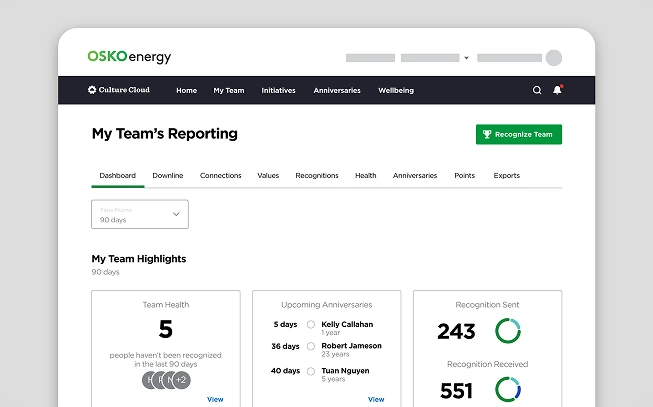
Use My Team to:
- Spot employees who may be overlooked
- Reinforce company values through recognition
- Strengthen team connections and collaboration
- Receive reminders to recognise employees regularly
- Build more consistent recognition habits
Examples of manager insights:
- Which employees have recently received recognition—and which haven't
- How team members are recognising one another
- Collaboration and recognition activity across departments
- Which company values are being reinforced most often
- Team members who may benefit from additional appreciation or support
Culture Intelligence: Flight risk and job transitions
Culture Intelligence helps organisations identify important workforce patterns connected to recognition. The Flight Risk dashboard highlights groups where recognition levels and recognition trends may indicate elevated retention risk. This view surfaces patterns and indicators that can help leaders strengthen connection and appreciation before disengagement grows.
The Job Transitions dashboard focuses on employees experiencing promotions, lateral moves, team changes, and other role transitions. It helps leaders understand whether recognition is occurring during these important moments and where support may be needed. Access to these insights is role-based and permission-controlled, ensuring recognition data is used appropriately to guide leadership action rather than evaluate individual employees.
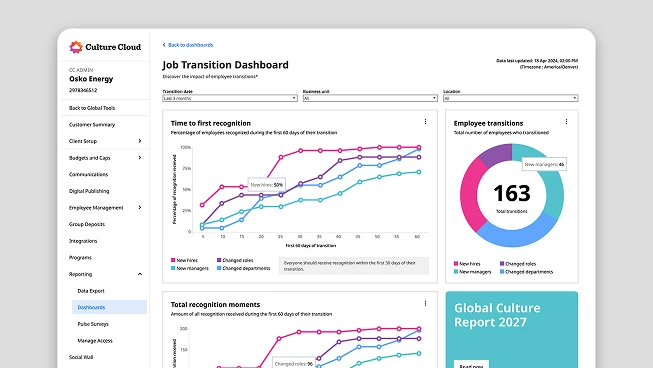
You can use Culture Intelligence to:
- Identify recognition patterns associated with retention risk
- Understand where appreciation may be declining
- Support employees through promotions and role changes
- Recognise transition moments before disengagement occurs
- Prioritise leadership attention where it can have the greatest impact
Examples of Flight Risk insights:
- Groups receiving significantly less recognition than organisational averages
- Areas where recognition activity has declined over time
- Trends that may correlate with increased retention risk
- Recognition gaps across departments, geographies, or employee populations
Examples of Job Transition insights:
- Recognition activity following promotions or role changes
- Employees who recently moved teams or responsibilities
- Recognition trends during onboarding into new positions
- Transition groups receiving less support than expected
How do you turn recognition insights into action?
Employee recognition analytics and data are only useful if they translate into meaningful changes and improvements. Organisations use Culture Cloud insights to act on three of the most important culture challenges: attrition, manager effectiveness, and values reinforcement.
Reduce regrettable attrition
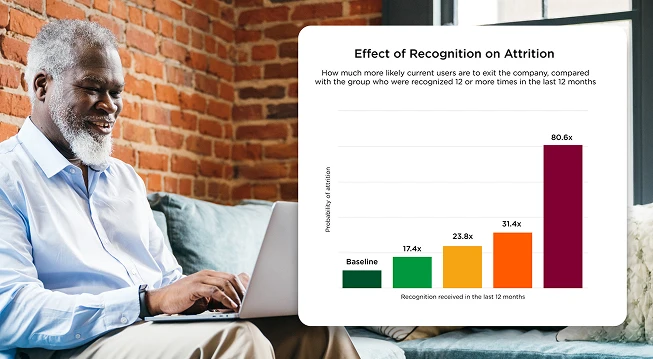
Recognition is an early warning sign. When employees stop getting recognised, or get recognised a lot less than before, they're more likely to disengage and eventually quit. Spotting this pattern early gives HR leaders and managers real time to step in, before flight risk turns into a resignation.
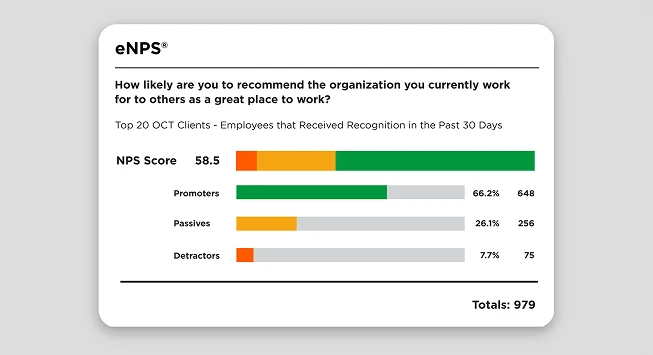
The research backs this up. ICF, a global technology and consulting firm with over 9,000 employees, found that recognition accurately predicted employee turnover 91% of the time. Their programme, powered by Culture Cloud, turned that insight into something their HR team could actually use: a direct, trackable link between recognition and retention.
The Culture & Business Impact dashboard makes this easy to see. It compares employees who've been recognised in the last 30 days against those who haven't, showing the difference in NPS scores and likelihood to stay. Recognition shows up in both numbers, and so does its absence.
The goal is to use recognition data to reach people before they start to feel invisible.
Strengthen people leader effectiveness
Managers have more impact on culture than almost anything else, and recognition is a big part of why. When managers show up for their people, people notice. When they don't, that gets noticed too.
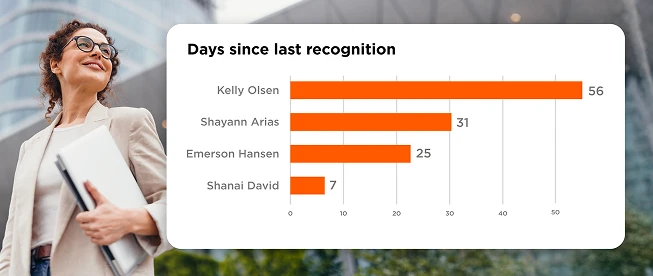
The My Team dashboard shows managers exactly how they're doing by surfacing who on their team has been recognised recently, and who hasn't. If someone hasn't been appreciated in a few weeks, managers get a nudge. It's a simple prompt, but it encourages recognition behaviour that can be easy to forget when you're busy.
"Reports give us insight into what is happening throughout our branches so we can acknowledge employee great work on a regular basis."
—Heritage Bank
Reinforce company values at scale
Most organisations have their values written on the wall or on their ‘About Us’ page. Employee recognition analytics and data can tell you whether those values are actually showing up in the day-to-day employee experience.
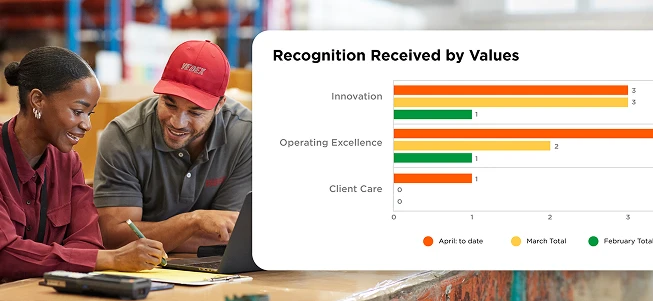
When recognition is tied to values, you can see which ones people are calling out most, which ones are barely mentioned, and whether certain teams are living them differently than others. That's useful for any HR leader trying to figure out if a culture initiative is actually taking hold. It's also how O.C. Tanner thinks about building recognition programmes that reflect what organisations actually stand for, connecting the everyday moments to the bigger picture.
Recognition reporting that actually means something
Most recognition programmes collect data, but not many do anything useful with it.
Culture Cloud is designed to be different. HR administrators get a clear view of how the programme is running. Managers see what's happening on their teams. Culture Cloud reporting and analytics show the patterns that matter most, like who's being recognised, who isn't, and where the risks are before they become problems.
Ready to see what your recognition data can tell you?
Top