
Updated on
November 4, 2026
4 November 2026
Key takeaways:
Employee incentive programmes work best when they're tied to specific behaviours. The reward also needs to feel worth earning to the people pursuing it.
Incentives are different from everyday recognition, but the two work hand in hand.
O.C. Tanner's Initiatives tool makes it easy for organisations and individual teams to build incentive programmes that drive real business results.
Most employee incentive programmes are built around a simple idea: if you reward the right behaviour, people will repeat it. That instinct is correct. Putting it into practice is where things get complicated.
Incentive plans that chase short-term activity often produce a temporary spike in the desired behaviour, but then a return to baseline once the reward is gone. Programmes that drive lasting change are designed differently. They connect rewards to behaviours that actually matter, and they build momentum that outlasts any single campaign.
This article covers what makes employee incentive programmes work, the most common types of workplace incentives, and how to design an incentive plan your organisation can successfully sustain.
What are rewards and incentives in the workplace?
Rewards and incentives tie recognition directly to specific goals or behaviours. When an organisation wants employees to practice a certain behaviour, hit a particular target, or develop a specific skill, an incentive programme creates a clear link between that action and a meaningful reward.
Think of a manufacturing floor leader wanting to improve safety practices. They create a programme that rewards employees with points each time they demonstrate a safe behaviour or report a near-miss. The reward is the incentive, the behaviour is the goal, and the points are the currency that connects the two.
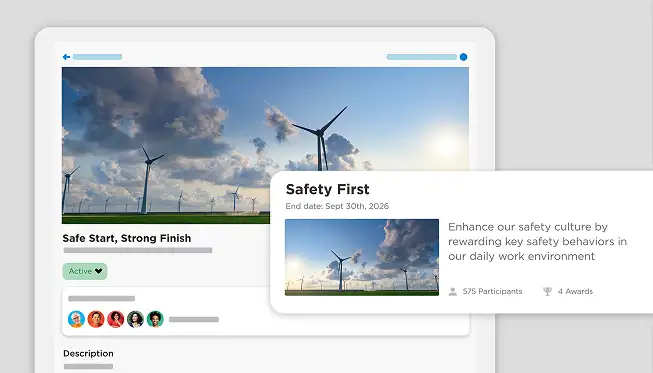
It's worth distinguishing incentives from day-to-day employee recognition. Recognition demonstrates appreciation for who employees are and what they contribute, often spontaneously and in the moment. Incentives are more structured; they set a goal in advance and reward employees for achieving it. The two approaches complement each other and work best as part of a holistic recognition strategy, not as substitutes for each other.
Why do employee incentive programmes matter right now?
Organisations are under more pressure than ever to do more work with the same headcount. Hybrid and distributed workforces introduce certain complexities. Skill gaps are widening as industries change faster than training programmes can keep up. And the behaviours that produce business results, like safety, productivity, learning, and referrals, are often the ones hardest for leadership to see.
Well-designed incentive programmes address all of this directly. They make desirable behaviours visible, tangible, and worth pursuing. Harvard Business Review research consistently shows that recognition and incentives improve employee motivation, especially when they're customised to the people involved. A one-size-fits-all programme rarely moves the needle the way a well-targeted one can.
Incentive programmes also give organisations a way to align employee behaviour with strategic priorities, such as reducing safety incidents, accelerating skill development, or improving customer satisfaction scores. When the incentive is clear and the reward is meaningful, people pay attention.

What are the most common types of employee incentive programmes?
Incentive programmes take different shapes depending on what behaviour they're trying to drive. Here are the types that many organisations reach for most.
Performance incentives
Performance incentives are exactly what they sound like: rewards tied to results. A team hits a goal, an individual completes a project, a department clears a backlog. The programme works at any scale, from a single team to the entire organisation. The one thing that makes or breaks a successful performance incentive is clarity. The more specific the target, the more motivated people are to hit it.
Sales incentives
Sales incentives are among the most common performance-based programmes in enterprise organisations. Quota attainment, accelerators, and contests all fall into this category. The difference between a good sales incentive and a great one is usually the reward. Cash bonuses create short bursts of activity. Points-based rewards tied to something meaningful tend to create more sustained motivation. The team initiatives solution in Culture Cloud® gives sales leaders a flexible way to run targeted campaigns without requiring a separate system.
Safety incentives
Safety incentive programmes reward employees for demonstrating compliant behaviours, reporting hazards, completing training, and reducing incidents. They're especially valuable in industries like manufacturing, logistics, and transportation, where safety performance has direct consequences for both employees and the business.
"We have statistical and anecdotal evidence that receiving the awards has a positive correlation with the reduction of accidents."
—Susan Henry, HR Business Advisor, FedEx
Learning and development incentives
When organisations want employees to pursue certifications, complete upskilling programmes, or develop leadership capabilities, incentives create meaningful motivation to do so. Learning incentives are particularly effective when the reward is tied directly to the completion of the programme, keeping the feedback loop tight between the effort and the recognition.
Wellness incentives
Wellness incentive programmes reward employees for participating in health initiatives, meeting fitness goals, or engaging with wellbeing programmes. They're a natural complement to a Total Rewards strategy, and they work especially well when the recognition is visible to peers and leaders, reinforcing that the organisation genuinely values employee health.

Referral incentives
Employee referral programmes are one of the most cost-effective talent acquisition strategies available to large organisations. Rewarding employees for successful referrals keeps the programme top of mind and signals that the organisation trusts its people to know who would thrive in the culture. Points-based referral incentives work well because they can be redeemed for something meaningful, rather than a one-time cash payment that quickly fades from memory.
How do you create an effective employee incentive plan?
The structure of an incentive programme matters as much as the reward. Here are the five elements that differentiate programmes that create real behaviour change from ones that create temporary spikes.
1. Clear objectives tied to business outcomes
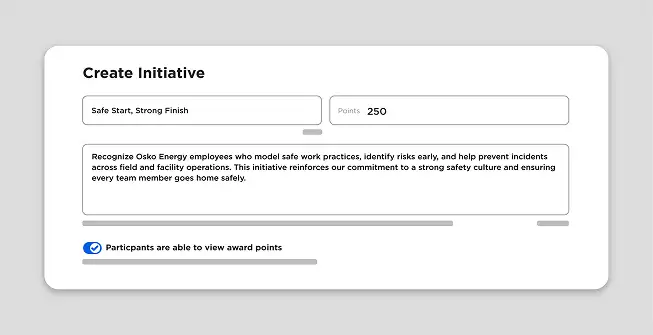
Every incentive programme should answer the question: What specific behaviour are we trying to drive, and why does it matter to the business? Vague objectives produce vague results. When the goal is concrete, measurable, and connected to something the organisation genuinely cares about, employees are more likely to take it seriously.
2. Meaningful rewards that give employees choice
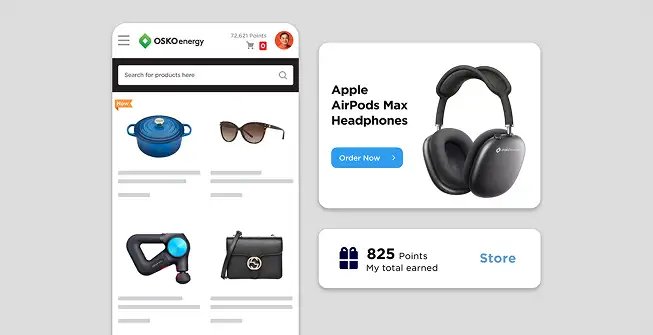
A reward is only motivating if employees actually want it. Points-based systems that allow employees to choose their own rewards consistently outperform programmes that offer a fixed prize. This is especially important across large and distributed workforces, where what motivates a frontline employee in one location may be completely different from what motivates someone in another. For example, the Culture Cloud Award Store gives employees a wide range of options across gift cards, merchandise, experiences, and travel.
3. Transparent rules that feel fair
Incentive programmes break down fast when employees feel the rules are unclear or applied unevenly. Clear criteria, visible progress, and equitable access to the programme across roles and locations are what make an incentive programme feel worth participating in. Fairness is what determines whether employees trust the programme enough to consistently engage.
4. Timely reinforcement
The longer the gap between a behaviour and the reward, the weaker the motivational connection. Programmes that recognise employees immediately after a qualifying behaviour are significantly more effective than those that batch rewards at the end of a quarter. Real-time, or near-real-time, reinforcement is one of the most reliable ways to drive lasting behaviour change.
5. Measurement and visibility
An incentive programme you can't measure is one you can't improve. Tracking participation rates, goal completion, and business outcomes helps organisations see what's working and adjust what isn't. Visibility into the data also helps HR and operations leaders make the case for continued investment. Dashboards, notifications, and reporting tools enabled with O.C. Tanner’s Culture Intelligence™ help programme administrators track incentive performance and demonstrate ROI.
How does O.C. Tanner's Initiatives tool help organisations design meaningful incentives?
O.C. Tanner's Initiatives is the incentive management tool built into the Culture Cloud recognition platform. It gives HR administrators, operations leaders, and individual team managers a way to create targeted incentive programmes that tie specific behaviours to meaningful rewards.
What makes Initiatives particularly flexible is that it works at every level and within every function of the organisation. A global HR team can run a company-wide safety campaign. A single department leader can build a team-specific programme to hit a monthly goal. Because Initiatives lives inside the same platform employees already use for recognition, participation doesn't require learning a new tool or clicking into a different programme.
Here's how three organisations have used Initiatives:
Wellstar Health System
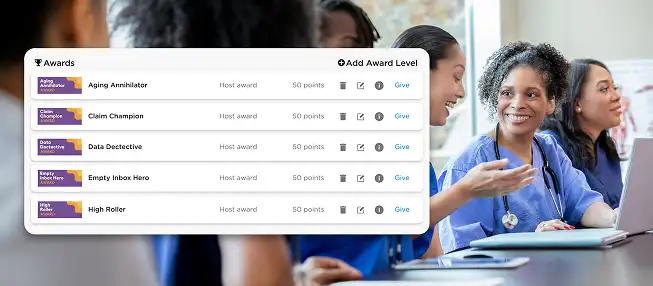
Wellstar used Initiatives to tackle a specific operational problem: aging accounts receivable. They built a recognition-powered incentive campaign that rewarded revenue cycle employees with points for clearing backlogs and hitting targets. In three months, the programme reduced aged account balances by $13 million.
3M
3M uses Initiatives as part of their Everyday Wins programme, giving teams across the organisation the ability to run targeted incentive campaigns alongside their broader recognition strategy. The platform reached 94% of their 93,000 employees, with nearly 2 million recognition moments in the first year.
Navy Federal Credit Union
Navy Federal Credit Union uses individual Initiatives to allow different service teams and departments to build recognition campaigns tied to their specific work. Teams use Initiatives to recognise employees for volunteerism, wellbeing participation, DI&B efforts, and supporting service members through career transitions. The result: 92% of employees feel they have special and unique benefits at Navy Federal Credit Union.
Should employee incentives be monetary or non-monetary?
Both work. The question is which works better for the specific behaviour you're trying to drive and the specific employees you're trying to motivate.
Cash and cash-equivalent rewards are direct and easy to understand. They work well for quota-based sales programmes and short-term performance sprints where the financial value is transparent and motivating.
Non-monetary incentives, including points redeemable for experiences, travel, merchandise, or gift cards, often outperform cash for sustained behaviour change. Harvard Business Review research shows that symbolic and experiential rewards can significantly improve motivation, especially when they're customised to what employees actually value. A reward someone chooses for themselves tends to mean more than a check that disappears into a bank account.
Points-based systems give organisations the flexibility to offer both. Employees earn points and choose how to redeem them. That combination of structure for the organisation and choice for the employee is what makes behaviour-based rewards programmes most effective over time.
Building incentive programmes that last
The most effective employee incentive programmes don't just spike activity. They build habits. When the goal is clear, the reward is worth pursuing, and recognition is timely, employees don't just change their behaviour for the duration of the campaign. They start doing it because it becomes how they work.
That's what distinguishes an incentive strategy from an incentive event. And it's what O.C. Tanner's Initiatives is designed to support: programmes that organisations can run at any scale, measure over time, and build into the recognition culture they already have.
Turn Recognition Into Real Connection
Top
Explore other resources
No items found.