Updated on
October 23, 2026
23 October 2026
When designing or improving an employee recognition solution, a common question comes up: should we use monetary or non-monetary recognition?
For many organisations, the answer tends to be tied to budgetary constraints. But employees don’t view recognition as a budget line item—they see it as a way for organisations to show they see, value, and care about them.
New global research from the O.C. Tanner Institute shows that the most effective, impactful recognition solutions incorporate both monetary and non-monetary recognition. When organisations provide meaningful recognition experiences alongside tangible awards, employees feel more appreciated and connected.
A combination of non-monetary and monetary recognition has higher impact
Some organisations think about starting with just non-monetary recognition: thank you notes, emails, verbal praise, and public recognition. Others invest directly in gift cards, redeemable points, or cash awards.
Both approaches have value, but employees respond most positively when they experience a combination of the two.
According to a recent experiment conducted by the O.C. Tanner Institute, employees who worked in organisations with a combination of monetary and non-monetary recognition consistently rated their organisation more positively than those whose programmes only focused on a single approach.
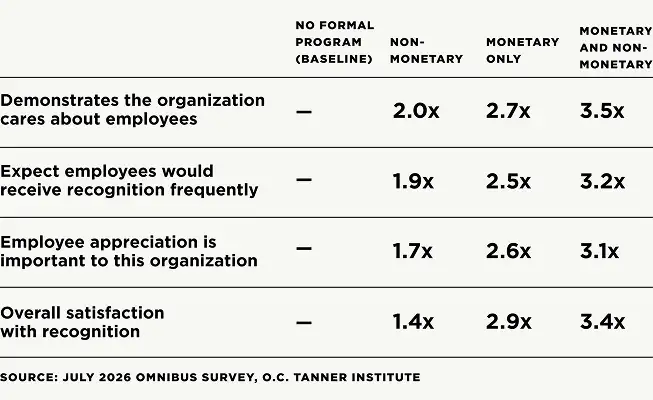
Having a non-monetary-only programme had more impact than no recognition at all, and monetary-only recognition programmes fared better than non-monetary-only recognition programmes.
But it is the combination of both that had the greatest effect on how employees view recognition and their organisation. Non-monetary recognition conveys the appreciation, while monetary recognition reinforces the value of the contribution.
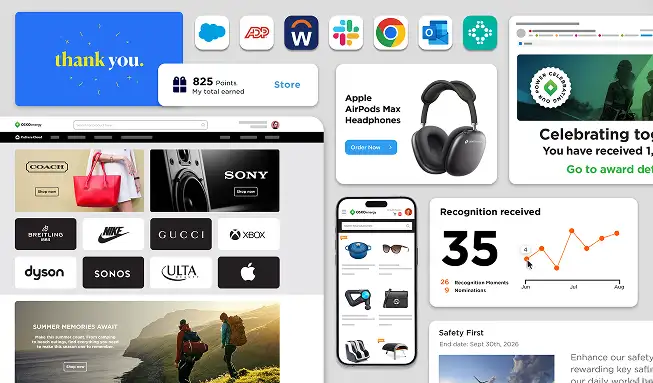
O.C. Tanner’s recognition solutions and tools offer numerous non-monetary and monetary ways to say thank you every day, in the most meaningful ways.
Recognition doesn’t just impact how employees feel. It also impacts how they connect with one another. In another study, employees who received public, monetary recognition were more likely to feel connected to their teams, help them again in the future, and connect outside of work than employees who just received public recognition, an ecard, or even monetary-only recognition.
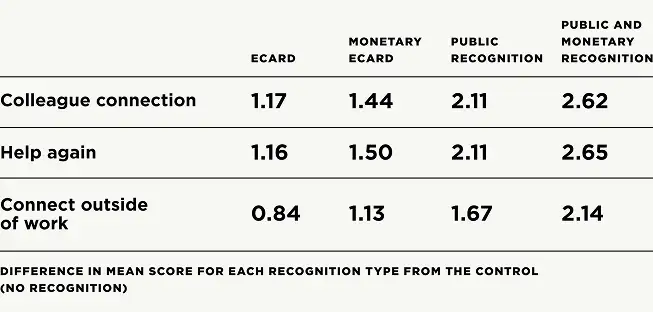
Tip: Having any type of recognition programme (monetary or not) is more effective than no recognition programme at all, but if your organisation is currently relying solely on recognition cards (e-cards), consider adding monetary ecards for more impact.
Recognise more people, more often, in more ways, with a variety of tools that make recognition public, shared, and integrated.
Award choice matters
For monetary recognition programmes, award choice and type matter.
We asked employees to think of their most ideal recognition experience and which types of awards would be most meaningful to them. The results show a wide range of preferences.
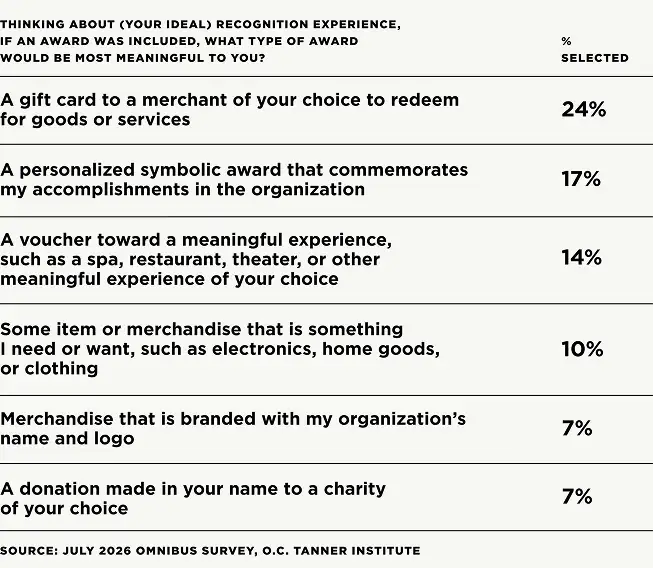
Since there is no single award that works for everyone, the most successful recognition solutions incorporate a variety of meaningful awards so employees can choose something they love.
A thoughtful, intentionally-designed award strategy leads to a 10x higher likelihood that employees feel personally invested in helping the organisation succeed.

Personalised, custom awards celebrate career moments in memorable ways that build pride and inspire performance.
Interestingly, unlimited choice isn’t always better either.
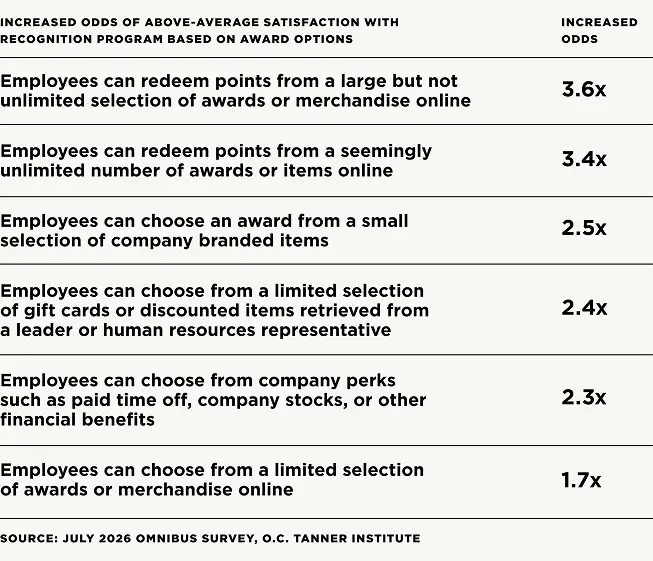
Employees reported the highest satisfaction when they could redeem points from a large (but not unlimited) selection of awards online. Programmes with unlimited choice performed slightly worse. This may be caused by decision fatigue that comes with too many options.
Having a large selection of awards to choose from also led to higher satisfaction than traditional “rewards” like PTO, stock, and other financial and cash benefits. Awards that are personally selected by employees tend to be more memorable than cash awards, serving as a lasting reminder of the employees’ great work and achievements.
O.C. Tanner’s Global Rewards Marketplace offers countless rewards for every person and preference.

Build a recognition strategy that helps employees feel valued
When organisations combine monetary and non-monetary recognition, it leads to more frequent, more meaningful recognition.
Design your recognition strategies with employees in mind. Ensure employees have a large (but not unlimited) selection of awards to choose from, including personalised awards, and that recognition is given publicly and regularly. Employees will feel more appreciated and connected and do their best to help your organisation succeed.
See how Ensemble Health partnered with O.C. Tanner to provide employees with a wide selection of meaningful, personal awards to celebrate achievements and build company pride.

“The flexibility of choosing something for myself or someone I love, something I need in the kitchen or a gadget I can use or something I can wear, something that doesn’t have to be expensive but is of great quality, that’s supported by great customer service from O.C. Tanner—that’s something that is hugely appreciated by our associates.”
—Richard Lewis, AVP, Culture and Inclusion, Ensemble Health
Turn Recognition Into Real Connection
O.C. Tanner’s solutions combine meaningful appreciation with personal awards to create unforgettable employee experiences.
Top