
Updated on
January 22, 2026
22 January 2026
Empathy in the workplace is increasingly important for leaders to consider and practice. But what does it mean to be an empathetic leader? How can we put an abstract concept into action?
Recent research from the O.C. Tanner Global Culture Report reveals a transformative approach called practical empathy. Rooted in understanding and action, practical empathy transcends sentimentality. In other words, an engaged empathetic leadership style can be so much more than mere listening.
So what is empathetic leadership? Let’s explore what leadership looks like with the practice of practical empathy—an approach that can help redefine company culture and drive positive business outcomes.
Empathy has a meaningful, measurable impact on the employee experience. Read our eBook to dive deeper into the data.

Why does empathetic leadership matter?
In a survey of 150 CEOs by Harvard Business Review, 80% said empathy and leadership were keys to success. Despite this majority, there's a lack of consensus on how to become an empathetic leader. Many recognise empathy as a shared feeling but struggle to translate it into meaningful action that connects with people.
A study of 889 employees by Catalyst found that when leaders practice empathy it leads to several positive effects in the workplace:
- Innovation. When workers viewed their leaders as empathetic, they reported feeling more innovative—61% of employees compared to only 13% of employees with less empathetic leaders.
- Engagement. 76% of people who experienced empathy from their leaders reported they were engaged compared with only 32% who experienced less empathy.
- Retention. 57% of white women and 62% of women of colour said they were unlikely to think of changing jobs when they felt their life circumstances were respected and valued by their companies. However, when they didn’t feel that level of value or respect for their life circumstances, only 14% and 30% of white women and women of colour respectively said they were unlikely to consider leaving.
- Balance. When people felt their leaders were more empathetic, 86% reported they are able to navigate the demands of their work and life—successfully juggling their personal, family and work obligations. This is compared with 60% of those who perceived less empathy.
As our research has shown, modern leaders build relationships through understanding, championing, and advocating for team members. Strong leaders naturally improve the culture of their organisations and increase the odds of having a thriving workplace community by 269%.

At the heart of modern leadership lies practical empathy, a people-centric approach grounded in understanding and supported by meaningful action. This pragmatic, thoughtful approach helps to reduce burnout among leaders and foster a sense of belonging among employees.
Get the complete practical empathy story in the “Practical Empathy” chapter of our Global Culture Report.
Effective empathy is active empathy
Practical empathy in the workplace extends beyond the traditional sharing of feelings to encompass a proactive approach, one that cares for the needs of employees and takes action on their behalf. Our research identifies six key components of practical empathy:
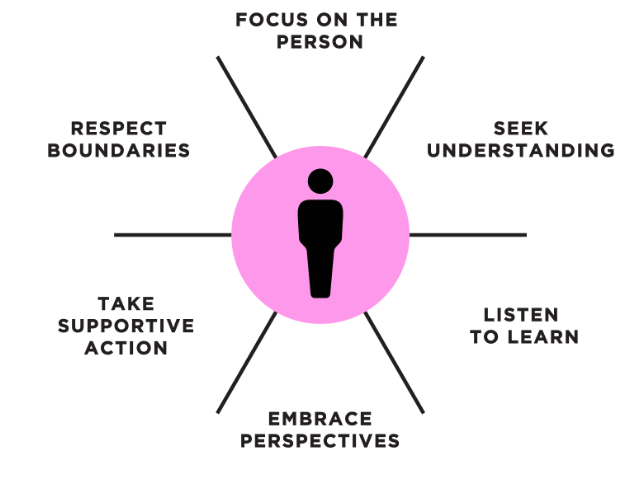
The six components of practical empathy in the workplace.
- Focus on the person. Prioritise the individual’s needs, challenges, and potential.
- Seek understanding. Solicit input and feedback on policies, programmes, and their day-to-day employee experiences (both negative and positive).
- Listen to learn. Actively listen to the person with genuine interest; don’t just demonstrate concern.
- Embrace perspectives. Remain open and accepting of different viewpoints.
- Take supportive action. Go beyond simply caring and take action on their behalf.
- Respect boundaries. Have support resources in place for consistency and so leaders don’t have to act as comprehensive support systems.
The crucial aspect of practical empathy lies in the follow-through, where genuine concern translates into concrete actions. This might involve offering flexible work arrangements, empowering employees with more autonomy, providing additional resources, or engaging in collaborative problem-solving.
While practical empathy doesn't always yield immediate solutions, it prioritises acknowledgment and meaningful response to the challenges individuals face.
The power of understanding with boundaries
A survey of more than 1,000 employees in the U.S. found that 52% of respondents feel that corporate attempts at empathy are inauthentic. Employees want to feel understood, appreciated, and valued as individuals. Understanding is foundational to practical empathy, regardless of a leader's tenure.
According to the Harvard Business Review, there are four ways that leaders can practice empathy in a more authentic way:
- Actively listen and be curious. When an employee is vulnerable or discussing their personal lives, how you listen to them can create trust and connection. Try not to think about your turn to speak. Rather, focus on really hearing and understanding their point of view.
- Know that you don’t have to have the answers. Providing solutions to problems comes naturally to leaders. However, employees aren’t always looking for solutions. Sometimes the best thing a leader can do is help someone feel seen and heard.
- Avoid an autopilot response. Empathy is not one-size-fits-all. Take in all the information you can before responding to the employee’s specific situation or needs.
- Always make the time. Even if you can’t listen to someone in the exact moment they come to you, be open about what else you have going on. Then offer to meet with the employee as soon you can. Schedule that meeting and make sure it happens.

Cultivating emotional intelligence and actively working to help your employees feel understood will go a long way to transforming your work culture. That being said, leaders are busy people too and also have their own needs.
Setting boundaries is crucial for sustaining practical empathy, as it can otherwise strain leaders emotionally and interfere with their work. Organisations must assist leaders in balancing their mental health while meeting employee needs by providing external resources like mental health services and counselling, which do not diminish employees' trust or connection with their leaders.
For more data and insights on supporting leaders, see our Global Culture Report Chapter, “Leadership at Risk.”
Modern leaders—characterized by mentorship, advocacy, and inspiration rather than control—prioritise empathy and contribute to better organisational outcomes. Perceived empathy in leaders increases the likelihood of being seen as effective leaders, leading to high levels of employee engagement.

The three key connections leaders create for employees
As the Harvard Business Review notes, “You may not have a solution to every problem or challenge that is brought to your attention, but what matters is that you genuinely care for people, validate their feelings, and are willing to offer support.”
How KPMG practices empathetic leadership
KPMG prioritises practical empathy to support its employees' wellbeing and performance, focusing on achievement, mastery, purpose, and fulfillment. The firm actively seeks feedback to improve employee wellbeing and offers extensive mental health resources, including therapy and caregiver programmes.
Leaders are relieved of non-core tasks to concentrate on modern leadership and personal needs, with clear boundaries to avoid overextending into therapeutic roles.
According to Jason LaRue, Partner and Total Rewards Leader at KPMG, fostering empathy yields significant returns, with lower medical costs and higher productivity. “We don’t want to turn our leaders into therapists,” says LaRue, “because that’s not good for the individual or the leader.”
Investing in employee wellbeing is not only the right thing to do but also advantageous for business success.

Putting practical empathy to work
To build a people-centered culture, organisations must cultivate practical empathy, work to understand their people, and enable leaders to take action.
Strong leaders naturally improve the culture of their organisations and increase the odds of having a thriving workplace community by 269%.
Champion practical empathy
Establish policies and programmes around empathy that allow leaders to act, but also set boundaries. Equip leaders with tools to help them have conversations and understand their employees’ perspectives, opinions, and struggles.
One-to-one meetings are ideal to facilitate these conversations. Then clearly define where the leader’s responsibility ends and other resources for employees begin.
Seek to understand employees
Invite feedback from employees in surveys, focus groups, town halls, and one-to-one meetings. Get to know their opinions, hopes, and struggles. Even questions like “how are things going outside of work?” are worth asking. This practice of genuine empathy and compassion goes a long way to strengthen connection and community.
Lead with action
Leaders at every level should take supportive action to help meet employees’ psychological needs for autonomy, mastery, and connection at work. This means regularly, proactively meeting with their people, actively listening, and providing support such as removing roadblocks or expressing genuine appreciation.
Action also entails guiding employees to company or outside resources when needed. And the act of recognising employees for great work can significantly increase care and empathy on teams.
Ready to take your work culture to the next level? We’re here to help you learn more about Culture Cloud, the comprehensive platform for delivering impactful recognition at scale.
O.C. Tanner develops ongoing research reports on the trends, statistics, and perceptions that are shaping workplace cultures around the world. Learn more at octanner.com.
Turn Recognition Into Real Connection
Top