
Updated on
October 8, 2026
8 October 2026
Key takeaways:
The fastest way to increase the value of your Total Rewards is to help employees understand what they already have.
Workplace transparency is what turns a list of offerings into something employees trust and use. Research from O.C. Tanner's 2026 Global Culture Report identifies four types of transparency that matter most, and each one applies directly to Total Rewards.
Recognition is the only part of Total Rewards employees experience every week. It's the most practical way to keep the rest of the package visible all year.
Most Total Rewards leaders know the benefits and compensation package they’ve put together for employees is strong. The benefits are real, the investment is significant, and the offerings go well beyond pay and health coverage. The problem is that employees often undervalue their Total Rewards package simply because they aren’t clear on what’s included.
The solution isn't necessarily spending more or adding more options. It's helping employees understand what they already have. Your employee recognition programme can keep that awareness alive throughout the year beyond the annual total compensation statement.
This starts with understanding why the gap exists in the first place. O.C. Tanner's research on modernizing Total Rewards strategies finds that employees increasingly want their rewards to reflect care and growth, not just compensation. And research has found that the issue is rarely a weak package. It's a communication and visibility problem.
Our Total Rewards Checklist is a practical starting point for auditing what you have and how well employees understand their Total Rewards packages.
Why don't employees understand their Total Rewards?
Total Rewards is the term HR uses to describe everything an organisation provides to employees beyond a paycheck: health benefits, retirement contributions, learning opportunities, flexible work, wellbeing programmes, and recognition. It's a comprehensive picture of the full value of employment. The problem is that most employees have never heard it defined that way.
According to research from the O.C. Tanner Institute, fewer than 40% of employees know what "Total Rewards" means, and only 14% of those who do can actually explain it. Some genuinely confuse it with customer loyalty programmes.
Annual Total Rewards statements don't solve this. They arrive once a year, often in a format that employees open, scan for their salary number, and close. Everything else in the package (the retirement contributions, the wellbeing programmes, the learning budget, the flexible benefits) gets buried.
The result is organisations paying for programmes that go unused. Not because employees don't want them, but because they don't know they're there. And that has a real cost.
Employees who actually understand the value of their Total Rewards package are more engaged and more likely to stay. Closing that gap starts with helping employees understand what they already have.

What does transparency have to do with Total Rewards?
For an employee to truly feel the value of their Total Rewards, a few things need to be true.
- They need to know what's available to them personally
- They need to see that their teammates have the same access
- They need to understand why the package is built the way it is
- And they need to trust that the organisation will follow through
All of this boils down to transparency, and it turns out to be one of the strongest predictors of how employees feel about their workplace culture.
O.C. Tanner's Global Culture Report identifies four types of transparency that matter most to employees. When organisations practice all four, the odds of being rated as a great place to work increase 3x.
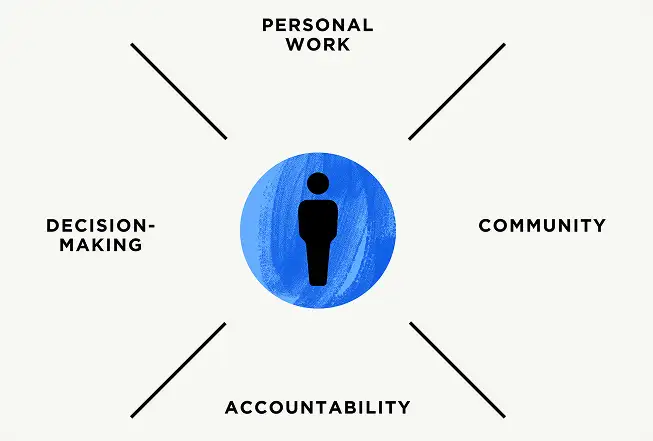
1. Personal work: What your manager tells you matters more than what HR sends
Employees want to know how their pay is structured, what they're entitled to, and how their package connects to their individual role and career path. How that information is delivered matters.
In fact, transparency about personal work is 7x more powerful when it comes from a direct manager than from HR or a leadership email. Benefits communication that flows through people leaders, not just inboxes, lands in a completely different way.
2. Community: What my teammates and peers have access to
Employees take cues from the people around them. When they see a colleague get recognised, hear someone talk about a benefit they're actually using, or watch a teammate celebrated publicly, it makes the organisation's investment feel real.
3. Decision-making: How the package gets built and why
Employees value what they understand. When organisations share how benefits decisions get made, why certain offerings are included, and what changed, employees see Total Rewards as an investment rather than a policy.
4. Accountability: What the organisation commits to and follows through on
Employees need to trust that the organisation will follow through on what it promises. That trust is built through consistency, honest communication when things go wrong, and regular recognition that shows people they're genuinely valued. Without it, transparency is just an idea.
Forbes found that when leaders shared organisational challenges openly and invited dialogue, 63% of employees became strong company advocates, compared to 6% where that transparency was absent.
How do you explain Total Rewards in plain language?
Explaining Total Rewards to employees means using plain language when it comes up. Skip the phrase "Total Rewards" altogether in most employee-facing communications. Talk about the money they take home, the healthcare that covers their family, the retirement contributions being made on their behalf, and the learning budget they can access.
A few practical swaps:
- Instead of "comprehensive benefits package": "Here's what you have access to as part of our team and organisation."
- Instead of listing everything at once: Lead with what matters most to each audience. Financial stability for employees worried about cost of living. Growth and flexibility for early-career employees. Health and retirement for more tenured staff.
- Skip the once-a-year approach. A single annual statement is easy to ignore. Short, timely communications throughout the year, timed to when specific benefits are most relevant, are far more likely to actually reach people.
Most Total Rewards statements are built around every offering and everything accounted for. The problem is that employees don't read them that way. They scan for their salary, maybe their health plan, and close the document. A more useful statement leads with what employees are actually asking: what do I have, and how do I use it? It also makes room for recognition as evidence that this organisation cares about its employees.

How does recognition keep the message of care that Total Rewards communicates visible all year?
Total Rewards is how an organisation demonstrates care for employees through health coverage, retirement, learning opportunities, and wellbeing programmes. Recognition delivers that same message of care every single day. That's the core of why recognition and Total Rewards belong in the same conversation.
O.C. Tanner's 2026 research found that adding integrated recognition to transparency practices can double or triple the positive impact on employee engagement, purpose, and belonging. Recognition that lives inside the tools employees already use, through integrations with HRIS platforms, email, and collaboration tools, means the message reaches people in the flow of their actual work.
Recognition also reinforces individual parts of the package. When someone is recognised for completing a learning programme, it reminds them the learning budget exists and is worth using. When a wellbeing milestone gets celebrated, the wellbeing programme gets back on people's radar. When a career anniversary is marked well, it signals that the organisation is paying attention to the whole arc of someone's time here.
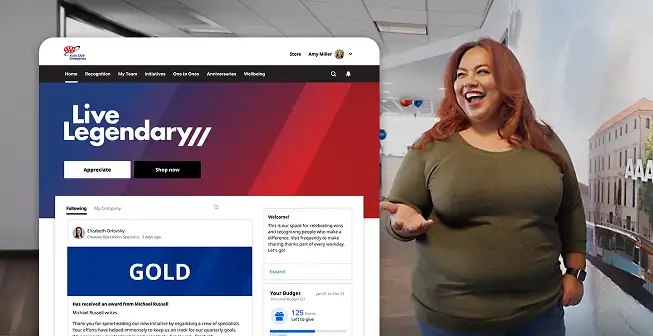
AAA - Auto Club Enterprises made this connection deliberately. With 16,000 employees serving 18 million members, they built their Live Legendary recognition programme directly into their Total Rewards strategy. "Care for our employees is at the heart of our Total Rewards strategy," says Andrew DeCaminada, Vice President of Talent. Recognition is tied to company values, woven into wellness initiatives, and introduced to every employee on day one. The results were a 90% award redemption rate with 82% of employees saying they feel successful in the organisation.
Reach matters too. A benefits communication strategy is only as strong as its ability to reach every employee, including frontline and deskless workers. According to the 2024 Global Culture Report, the majority of the global workforce is offline or deskless. Mobile access, kiosks, and physical touchpoints aren't optional for these employees. They're the only channel that works.
For organisations with many offline or deskless employees, Southwest Airlines and 3M show what's possible when recognition reaches everyone. Southwest saw 97% platform engagement and 359,000 recognition moments in a single quarter across 70,000+ employees. 3M drove 94% platform adoption across 93,000 employees, including manufacturing and production teams, by making recognition accessible through kiosks and mobile for workers who are never at a desk.
How do you know Total Rewards communication is working?
Knowing your benefits communication is working means looking beyond whether employees can name their offerings. The real signal is whether they're using them.
A few metrics worth tracking:
- Are benefits utilisation rates moving? If employees are using more of the programmes you tell them about, something is working.
- Is recognition reaching everyone? Gaps in recognition reach are often gaps in Total Rewards awareness. The same teams being left out of appreciation tend to be the ones who feel least connected to the package.
- Are engagement and retention improving in the groups that are most recognised and most informed about their benefits? If those numbers are moving in the right direction, you have a direct signal that the strategy is working.
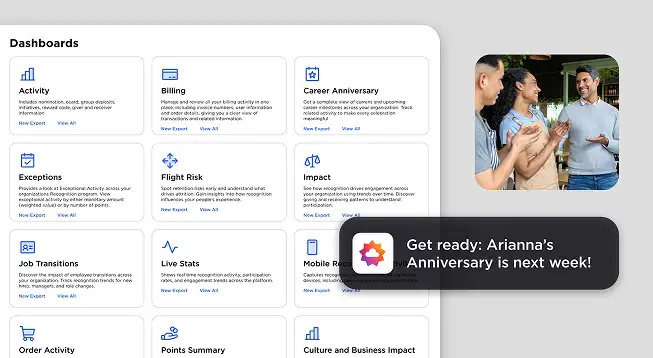
O.C. Tanner's Culture Intelligence gives HR and Total Rewards leaders reporting on recognition reach, frequency, and distribution across the organisation. Zions Bancorporation put this kind of visibility to work in their Value You recognition programme. They used live dashboards and regular manager reminders to build recognition into their normal operations. The result was a 30% increase in anniversary recognition messages.
Where should you start?
Total Rewards communication doesn't need a full redesign. A few focused changes can meaningfully shift how employees experience the offerings you already have.
- Audit what you have. Use the Total Rewards Checklist to review what's in your package and whether employees know it exists.
- Simplify the language. Rewrite the most important employee-facing touchpoints in plain terms. Your statement, onboarding materials, and manager talking points are all good places to start.
- Route communication through managers. Transparency about work and rewards is much more powerful from a direct manager than from HR. Give managers the information and language they need to have those conversations.
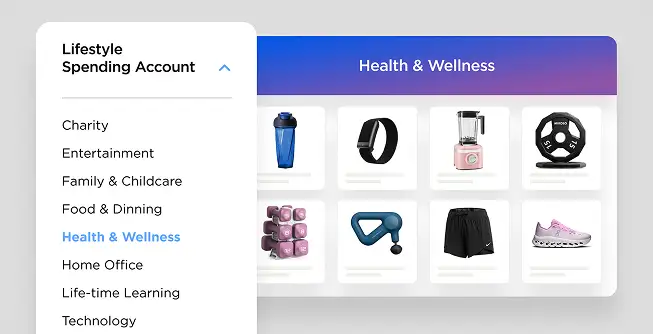
- Connect recognition to specific offerings. When employees are recognised for using their wellbeing programme, completing a learning module, or hitting a career milestone, it ties appreciation to something tangible in the package. That connection is what makes care feel real. Lifestyle Spending Accounts and employee recognition tools are built to make those moments easy to create.
- Create more touchpoints. Showcase specific offerings throughout the year at the moments they're most relevant: open enrollment, performance reviews, onboarding, and milestone anniversaries.
- Measure reach. Track where recognition is reaching and where it isn't. Those gaps are usually where Total Rewards awareness is lowest too.
Understanding is the multiplier
The investment in your Total Rewards package is already made. The opportunity is making sure employees actually know about it.
When employees understand what they have, they value their employer more. They use the programmes more. They're more likely to stay. The connection between recognition and Total Rewards is what keeps that understanding alive, every week of the year.
Turn Recognition Into Real Connection
Top



.png)