Make thriving workplace culture your superpower to inspire high-performing teams and produce measurable business results.
See why Culture Cloud sets the industry standard.
Culture Cloud
Explore the world’s most complete recognition platform—backed by a century of expertise.
See why we excel at recognition in the flow of work.
Learn how Culture Intelligence delivers more useful insights.
Explore industry-leading insights for every level of your organisation.
See what enterprise-grade security looks like.
Amplify the impact of your recognition solution.
Discover versatile tech that delivers better results.
Employee recognition
Looking for a workplace culture that sustains healthy, high-performing teams? Start here.
Enable everyone to give, receive, like, comment, share, and boost.
Say Thanks™ lets customers appreciate team members too.
Help managers set team goals and reward success.
Make managing rewards that delight employees easy.
Extend employee recognition to everyone, everywhere
Find endless new ways to connect people to purpose.
Celebrations
Build momentum with personal and shared moments that shape culture and belonging.
We invented the industry. Check out today’s Anniversaries.
Countless ways to celebrate results that matter.
Create strong beginnings with tools that make it easy.
Celebrate birthdays, holidays, wellness goals, and more.
Offer countless rewards for every person and preference.
Global rewards marketplace
Motivate great work with a global range of gifts and experiences that match every moment.
Offer flexibility with top retailers and Visa cash cards.
Book flights, hotels, trips, and other adventures.
Let employees donate to nonprofits they care about.
Celebrate together with bulk gifts for teams from 10 to 10K+.
Holiday, event, wellbeing, LSA, company stores and more.
Specialty storefronts
Build unique reward-filled marketplaces that celebrate goals, wellbeing, holidays, and more.
Deliver awards people love with our core redemption experience.
Create time-bound, curated stores for any purpose.
Support your people with unique lifestyle spending accounts.
Create a store for branded corporate swag employees love.
Give managers easy access to trophies, gift cards, and more.
See how awards that reflect your culture increase impact.
Custom awards
Celebrate key career moments with handcrafted awards that commemorate success.
Foster pride and belonging with premium logo items.
Create coveted awards to honor significant wins.
Deliver thoughtful packages for meaningful moments.
Give collectible awards that capture a career in 3D.
Craft rings, pins, and icons people display with pride.
Appreciate more people, more often, in more ways.
Use cases
Tips and inspiration for every industry.
Industries
Gain insights from the industry leader who has studied thriving workplace cultures longer, innovated more solutions, and delivered more results than any other recognition provider.
Explore exclusive culture tips, and trending HR solutions.
Read how the world's top organisations use Culture Cloud.
Access our research library including the annual Global Culture Report and State of Employee Recognition.
Attend our highly-rated annual conference or catch our Culture Trends Tour in a city near you.
Stay informed with our live and on-demand webinars.
Hear interviews with experts on our Culture by Design podcast.
We invented the employee recognition industry a century ago and haven’t stopped innovating since. Let’s apply our unrivalled experience to help your people thrive at work.
Recent news and accolades from O.C. Tanner.
Our approach to environmental, social, and governance factors.
Meet our team of researchers and data scientists.
We’re always looking for bright, bold, collaborative people.
Lorem ipsum dolor sit amet, consectetur asdf
Products
Lorem ipsum dolor sit amet, consectetur adipiscing elit, sed do eiusmod tempor incididunt ut labore et dolore.
Culture-building efforts and modern workplace trends created a 6% engagement increase, yet 59% of employees are still willing to leave.
The employee experience is not what you think it is. Our study shows only 42% of employees feel good about their daily experiences at work.
It’s the new workplace crisis. With 79% of employees suffering from burnout, it needs to become a top priority for all HR professionals.
Traditional leadership is being replaced. Modern leaders use mentoring, connection, and employee recognition to inspire 86% more great work.
Today’s one-to-one conversations go beyond performance reviews to help leaders and employees connect, share goals, and improve trust 276%.
Psychologically safe, autonomous teams produce 2-3X higher employee engagement, more great work, and a better overall employee experience.
Only 51% of employees say their company excels at listening to employees. Listening is more than hearing, and improves employee satisfaction.
The statistics about culture show the impact of leadership is profound. Leaders plays a pivotal role in building thriving workplace culture and impacting their company’s bottom line.
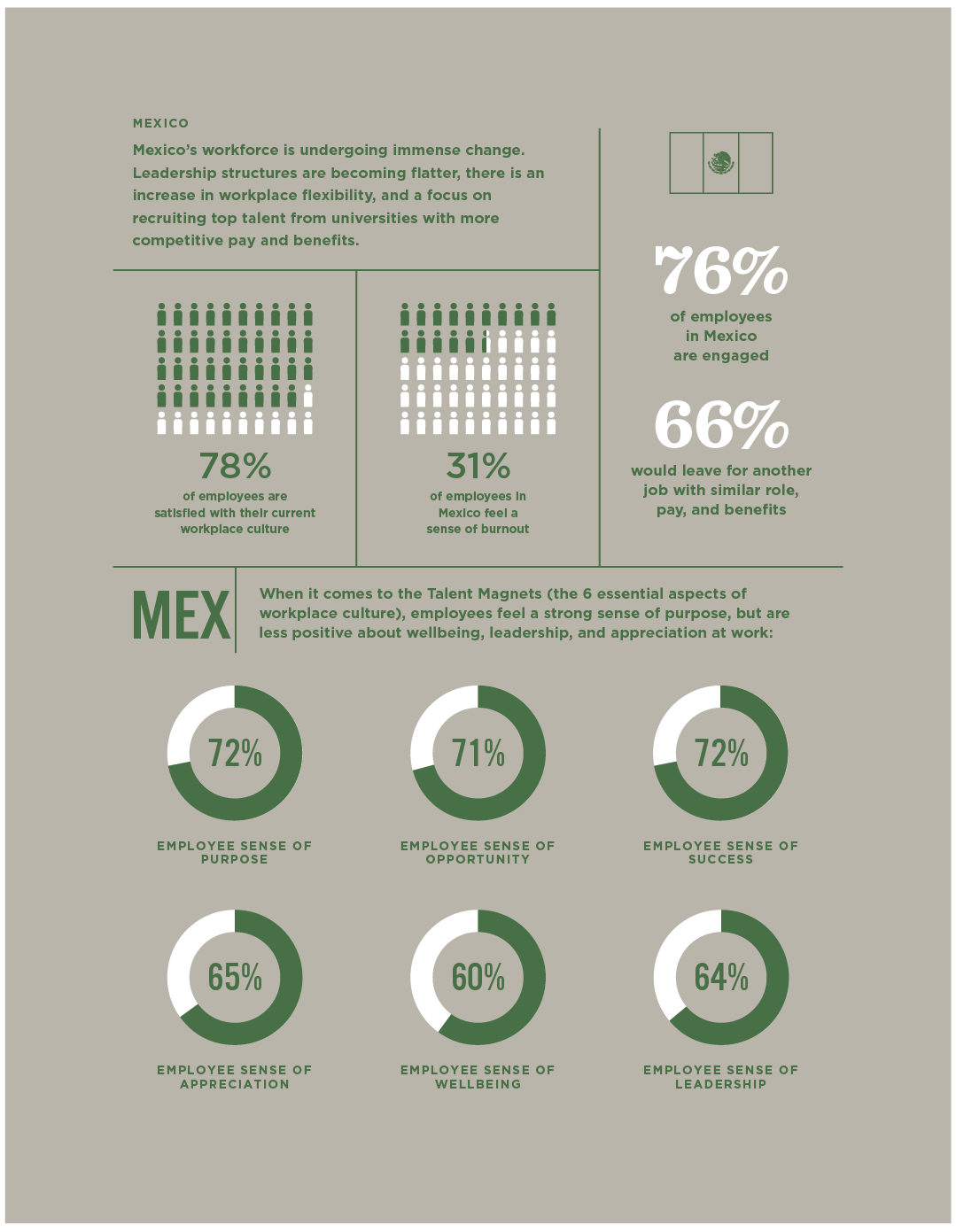
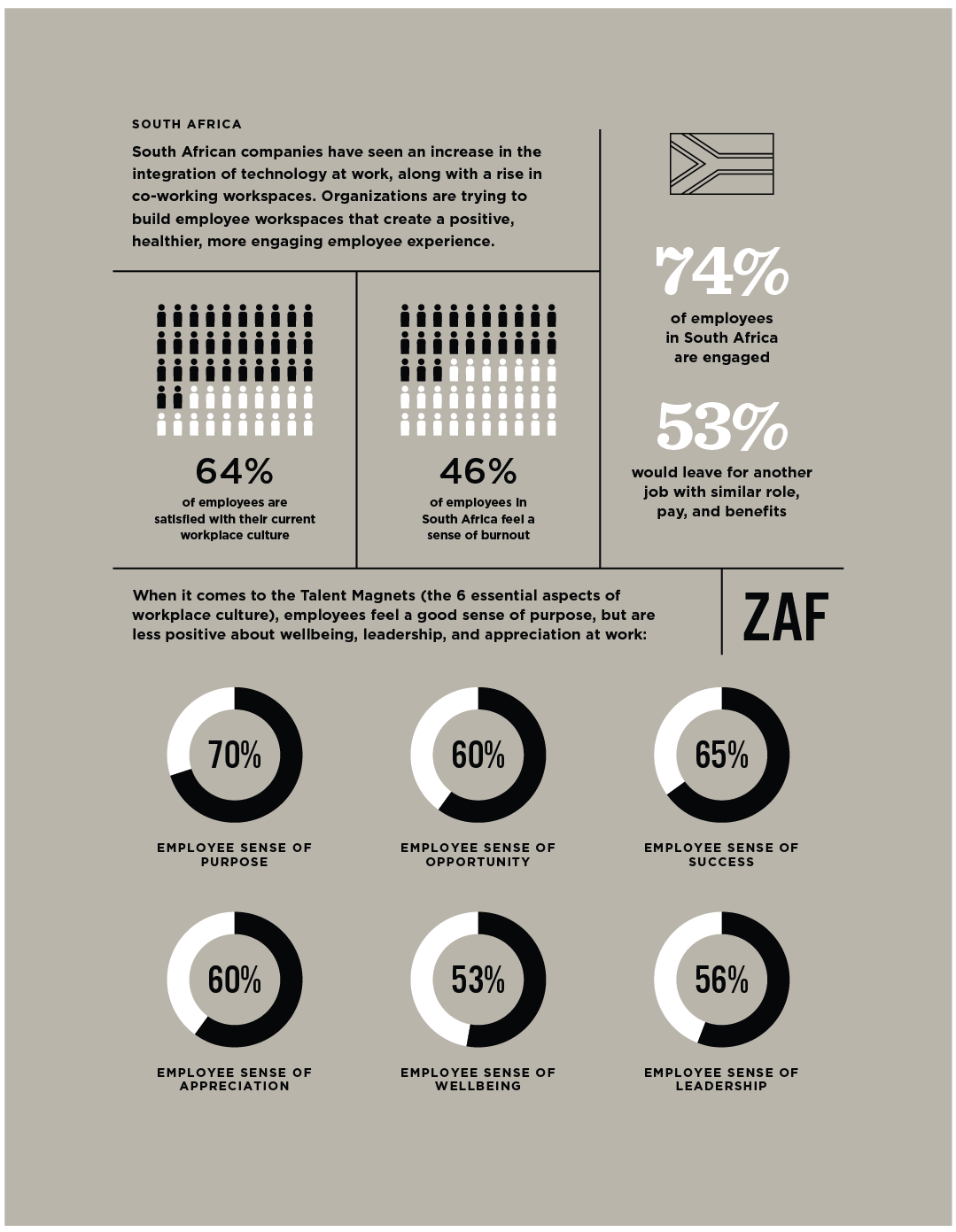
See how worldwide employee engagement statistics vary and how employees feel about workplace culture across 18 different countries.
Share
Link Copied
Stay Informed
Upcoming webinars, events, reports, and culture best practices for HR leaders.