
Topic: Employee Experience

Search
Close

Four Ways Recognition Builds Workplace Inclusion

Insights from
,

Employees standing in a line with arms around each other

Updated on 

August 7, 2025

7


August


2025

Insights from Robert Ordever, Managing Director of O.C. Tanner Europe

Inclusive workplaces are environments where all employees feel valued, respected, and empowered to contribute fully. These workplaces ensure that all employees have equal access to opportunities and resources.

Having an inclusive workplace is no longer optional—it's integral to your company's success. Inclusive company cultures translate into higher levels of employee satisfaction, better HR outcomes, and can even help your organisation financially out-perform competitors.

At O.C. Tanner, we’ve helped thousands of companies around the world build thriving cultures where employees feel like they belong. How? By partnering with them to design and implement meaningful employee recognition strategies—the kind that increase feelings of belonging and inclusion. And it makes a measurable difference. According to our research:

  • Employees who feel their unique identities are appreciated and valued at work are 2x more likely to feel a sense of belonging.
  • When employees experience integrated recognition, there is an 8x increased odds the employee will feel a sense of belonging.
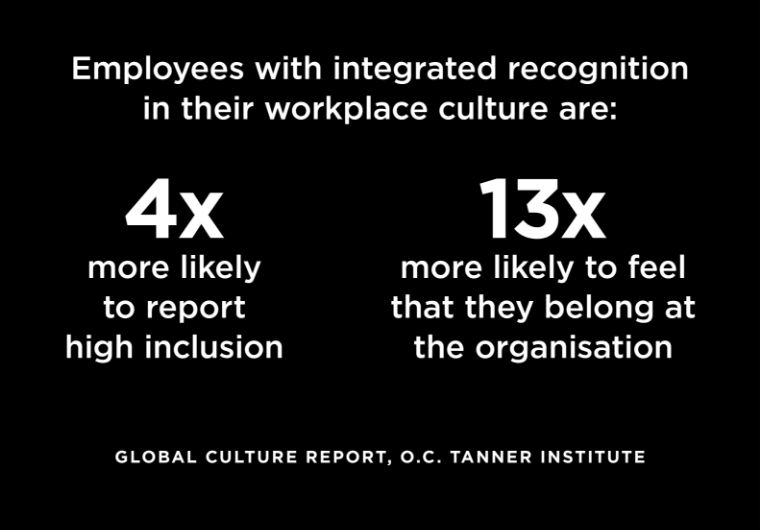
  • Employees with integrated recognition in their workplace culture are 4x more likely to report high inclusion, and 13x more likely to feel that they belong at the organisation.

Employees celebrating together in a meeting
Explore the link between recognition and inclusion with insights from Andreea Dinu, Culture and Engagement Strategist for O.C. Tanner Europe.

Let’s unpack the four ways employee recognition supports feelings of inclusion at work.  

1. Recognition increases feelings of belonging

At its core, recognition inherently demonstrates that a person’s unique skills, talents, and contributions are valued. Effective recognition communicates the important role each individual plays in the success of the company—and that they belong.

For recognition to be effective at communicating a sense of belonging, it must be:

  • Timely: Recognition in the moment shows attention and care.
  • Genuine: Authentic gratitude that is personal and heartfelt.
  • Specific: Go beyond “thanks” to explain what the person did and why it mattered.
  • Equitable: Everyone in the organisation can give and receive recognition.
  • Visible: Employees see that recognition is being given and are inspired to give as a result.
  • Frequent: Recognition happens often throughout the year for both small and big successes.
  • Tied to company purpose and values: Celebrate how employees drive your culture (bonus points if you are recognising inclusive behaviours).
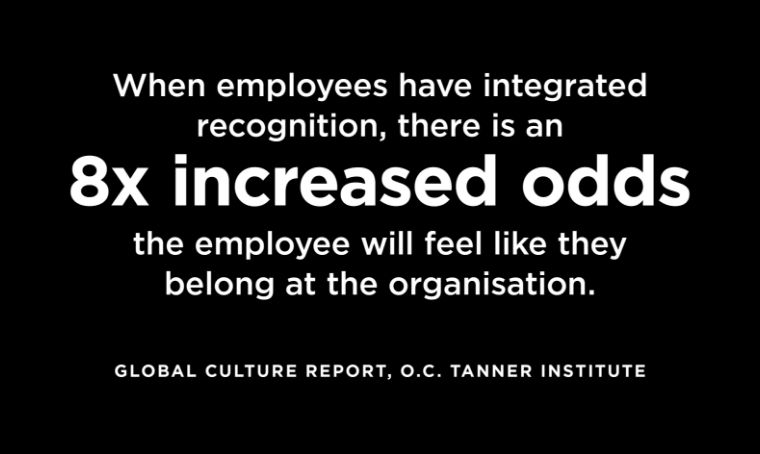
When employees have integrated recognition, there is an 8x increased odds the employee will feel like they belong at the organisation. —Global Culture Report, O.C. Tanner Institute

Building a culture of care and inclusion with a global workforce at Treasury Wine Estates

A few years ago, the HR team at Treasury Wine Estates (TWE) was tasked with implementing a new vision laid out by an incoming CEO, which sought to strengthen their focus on promoting a culture of courage, care, and inclusion.

Treasury Wine Estates’ employee recognition software platform and awards, powered by O.C. Tanner’s Culture Cloud.

The HR team turned to recognition as a way to encourage and celebrate employees that demonstrated these values in action. This required refreshing existing recognition tools to ensure everyone in the global workforce could easily access them, both in the office and in the vineyards.

Within a year of launch, employee survey results showed an increase in positive feelings tied to key cultural indicators, including a “Culture of Care,” and “TWE Demonstrates Care for my Wellbeing.” Employees at TWE feel like they are truly valued and belong at the organisation through these recognition initiatives.

Listen to our senior researchers dive into the connection between recognition, belonging, and community in the workplace.

2. Recognition encourages connection

Recognition connects employees to three things:

  • Purpose. Recognition shows how employees individually contribute to the organization’s broader purpose and make a difference at work. It rallies employees to work together towards a common cause. This is especially impactful for the growing workforce of Gen Z employees, who rank purpose as one of the most important elements of job satisfaction.
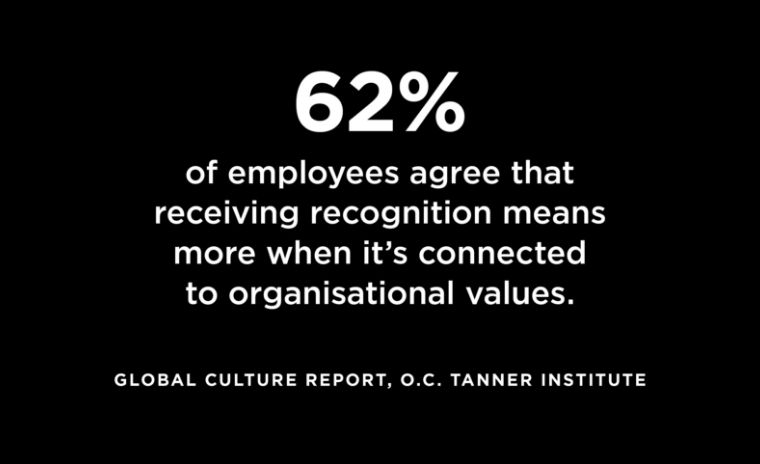
62% of employees agree that receiving recognition means more when it’s connected to organisational values.
  • Accomplishment. Recognition helps all employees feel a sense of success. Whether it’s collaboration, innovative thinking, or great work, recognition connects employees to their accomplishments in meaningful, celebratory ways.
  • ‍One another. Recognition connects employees across teams, departments, and locations, including employees who may not normally interact with one another. Recognition helps each employee feel they are a contributing, essential member of the team.

Recent Gallup research shows that if someone has at least one good friend at work, they are 44% more likely to recommend their company as a great place to work, and 63% less likely to look for jobs at other organisations. Belonging and inclusion in the workplace matter.

Peer to peer recognition tools on O.C. Tanner’s Culture Cloud platform

Strengthening connection across borders with recognition at Newgen

Newgen is a tech company based in India with locations around the globe. Among its 4,600 employees, the strength of interpersonal bonds has always been a key aspect of Newgen's culture.

To maintain its close-knit culture while supporting growth, Newgen’s team turned to employee recognition to facilitate ongoing connection across borders. This important cultural driver is enabled by an employee recognition platform to ensure every Newgenite feels valued, no matter where they are.

Newgen’s employee recognition platform powered by O.C. Tanner’s Culture Cloud.
Learn about the 6 behaviours that drive connection and belonging at work.

3. Recognition enhances collaboration with gratitude

Peer-to-peer recognition empowers employees to highlight anyone, including those who might be overlooked, feel excluded, or have less-visible roles. It allows employees to recognise accomplishments and contributions that leaders might miss.

Ensure all employees are able to recognise one another for great work, no matter their roles or departments, so peer-to-peer collaboration and recognition can thrive. Recognition tools should be easy to access to enable employees to share recognition among peers.

The act of giving recognition is not just impactful for the recipient, but it also benefits the giver. Research shows that sharing gratitude is a powerful driver of improving mental health at work, with employees reporting a significant decrease in the odds of burnout (57%), anxiety (24%), and depression (28%).

O.C. Tanner’s Culture Cloud recognition platform helps all employees give and receive recognition, no matter where (or when) they work.

4. Recognition data can point out inequalities and inform inclusion efforts

Tracking recognition data can provide powerful insights into how your company culture is expressed in practice. You can integrate key recognition data—who is being recognised, who is giving recognition, and what is being recognised—with other demographic and performance data to identify ways to make the employee experience more inclusive.

There are plenty of recognition platforms with built-in reporting tools that help you monitor recognition and understand recognition trends, like O.C. Tanner’s Culture Cloud.

Using this information, you can work to improve recognition and inclusion efforts across the organisation through trainings, one-on-one discussions, and more.
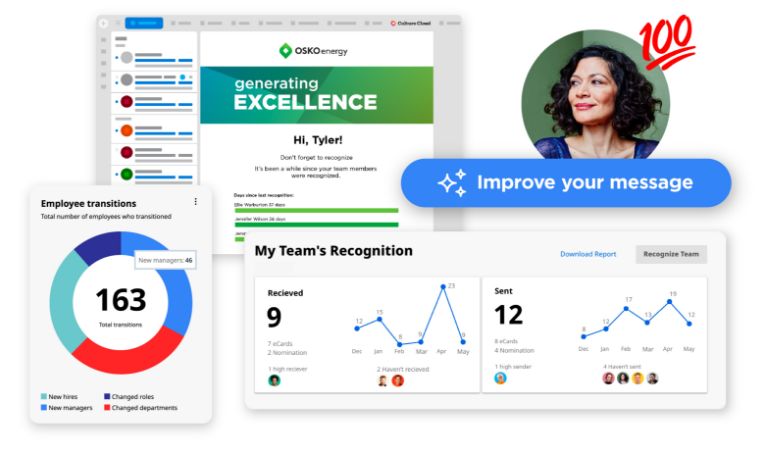
Dashboards and reports available on O.C. Tanner’s Culture Cloud platform for insights on recognition trends in your organization.
Employees with integrated recognition in their workplace culture are 4x more likely to report high inclusion, and 13x more likely to feel that they belong at the organisation. —Global Culture Report, O.C. Tanner Institute

Showing employees they belong in your workplace

Appreciation is a powerful connector. Everyone wants to feel valued and know they are making a difference. It’s also something everyone in the organisation can do—from the CEO to the newest hire—to build a more inclusive culture for all.

O.C. Tanner is the global leader in software and services that improve workplace culture through meaningful employee recognition experiences. Learn more at octanner.com.

top
Get the Full Paper

Insights from Robert Ordever, Managing Director of O.C. Tanner Europe

Inclusive workplaces are environments where all employees feel valued, respected, and empowered to contribute fully. These workplaces ensure that all employees have equal access to opportunities and resources.

Having an inclusive workplace is no longer optional—it's integral to your company's success. Inclusive company cultures translate into higher levels of employee satisfaction, better HR outcomes, and can even help your organisation financially out-perform competitors.

At O.C. Tanner, we’ve helped thousands of companies around the world build thriving cultures where employees feel like they belong. How? By partnering with them to design and implement meaningful employee recognition strategies—the kind that increase feelings of belonging and inclusion. And it makes a measurable difference. According to our research:

  • Employees who feel their unique identities are appreciated and valued at work are 2x more likely to feel a sense of belonging.
  • When employees experience integrated recognition, there is an 8x increased odds the employee will feel a sense of belonging.
  • Employees with integrated recognition in their workplace culture are 4x more likely to report high inclusion, and 13x more likely to feel that they belong at the organisation.
Employees celebrating together in a meeting
Explore the link between recognition and inclusion with insights from Andreea Dinu, Culture and Engagement Strategist for O.C. Tanner Europe.

Let’s unpack the four ways employee recognition supports feelings of inclusion at work.  

1. Recognition increases feelings of belonging

At its core, recognition inherently demonstrates that a person’s unique skills, talents, and contributions are valued. Effective recognition communicates the important role each individual plays in the success of the company—and that they belong.

For recognition to be effective at communicating a sense of belonging, it must be:

  • Timely: Recognition in the moment shows attention and care.
  • Genuine: Authentic gratitude that is personal and heartfelt.
  • Specific: Go beyond “thanks” to explain what the person did and why it mattered.
  • Equitable: Everyone in the organisation can give and receive recognition.
  • Visible: Employees see that recognition is being given and are inspired to give as a result.
  • Frequent: Recognition happens often throughout the year for both small and big successes.
  • Tied to company purpose and values: Celebrate how employees drive your culture (bonus points if you are recognising inclusive behaviours).
When employees have integrated recognition, there is an 8x increased odds the employee will feel like they belong at the organisation. —Global Culture Report, O.C. Tanner Institute

Building a culture of care and inclusion with a global workforce at Treasury Wine Estates

A few years ago, the HR team at Treasury Wine Estates (TWE) was tasked with implementing a new vision laid out by an incoming CEO, which sought to strengthen their focus on promoting a culture of courage, care, and inclusion.

Treasury Wine Estates’ employee recognition software platform and awards, powered by O.C. Tanner’s Culture Cloud.

The HR team turned to recognition as a way to encourage and celebrate employees that demonstrated these values in action. This required refreshing existing recognition tools to ensure everyone in the global workforce could easily access them, both in the office and in the vineyards.

Within a year of launch, employee survey results showed an increase in positive feelings tied to key cultural indicators, including a “Culture of Care,” and “TWE Demonstrates Care for my Wellbeing.” Employees at TWE feel like they are truly valued and belong at the organisation through these recognition initiatives.

Listen to our senior researchers dive into the connection between recognition, belonging, and community in the workplace.

2. Recognition encourages connection

Recognition connects employees to three things:

  • Purpose. Recognition shows how employees individually contribute to the organization’s broader purpose and make a difference at work. It rallies employees to work together towards a common cause. This is especially impactful for the growing workforce of Gen Z employees, who rank purpose as one of the most important elements of job satisfaction.
62% of employees agree that receiving recognition means more when it’s connected to organisational values.
  • Accomplishment. Recognition helps all employees feel a sense of success. Whether it’s collaboration, innovative thinking, or great work, recognition connects employees to their accomplishments in meaningful, celebratory ways.
  • ‍One another. Recognition connects employees across teams, departments, and locations, including employees who may not normally interact with one another. Recognition helps each employee feel they are a contributing, essential member of the team.

Recent Gallup research shows that if someone has at least one good friend at work, they are 44% more likely to recommend their company as a great place to work, and 63% less likely to look for jobs at other organisations. Belonging and inclusion in the workplace matter.

Peer to peer recognition tools on O.C. Tanner’s Culture Cloud platform

Strengthening connection across borders with recognition at Newgen

Newgen is a tech company based in India with locations around the globe. Among its 4,600 employees, the strength of interpersonal bonds has always been a key aspect of Newgen's culture.

To maintain its close-knit culture while supporting growth, Newgen’s team turned to employee recognition to facilitate ongoing connection across borders. This important cultural driver is enabled by an employee recognition platform to ensure every Newgenite feels valued, no matter where they are.

Newgen’s employee recognition platform powered by O.C. Tanner’s Culture Cloud.
Learn about the 6 behaviours that drive connection and belonging at work.

3. Recognition enhances collaboration with gratitude

Peer-to-peer recognition empowers employees to highlight anyone, including those who might be overlooked, feel excluded, or have less-visible roles. It allows employees to recognise accomplishments and contributions that leaders might miss.

Ensure all employees are able to recognise one another for great work, no matter their roles or departments, so peer-to-peer collaboration and recognition can thrive. Recognition tools should be easy to access to enable employees to share recognition among peers.

The act of giving recognition is not just impactful for the recipient, but it also benefits the giver. Research shows that sharing gratitude is a powerful driver of improving mental health at work, with employees reporting a significant decrease in the odds of burnout (57%), anxiety (24%), and depression (28%).

O.C. Tanner’s Culture Cloud recognition platform helps all employees give and receive recognition, no matter where (or when) they work.

4. Recognition data can point out inequalities and inform inclusion efforts

Tracking recognition data can provide powerful insights into how your company culture is expressed in practice. You can integrate key recognition data—who is being recognised, who is giving recognition, and what is being recognised—with other demographic and performance data to identify ways to make the employee experience more inclusive.

There are plenty of recognition platforms with built-in reporting tools that help you monitor recognition and understand recognition trends, like O.C. Tanner’s Culture Cloud.

Using this information, you can work to improve recognition and inclusion efforts across the organisation through trainings, one-on-one discussions, and more.

Dashboards and reports available on O.C. Tanner’s Culture Cloud platform for insights on recognition trends in your organization.
Employees with integrated recognition in their workplace culture are 4x more likely to report high inclusion, and 13x more likely to feel that they belong at the organisation. —Global Culture Report, O.C. Tanner Institute

Showing employees they belong in your workplace

Appreciation is a powerful connector. Everyone wants to feel valued and know they are making a difference. It’s also something everyone in the organisation can do—from the CEO to the newest hire—to build a more inclusive culture for all.

O.C. Tanner is the global leader in software and services that improve workplace culture through meaningful employee recognition experiences. Learn more at octanner.com.

top
About The AUTHOR:

related Resources

Large, Global Chemical Company: A Global Employee Recognition Strategy

This large, global, chemical company's previous attempt at employee recognition was not successful. See how they worked with O.C. Tanner to create a strategy that thrived.

Capture the Spark: How Practicing Hope and Inspiration Elevate the Employee Experience

See what the latest research says about how to help employees feel inspired and the positive outcomes of inspiration and hope in the workplace.

O.C. Tanner’s Culture Cloud: What’s New in Q3 2025

Learn about the new features available on our Culture Cloud platform in Q3 2025.