The environmental pillar of sustainability is rooted in environmental stewardship, which includes voluntary reporting and actions beyond applicable governing requirements. For example, O.C. Tanner completes the CDP Climate Change and Water Security questionnaire annually and EcoVadis survey at least annually. Both the CDP Climate Change and Water Security scores for O.C. Tanner increased to B-, within the management level. C is the current North American average CDP score for both Climate Change and Water Security. The EcoVadis score improved by 6.82% between the last two reporting dates and the official scorecard may be requested through the EcoVadis platform.
Environmental Targets
O.C. Tanner has two continuous targets for environmental compliance: zero violations or citations, especially as recorded in EPA’s ECHO database, and full compliance with current environmental permit(s).
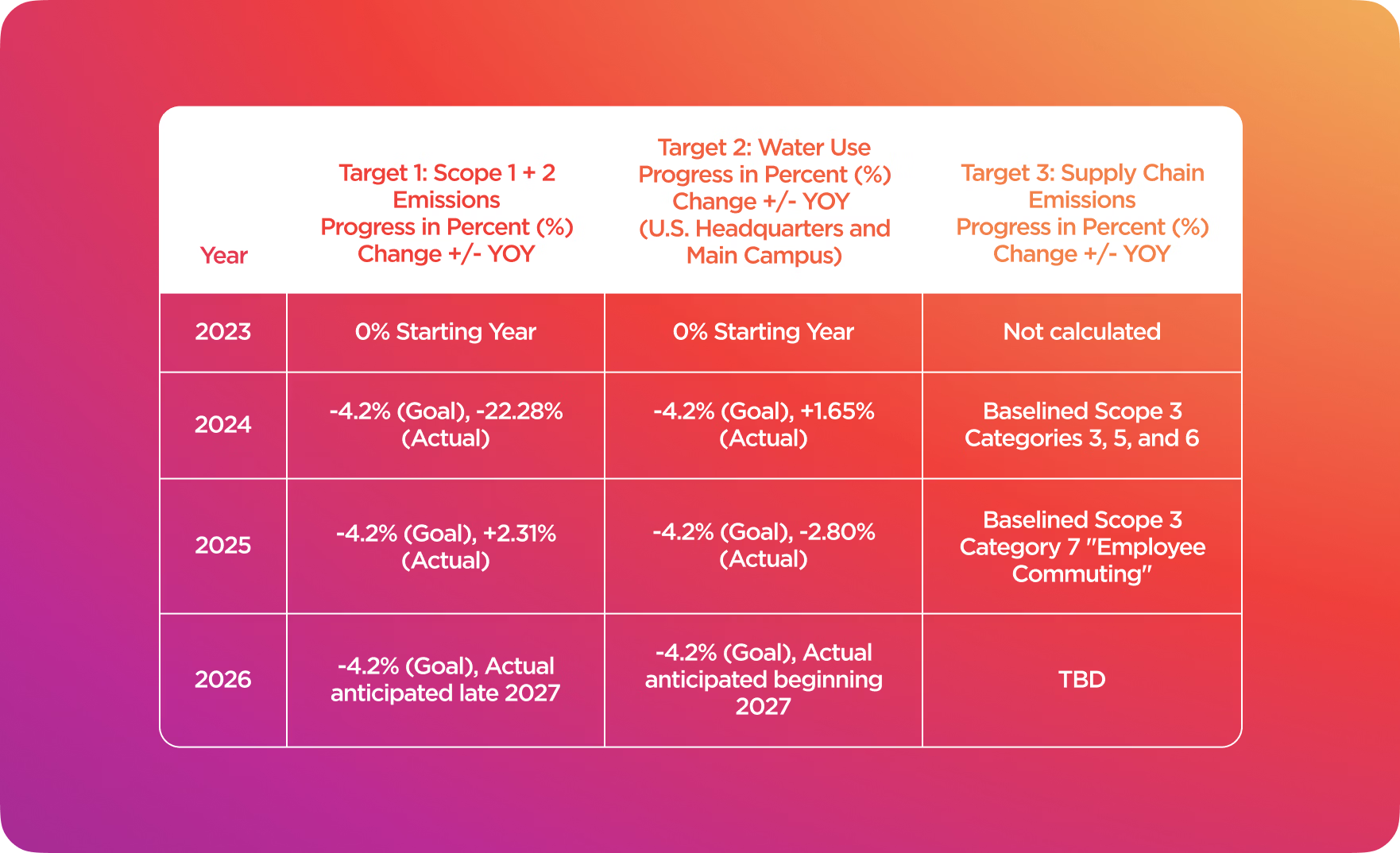
There are two environmental sustainability targets shown in the table above. As part of our commitment to continuous improvement, voluntary emissions reporting expanded to include global operations beginning for reporting year 2023. Our new emissions and water conservation targets of 4.2% absolute annual reduction are aligned with a 1.5-degree future, recognizing the importance of mitigating climate change as much as possible. With select scope 3 emissions categories being newly measured, we have not yet set a goal until we measure all relevant categories, maintaining the greatest level of accuracy.
Emission and water use reduction take place mainly through efficiency improvements and equipment replacement/upgrade. Examples include upgrades for ventilation scrubbing system, light system motion sensors, HVAC equipment, air compressors, and water heaters.
Operational environmental considerations:
- The ADC warehouse at O.C. Tanner’s headquarters in the U.S. is landfill-free as of mid-2025. All in-house manufacturing lines for acrylic, wood, crystal, and logo branded processes are currently included as landfill-free.
- Precious metal scrap (especially gold) is currently recovered on site, refined, and reused in product.
- Batteries, paper, wood pallets and manufacturing scrap, larger pieces of acrylic, electronic waste, organic waste, and plastics 1 and 2 are all reused or recycled from one or more O.C. Tanner facilities.
- In July 2024, a new single stream recycling training rolled out to approximately 1,100 O.C. Tanner headquarter and main campus employees in the United States.
- Materials during sourcing are also considered for environmental regulatory and/or permit impact(s) for O.C. Tanner’s direct operations.
Downstream environmental considerations for customers:
- Our United Kingdom and European catalog has a sustainable merchandise section customers may select from within certain geographic areas, which accounts for about 33% of that catalog.
- The United States catalog has an “Eco Friendly” section featuring items which can be used multiple times, items made of recycled material, or giving to environmental causes.
- Approximately 70% by weight of outer packaging, shipping containers, and inserts used globally for O.C. Tanner manufactured products are recyclable. O.C. Tanner is pursuing 100% recyclable packaging for in-house manufactured items.
- O.C. Tanner requests customers and end-users handle waste in a legal and responsible manner. We highly encourage recycling or reuse of end-of-life products.