THE STATE OF GENERATIONS AT WORK 2026

Loyalty. Competence. Meaning. Inclusion.

How each generation approaches work, wellness, and technology.

Get the full report to Learn how to help your teams:

Understand what empowers and challenges each generation

Strengthen generational connections to facilitate tech adoption

Cultivate the 5 elements of generational synergy

Employ recognition as a bridge between generations
Organizations that leverage generational differences as strengths gain 
a decisive advantage.
How do the different generations really feel about work, and how can organizations create generational synergy?

We turned to employees to find out. Researchers at the O.C. Tanner Institute surveyed 5,702 individuals in 17 countries plus 9 focus groups of employees, leaders, and hr professionals.
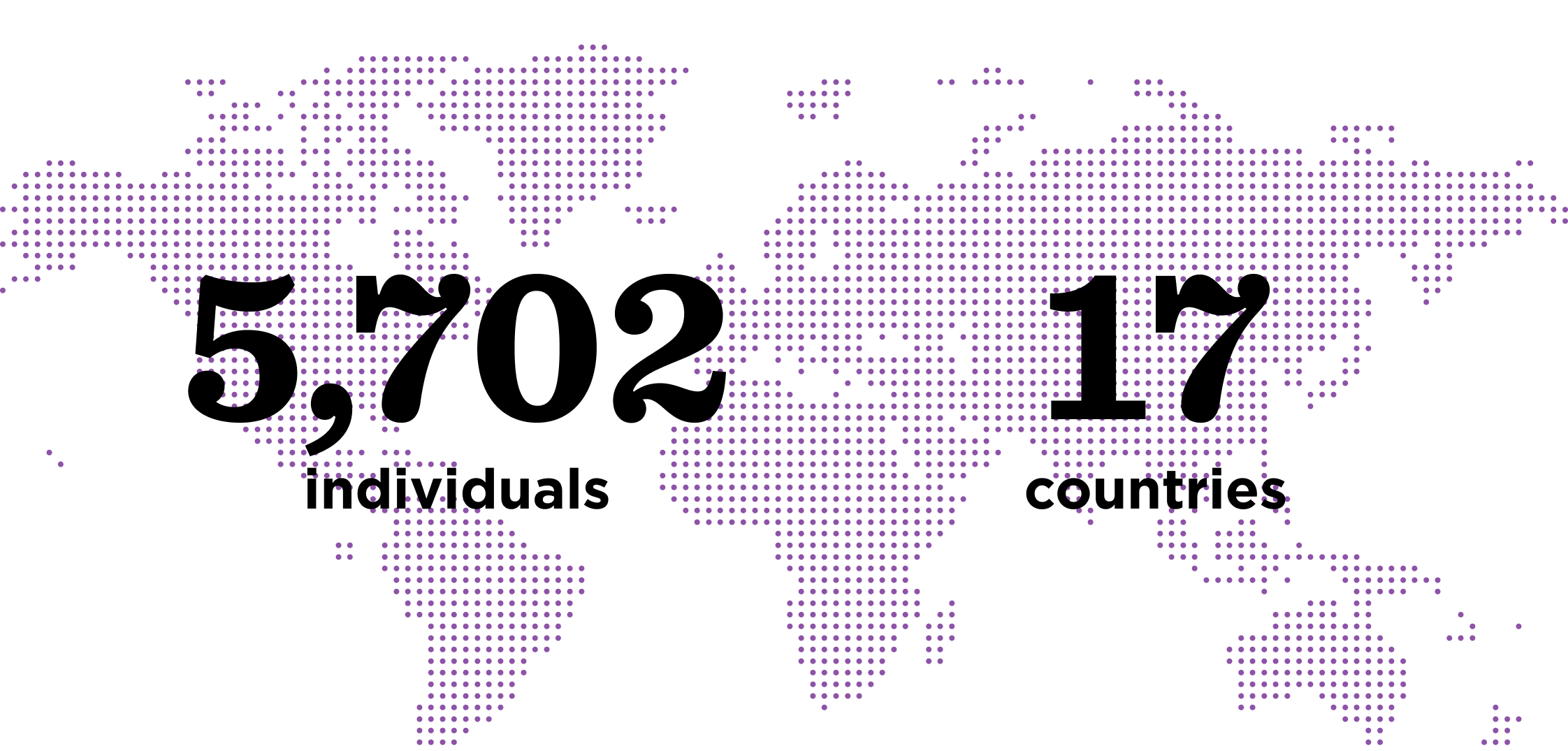
5,702 individuals in 17 countries

See what members of each generation said:

"Work hard, stay loyal, and the system will reward you." —Physician (Baby Boomer)
“For me to feel appreciated is: try my idea. Because I'm the one who works with the people and with the software. I know how it works.” —Administrative Assistant (Gen X)
“I have always been taught to embrace age diversity and that it just creates stronger teams. It allows you to look at things from different angles that you haven't before.” —Senior Consultant (Millennial)
“I work with data, so I would teach the older people how to make spreadsheets, and they would give me tips on how to be a business professional and ethical in the workplace.” —Data Coordinator (Gen Z)

Get the full report.

Theme 1

Each generation has areas where they struggle and shine 
in the workplace
Employees from each generation have different approaches to work rooted in their lived experiences and their initial relationship with work. We call these “generational contracts.”
These contracts differ by generation and can be a source of tension and misunderstandings between workers. For example, Baby Boomers have 45% increased odds of saying loyalty should be rewarded at work with job security, fair pay, respect, and recognition, while Gen X are 21% less likely to trust their organizations to do the right thing.
By understanding each generation’s contract with work, organizations can leverage their different strengths as a competitive advantage.
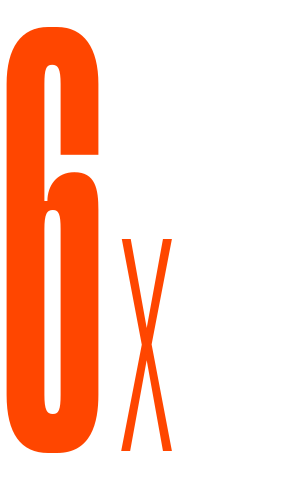
6x

Poor communication and collaboration due to generational conflict leads to 6x increased odds of burnout among employees

Theme 2

Generational synergy boosts cultural and business ROI
What is generational synergy? It’s when generations work together and use their differences to produce better outcomes.
Generational differences can be a source of conflict 
and tension in the workplace. Gen X doesn’t understand Baby Boomers’ loyalty and dedication to the company. Millennials may find Gen X’s approach to work lacking in enthusiasm, while Gen Z feels lonely and struggles to connect with other generations.
Organizations that intentionally create environments where generations learn from one another and work together towards shared goals can encourage generational synergy, which results in more innovation, improved retention, higher customer satisfaction, and growth.
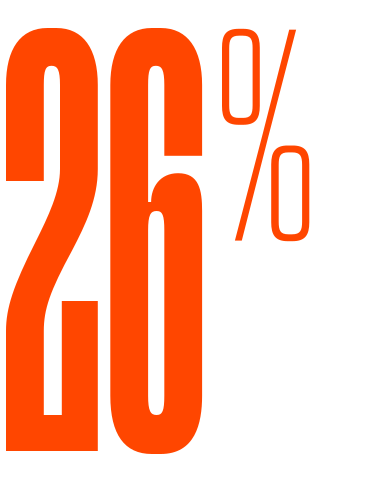
26%

Only 26% of employees experience generational synergy at work

Theme 3

Each generation embraces different wellbeing priorities
A holistic wellbeing approach can address varying needs across generations.
Wellbeing is the foundation for high-performance cultures that endure, but each generation prioritizes wellbeing and burnout differently, on a spectrum from security to enrichment.
By expanding the definitions of wellbeing and building generational synergy, organizations can provide wellbeing offerings that align with generational employee values and improve personal, cultural, and business outcomes.
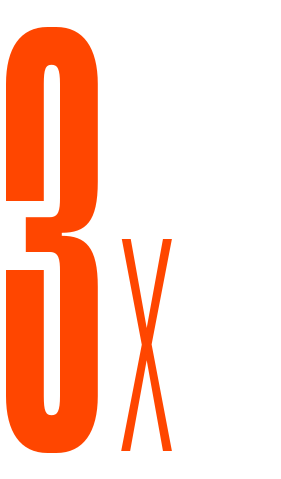
3x

When employees feel a sense of wellbeing at work, odds of having low turnover increase 3x

Theme 4

Tech adoption is easier with generational synergy
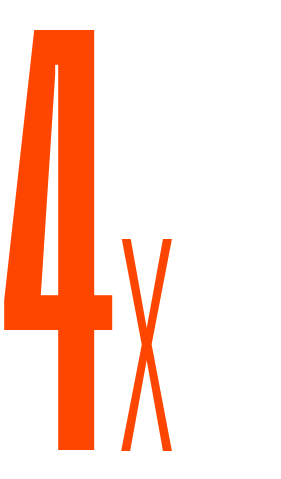
Building stronger relationships between generations smooths the way for employees of all ages to embrace new tech.
Most organizations rely on technology to improve communication and collaboration. Older generations often become the focus of tech adoption campaigns, while younger generations may turn to AI for guidance instead of seeking help from more experienced colleagues.
When technology replaces relationship-building and in-person sharing of information, it widens generational gaps. Building generational synergy within teams, on the other hand, encourages knowledge-sharing and helps all employees fully use technology together.
Recognition tech can be a powerful tool to foster collaboration among employees: a digital space where all generations feel seen and valued, where meaningful connections are naturally created across generations.
4x

greater odds of employees saying that technology makes it possible 
to better connect with my team 
when generational synergy is present

Theme 5

Recognition bridges generations and drives business results
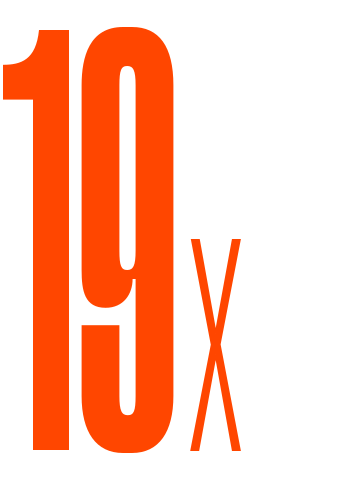
Employee recognition is one of the 
most effective ways to build generational synergy.
Recognition can reframe generational differences to build trust, belonging, and encourage great work.
Recognition also improves cultural and business outcomes. There is greater collaboration, innovation, and growth in organizations with integrated recognition.
Integrating generational contracts, personal traits, and unique skills in a recognition moment calls out the uniqueness of each individual and their place in the organization. Employee recognition celebrates and unites employees across generations.
19x

Odds of trust in the organization increase 19x with integrated recognition