Show full transcript
MODERATOR: Alright. Well, let's go ahead and get started. Welcome to today's O.C. Tanner webinar. We're so glad that you could join us.
We will send out a link to the on demand recording of this webinar later today, so watch for that in your email inboxes. And if you have any questions for our panelists, please feel to drop please feel free to drop them in the Q&A box or even in the chat. I'll be monitoring that throughout the whole webinar. And we should have time at the end of today's presentations for our panelists to take those live as well.
So I'm gonna introduce our two wonderful speakers today. Today, we have two workplace recognition experts joining us from O.C. Tanner, Cathie Lewis and Mimi West. Cathie is the executive product director of software at O.C. Tanner. She has over thirty six years of hands on experience in product development and leadership, and her extensive experience at O.C. Tanner includes roles in client onboarding and support, product management, budgeting, reporting, and commerce systems. Cathie's focus on strategy, design, and delivery results in products that reach thousands of organizations globally and create lasting value for clients and their people.
And Mimi West is the director of global product marketing where she champions innovations that elevate company culture, strengthen workplace well-being, and empower employees and leaders to thrive at work. With more than sixteen years of business management experience across six continents, Mimi brings a global perspective that helps organizations connect with diverse workforces, adapt to cultural and geographic nuances, and foster a deep sense of belonging. So take it away, Mimi and Cathie.
MIMI WEST: Raven, thank you so much. It is such an honor to be here with all of you. I'm excited to be joined by Cathie, who is amazing, as you will see. It's wonderful to have such a diverse group of leaders who genuinely care about making a difference to their people.
So I'd love to start us off with just a little mind opening question, and that is what if recognition could reach everyone in your organization?
Well, we'll give you some practical strategies to turn this dream into a reality. What you can expect from me and from Cathie today, we're gonna present to you evidence based tools that boost performance, support, and retention. We'll show you multiple avenues to reach more people, and then we'll wrap us up with some practical next steps to help you see better results starting today.
So at O.C. Tanner, our vision is to help people thrive at work, and we do this by equipping our clients with tools that help them help their employees thrive at work.
And so two years ago, in O.C. Tanner's Global Culture Report, we published an important statistic that is really the theme of today's presentation.
CATHIE LEWIS: Thanks, Mimi. Really excited to be here to talk with all of you today. So the global culture report that Mimi referenced let us know that eighty percent of the global workforce did not sit behind a desk.
Mimi, you can go on.
However, these employees are really essential to the workforce.
They're essential to your company, yet despite that, them being essential, they feel invisible, and they're often the last to be celebrated.
Our research also shows that these employees are disconnected from the company brand in ways that create real gaps. Leaders have less visibility into their work moments. Access to the opportunity is uneven. The result is a very real problem called recognition deserts.
When we include the eighty percent employees, when we include the eighty percent, the opposite is also true. We build stronger, more connected, and more engaged organizations.
So quick question before we move on for you. What challenges do you currently face in reaching all of your employees?
Go ahead and drop your feedback in the chat.
MIMI: We'd love to hear from you.
MODERATOR: I'm seeing people comment. They're saying one of the challenges is diverse job roles and responsibilities, a lot of working in silos, and having so many employees who work on job sites.
Some of them, they only see once a year.
MIMI: Yeah. These are common challenges, kind of diverse and distributed teams, sometimes in areas that can be harder to reach than one central area.
MODERATOR: This is great. This chat is so active. People are talking about difficulty reaching different generations. We've had some research on that recently. Reaching the front lines, who maybe don't have a work email address, and then trying to get leaders to really take action and model that behavior.
CATHIE: Really good feedback and insights.
MIMI: These are great insights. We, we've heard these before. These are very common challenges across companies, across industries. And every industry has their own flavor and their own consideration.
And solutions also need to be diverse for that reason. So a few things we will address if we really wanna tackle these challenges at the root. First, we wanna understand our employees' needs, and we know that you're constantly sending out surveys and reading reports and trying to understand what it is that your employees truly need.
Second is access. What are ways that we can reach them?
But then third, here's where some nuances that some solutions miss, and that is delivering these solutions in the way that employees will actually receive them.
So we'll take you through each one of these.
As a leader in your company, you're eager to understand the needs of your employees.
So our research helps to build upon this understanding. You know that every employee wants to feel seen, wants to feel heard and valued. Every employee wants to feel connected to your company and to your brand in meaningful ways.
So here are some additional insights that our research provides into the needs and desires specifically of frontline, offline, and deskless workers, the eighty percent.
So when we look into what they actually want, like every employee, yes, they want meaningful recognition from their leaders as well as from other sources.
Frontline employees, in particular, also want recognition from the people they serve.
So customers that may be patients in a hospital setting or other visitors of the business as applicable to their job and to their environment.
Offline employees want recognition in the moment. And here's an important piece of nuance. They want it to be clear and timely. They don't want it to be transactional, and they don't actually want it to be one hundred percent technology.
Even if technology is an enabler, it needs to feel real, authentic, and support that in person experience as often as possible.
So some real challenges. But how do we do this? Well, recognition, we know, needs to reach one hundred percent of your people in the ways that matter to them.
So what are some ways in which solutions can get this wrong?
These are some very common challenges that we have seen in our research.
Limited reach is one way or fragmented delivery. If things aren't integrated properly, that can create a poor experience for employees. Some tech solutions available today too often lack an employee centered view that drives the difference.
They make assumptions that may not always help their clients in their unique industry or in their unique setup.
Unreliable access can present a big barrier.
Lack of mobile options or even an over, too much of a focus on mobile only options, either of those can present a barrier because it can be hard to use.
Technology fluency does become a real barrier with offline employees, and it can quietly exclude people if it goes unaddressed.
So tech can be a very powerful entry point and often is, but it must be integrated, intuitive, and easy to use.
So is there some kind of Goldilocks principle? Yes. There absolutely is.
So getting the tech part right for offline employees, you really need to strike the right balance in order for the solutions to be effective. This is as true with recognition as it is with many types of solutions.
So when you think about these extremes, if there's not enough technology, many of these employees won't have access or they won't have consistent access to recognition.
On the other hand, if there's too much technology, that can lead to overwhelm, other barriers to use, friction, and that can result in low engagement, unnecessary administrative burden for ineffective results.
Point solutions. We all know this in the world of HR. If things are fragmented or not connected to each other, that in of itself can be a problem.
We don't want recognition to be a separate destination. It needs to meet employees in their flow of work.
Or sometimes the solution is not the right one for the organization. It can miss the mark.
It can become a waste of budget and time or run the risk of being perceived by employees as too transactional and not authentic.
So one of the ways to strike that Goldilocks principle of just right, it's an entry point, it's a means to an end, and it supports the human side in a myriad of ways that we'll walk you through.
So recognition done right, when it comes from a multiplicity of sources, from leaders, teams, peers, customers, and accessible pathways that actually reach everyone, is the most scalable way to build culture with high performance and high support.
So in a recognition desert, building one highway is a good first step, though it's not quite enough to reach one hundred percent of employees consistently.
So what we need is a more sophisticated infrastructure. Even the desert can become a thriving metropolis when you put in that right infrastructure. In the same way, we need a variety of different ways to reach more people and more often.
So the question is, how can your recognition program become more sophisticated in its design yet easier for administrators to set up and maintain and easier for employees to use? Does that sound like an impossible dream?
Well, it's not.
Reaching one hundred percent of employees is possible, and we'll walk you through some best practices to reach more people more often and in more ways and in the ways that are meaningful to them according to our research.
So what it looks like to set up the most effective integrations will be key, and Cathie will walk us through that next. We'll talk about mobile access, how that can be most effective, company sponsored events that can literally reach one hundred percent of all your employees in one shot, how to effectively pair technology with the tangible experiences and supporting those on the spot, live, authentic moments of recognition that are outside of the technology as well.
We'll show you tools that can equip leaders with data to make more effective decisions and how celebrations can be powerful cultural amplifiers to connect companies with their employees
CATHIE: Thanks, Mimi. I'm gonna be talking a little bit about integrations now, and one of the things Mimi referenced earlier in her slide on technology was really technology fatigue.
So recognition really has the greatest impact when it happens naturally in the employee's daily workflow.
Culture Cloud brings recognition directly into the tools employees already use, reducing friction and increasing participation.
Our goal is really simple: putting recognition into the flow of your employees' work.
Integrations with all systems your employees are already using, meeting them where they are. These include HRIS systems, communication tools, whatever they're using already.
A quick example of a client that we've been working with, Howard Hughes.
They built recognition directly into Workday. It reaches all of the employees who use Workday. It's highly visible to all. It's easy access, and it boosts participation.
With our top tier Workday partnership, you can connect to Workday with Culture Cloud also. You can automate employee data, payroll workflows, feedback, employee recognition moments, all done securely, intelligently, and at enterprise scale.
Howard Hughes has done this really well. Some great examples of how they integrated Howard Hughes into the Workday, putting in giving recognition, redeemable point balances directly taking them to the store to redeem, and approvals for leaders to approve the recognition going through their program.
Another great tool that we have is O.C. Tanner's developer portal. This is actually available directly on octanner.com, and you can go see everything about integrations. It's a great tool for your tech teams to see what's available, but also for program owners to get integration, including integration for Workday, and Extend, Anytime Feedback, built in Workday, APIs, prebuilt integrations, or any of the other HRIS systems that we integrate with.
Talking a little bit more about integrations and APIs. These are the different APIs that we have available and some of the prebuilt APIs using our modern standard driven APIs to embed Culture Cloud into your intranet, your custom apps, or internal dashboards, things like Zebra, Cipher, Daisy, Sabre, or any of your custom built tools.
We integrate with you, your custom enterprise software, and plus our APIs, bring recognition into the tools many of your company and your people use every day with our prebuilt experiential integrations.
So I'm gonna give you a little bit of an example here on the API side, and then we're gonna talk about some of the prebuilt ones.
So we worked with a large client and integrated directly into the daily tool that they use for their employees.
Their employees log in every single day, and what we actually did was just created some visibility to the tool. Mimi, I don't know if I'm seeing your screen anymore. Are you is it still there? Nope. I do. Sorry. Okay.
So this client wanted to integrate recognition directly into that. And to begin with, the first phase was just to get visibility into the tool, recognition visibility.
We did not change how recognition was created.
We just made the moments more visible inside the experience the store partners already knew and use daily.
What we saw from that was a three hundred and seventy five percent increase in engagement when this was launched of the recognitions actually sent.
Since it was launched, we've seen an average monthly baseline of increased recognition by eighty one percent. So just creating that visibility really helped elevate the number of recognitions that were given and received by the employees.
MIMI: And one thing that was really special about this integration is we integrated directly with this company's software. It was their own enterprise creation. So the closer you can get to that flow of work, like Cathie was explaining, and the more you can get into even enterprise custom software, the more you open up that channel for employees to be able to engage.
CATHIE: Thanks, Mimi. Along with that, we have the prebuilt integrations, and this is just an example of one of those prebuilt integrations with Teams.
Teams is a a widely used communication tool with many companies, and we've actually got some prebuilt integrations that work directly within Teams where you can see the social feed. You can give and receive recognition directly in Teams.
While you're in a Teams meeting, you can actually click to give recognition to those participating in the meeting, or you can just go to the recognition app within Teams and give recognition directly through Teams.
MIMI: Amazing.
CATHIE: Back to Mimi now.
MIMI: Thank you, Cathie. That was such a comprehensive view of integrations, and integrations are often the starting point to making this possible.
One thing that we'll walk you through is how employees wanna receive recognition from multiple sources. So these include company led sources. A lot of those are, like, the integrations or enabled by the integrations that Cathie just walked us through. These include other programs that we'll talk to you about more in detail.
But employees want to hear from the company. They wanna feel connected to the company.
They also want to receive recognition directly from their leaders.
Employee led celebrations and recognition is another powerful vehicle to drive engagement and to build your culture.
And then we'll wrap it up by talking about customer driven in those cases where you have frontline workers who want to hear from their customers, patients, and other visitors of their place of work that they serve.
So we'll start off with company led. Touch points like these help employees feel connected to their company values and brand. These include work anniversaries, recognition suite, well-being incentives, and company store, and much more.
One very fun way to bring the experience outside of the technology and into the hands of employees are through branded merchandise and swag. It's almost surprising how much employees love this. They love to get their hands on a water bottle, a jacket, a T shirt, a backpack, other things that have, whoops, other things that have the company logo on them.
Even stickers, we've seen be a humongous hit with employees.
Icons and symbols like these amplify impact across generations. Our research shows that recognition plus a symbolic award like this improves a sense of belonging within the company by twelve times.
And lest you think this is out of fashion or it's just for some generations, one finding in our research that surprises some company leaders is that Gen Z and Millennials are actually three times more likely to say a symbolic award has been a career highlight for them.
Life event boxes are another really meaningful way to help employees feel included. It's tactile. It's something they take home with them, something they can use in their daily life beyond work. There are so many meaningful use cases to surprise and delight employees with these boxes from onboarding when they first join a company to special programs like safety and life events, marriage, sympathy, when someone gets a new pet. These are all great moments to amplify with a box like this.
Also relevant in a special Manager Store that we set up for our clients. Managers have quick access to these kits. Creating a connection between the direct leader and an employee at key milestones of the team member's life really helps to build that connection and amplify your culture.
Another powerful vehicle is what we call events. So company sponsored events are incredibly powerful. It is, in fact, perhaps the only way you can reach one hundred percent of your entire employee population in one shot. So what does this look like? Company wide moments such as holidays, company anniversaries, and employee appreciation events represent some of the most visible and meaningful recognition opportunities that a company can create.
Yet these opportunities often come with competing requirements around speed, budget, audience size, personalization fulfillment. So our various solutions that we offer our clients help to ensure the experience matches the moment, reaches as many, up to a hundred percent of employees, as desired in a way that makes recognition feel more intentional, scalable, and consistent across the company.
So the solutions we offer clients include ways for every employee to select a gift of their choosing. Clients can offer digital rewards, storefront experiences, branded merchandise, and custom gifting programs in one single unified approach for company wide moments.
One example of this that worked really well was with a large healthcare client. So in the United States, the Thanksgiving holiday is very special and very meaningful, and this company wanted to do something to help support all of their employees with their family celebrations. And they chose Thanksgiving because it was a time of great meaning for their US based employees. It's a time of giving, of family, friendsgiving, and community.
So each employee in this company received a deposit of points with a customized email that made them feel special, warm, and fuzzy. They could then select a gift card to a restaurant of their choice to support flexibility in family meals for their holiday time. And this was very well received by their employees. In fact, they're going to do it again this year. It may, in fact, become a tradition in their company.
O.C. Tanner itself, as a company, we do quite a lot for our employees. And every time, we reach one hundred percent of our employees throughout the year, not just once. So these include full company events. Every year, we do an employee appreciation day where our employees can select a gift as well. Thanksgiving is a big holiday for us where they can select something that is meaningful. Company anniversaries. So this year, in fact, this month, we celebrate our ninety ninth anniversary as a company, which is very exciting, and that gives employees an opportunity to come together and to celebrate together.
In addition, we have a lot of employee celebrations set up, some of which is very automated and easy like we do for our clients. So these include onboarding, work anniversaries. When someone completes a year, three years, five years, or any number of years, there's a special total solution, and we do a live celebration with the team for that employee every time. Birthdays are huge. Everyone receives cash. And we also do a lot of special things to acknowledge retirements, including but not limited to a custom award.
So next, we'll walk you through some leader led solutions, and that will be Cathie.
CATHIE: Yeah. Thanks, Mimi. So excited to talk to you about leader led recognition or tools that we can help leaders because that's an important of aspect of the employees and who they wanna receive recognition actually from is from their leaders.
So leader led tools. We're gonna talk a little bit about the Manager Store. Mimi kind of talked a little bit about this on the branding, when she shared the branding. We're gonna talk about handwritten thank you notes and Broadcast, My Teams dashboards, and some Culture Intelligence and AI tools that we have to help leaders as they're giving recognition and understanding the recognition within their teams.
So to talk a little bit about Manager Store. Mimi touched on this earlier, but Manager Store allows for a custom store to be created that can have trophies, customized gifts, branded awards, or any type of award for a special event tailored to meet any of the needs of their team.
On the handwritten notes, I wanna talk a little bit about this one and tell a story.
And this, you can see this is an AI generated one that I actually did for Mimi today to thank her for everything she's done to help with this webinar today and help me with my first webinar. But just wanted to read this first out loud to Mimi. "Thank you so much for all your help with preparing for my webinar presentation. Your feedback, suggestions, and encouragement made such a huge difference. I feel so much more confident going into it. I really appreciate your time and support. Thank you, Cathie."
The story I wanna tell is one of the most meaningful recognitions I've had in my career here at O.C. Tanner, which has been a pretty long career, was actually a handwritten note that I received from one of my leaders.
I still have that note today. It sets pretty close to my computer. And whenever I'm having a really bad day, I bring that note back out, and it helps me through those tough days. So notes of encouragement and recognition make a difference.
They enable leaders to create personal authentic moments of appreciation. They reinforce that recognition does not always require an award to have meaningful impact, and they help managers build stronger employee connections through simple heartfelt acknowledgments.
MIMI: See, I told you all Cathie's the best, and this just proves it.
CATHIE: So, sometimes, though, recognition needs a little microphone to it. With leader broadcast, leaders can quickly share the good news about recognition moments that are happening in their team.
So when somebody actually creates a recognition for one of their team members, they can broadcast that recognition. Leaders have control over who receives the broadcast message. They can share it with executive leadership or a larger group or other groups across the organization and add their personal message to help create a better and more broad recognition moment for that employee.
They can amplify the recognition stories across teams, the organization, highlight accomplishments, milestones, and behaviors that reflect company values, creating the visibility for the great work while reinforcing culture at scale.
So talking a little bit about My Team and how My Team in Culture Cloud can really help leaders understand the recognition that's occurring in their team.
So My Team provides leaders with a single view of the team recognition activity and engagement.
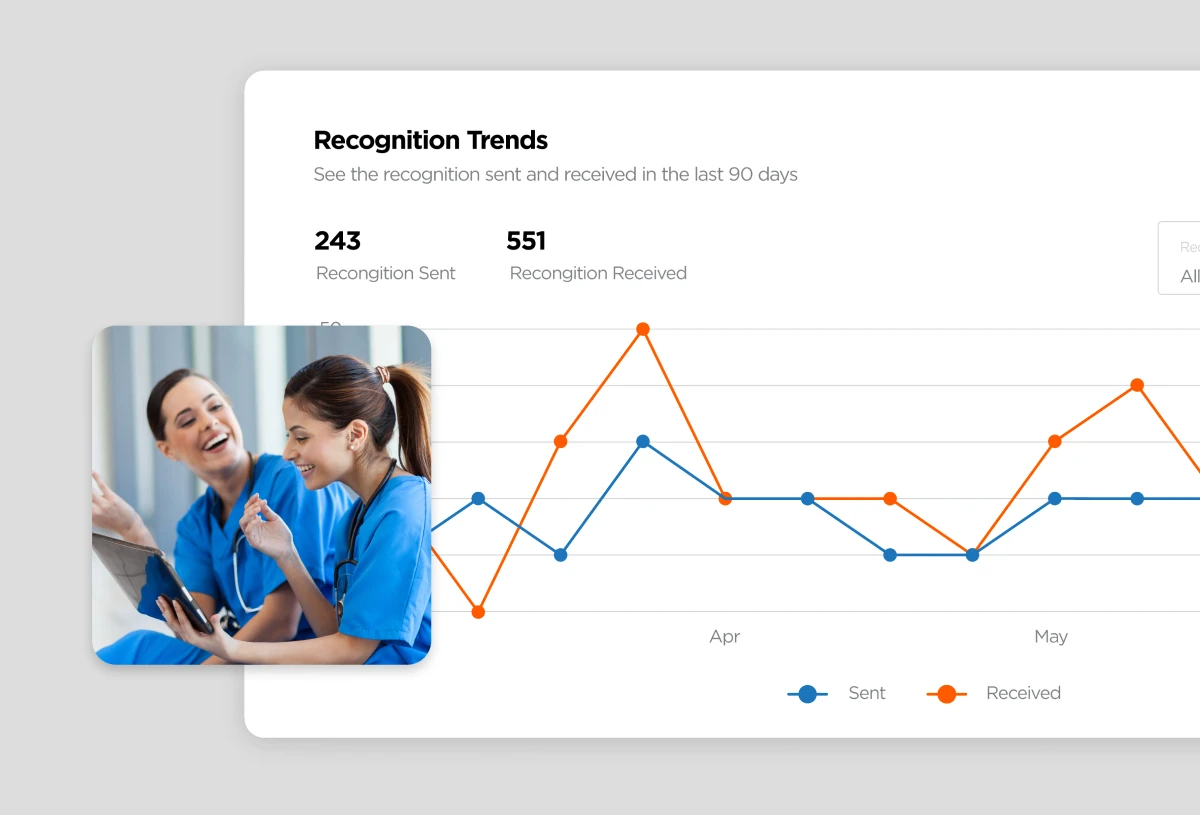
It helps managers understand who's being recognized, who may be overlooked, and where opportunities exist to turn recognition from a reactive activity into an intentional leadership practice.
So some of the new tools that we've got here is a Leader Coach that comes in that allows the leader to look at the data within their team and ask questions to the Leader Coach, and it will guide them, provide personalized guidance on how and when to recognize employees, help managers develop stronger recognition habits and leadership effectiveness, and combine behavioral insights with practical recommendations to improve team engagement and performance.
In addition, My Team actually provides some Culture Intelligence, delivering actionable insights that help leaders strengthen engagement and team culture, surface patterns, trends, and opportunities that may otherwise go unnoticed. It helps leaders make data informed decisions about recognition and employee experience.
AI insights is also a new tool that identifies recognition gaps, engagement trends, and emerging opportunities, highlights individuals, teams, and achievements that deserve attention, and reduces the efforts required for leaders to stay connected with their teams.
Gonna shift it back over to Mimi to talk a little bit about mobile.
MIMI: This is so much information. Thank you, Cathie. It is so much fun co-presenting with her.
As you can see, she has so much experience in the world of technology.
So let's talk about mobile for a moment. You all know that mobile can be a very powerful way to bring more people in. So in the chat, folks were mentioning a lot of employees don't have email, for example. We'll show you a way where they can connect to an app.
So we have a world class recognition app, highly rated. That certainly helps. But one way we bring more people in is through offline redemption QR codes. So employees who don't have emails can scan the code to automatically get entered in and redeem their points in the platform.
It's designed in a way that makes it easy. This quick, familiar, intuitive experience helps to reduce friction and overcome some of those barriers to access for employees who are able to access this through their phone.
So the app itself is, makes it fun for peers to recognize peers, for managers to recognize their team members, for leaders to recognize anyone, anywhere, even and including in those distributed workforces.
Now for companies that have special additional requirements, O.C. Tanner does offer its app both in app in the traditional app stores as well as through Microsoft Intune SDK and other channels where that is a requirement for companies, ensuring that mobile access is there for employees for whom it works, that we're compliant with company demands, and that we ensure a secure and engaging experience for all employees.
So tools like these ones that we've walked you through help you connect your people to your company's values and teams to one another. In doing this, you help foster a sense of belonging, and you build stronger culture. When people come together to celebrate moments, they build stronger relationships, a stronger sense of belonging, and cultures where everyone can thrive.
Now this brings us to additional things that employee led solutions can bring to the table. When employees have ways to create celebrations, engagement can soar.
So we equip you with tools to help you celebrate individuals beyond what they do in their workday. You can set up the conditions to help employees celebrate important moments in their personal lives. You can help them thrive through their most exciting milestones, including birthdays, weddings, graduations, and welcoming new babies into their family. And even in times of sorrow and bereavement, it's really important for employees to know that their company is thinking of them and that their coworkers are thinking of them too.
So to build on your toolkit to help people thrive, we're expanding the tools that you will have to celebrate your people. And this includes fun mobile features like recognition moments. So every person can see messages they've received and the impact that it's had on their company. This presents a year end review, and it's certainly been a very talk worthy one.
We'll show you some of the engagement and the social media storm that this caused since its release. So recognition moments is a very fun recap of the year that employees can see their stats on. We had a lot of success launching this last year with a major airline client. They were able to engage their employee population when it launched, and they're very excited to repeat that this year.
When we launched at O.C. Tanner, we were ourselves surprised at how many posts we saw on social media. So we're getting really excited to do our twenty twenty six year end review and repeat this cycle again.
Another feature we've developed building on this capability is a quarterly review, which our clients are very excited about.
So the ability for employees to turn a recognition moment into a powerful story that they can share is really important, and that's why a tool like Share to LinkedIn is important. So employees are most likely to share their recognition moments at work on their professional networks for employees who have a LinkedIn account. So this allows them to turn their recognition moments from work into reputation outside of work and across their networks. And you pair this with features like recognition moments, and you get a very, very powerful vehicle to drive engagement inside and cascading outside. And all of this is also very secure.
So another fun feature that we've seen a lot of engagement on is Post a Win. So Post a Win lets employees share a success story about their peers and their teams with or without the manager also recognizing them. So users can give their team recognition for others to see and appreciate. It's designed in a very intuitive way to mirror social media best practices, and this helps increase engagement in a way that's very familiar.
Next, if you've been paying attention to the news, you will have noticed that we just announced our very exciting preferred enterprise partnership with Kudoboard. Kudoboard is a global leader in employee celebrations. And with this partnership, companies can create more meaningful ways to recognize achievements, welcome new employees, celebrate milestones, and strengthen team connections.
This is a global partnership, and it includes an exciting integration.
Our partnership with Kudoboard often also includes coselling and cobranding opportunities.
So together, O.C. Tanner and Kudoboard will help clients make appreciation more visible within their companies, participation more engaging, and workplace culture stronger than ever, whether employees are in the office, remote, or in another location across the globe.
So if you've ever used Kudoboard, you'll know it's a very fun, exciting, engaging experience. Kudoboard is a leader in employee led celebrations, and they are the market leading solution for digital group cards, allowing multiple people to contribute personalized notes and media to a shared board. It can replace traditional paper cards, although, as Cathie mentioned, a lot of folks will like to have that experience as well. So it pairs very nicely with the different experiences and gives another tool for employees to engage.
Now my first experience with Kudoboard, I was working on a distributed team that was across different continents.
And when I first received a Kudoboard, that's how I learned what this product was. I was getting ready to welcome the birth of my third child. And having employees from across our operating room, in the US and in the UK and Asia was extremely meaningful to me. So I know the power that this tool brings. Whoops. And I skipped a few slides. Got so excited.
So this partnership is really of benefit to our clients because it brings those company led celebrations and employee led celebrations and gives you more tools to amplify those moments within your culture and make them even more meaningful, bringing this to more people more often, more ways.
So as we kind of reach the latter part of this, we'll have Cathie walk you through customer led celebrations.
CATHIE: Great. Thanks, Mimi. Really excited about that Kudoboard partnership. And like Mimi, the very first time I participated in that was probably within the last year. I've been in several of those, but was really fun to have these employee led things for new babies and new marriages and all the different kind of life events that happened to the employees. So really exciting partnership there.
So talking a little bit about the importance of customer led recognition.
We've covered company led, covered leader led, and employee led. So now we wanna talk a little bit about the customer led.
And why is customer led recognition, why does it matter? So organizations heavily invest in the employee recognition, but customer recognition adds a powerful external perspective that reinforces the impact of of the employees work.
When customers take the time to recognize an employee, and Mimi you can move on to the next slide.
You know, why does it really matter? Our research tells us that customer gratitude can land as belonging for frontline teams, and it highlights undervalued skills like patience, deescalation, and care.
It can feel uniquely credible in ways internal praise sometimes cannot.
So what is external or customer recognition? It's capturing and circulating customer gratitude as a feedback loop. Why it matters, we've kind of covered that.
It covers those those undervalued skills that a lot of times aren't caught in the standard recognition, and it's credible in ways internal praise sometimes cannot be.
It really validates the organizational values are being demonstrated, reinforces customer centric behaviors and service excellence, provides authentic feedback that leaders can use to identify and celebrate outstanding contribution. It creates stories that strengthen culture and illustrates what great service looks like, and it really helps build stronger connections between employees, customers, and the organization's mission.
So we're gonna talk a little bit about Say Thanks.
So Say Thanks is our solution for customer or client recognition. You can create company QR codes that you can highlight on signage, cards, posters, table tents, inside your intranet and tools through workplaces where customer interaction happens, lobbies, lounges, waiting areas, you name it, anywhere your customers are located. This can further be customized so that an employee can have a personalized QR code that they that might have at their workstation or hanging on their lanyard or on a name placard, making it easy for the client to recognize them directly.
A customer, a patient, a passenger, shopper, patron, they can scan the QR code. This takes them to a simple interface, web or mobile, where they can share their note of appreciation and thanks.
Managers are then alerted, making them aware of the great work that's been taking place throughout their team, where they can approve it or even decline it if the comment. Built in safeguards help with privacy, governance, budgeting, and reporting all in one place. There are even AI assists that help the client craft their message.
So what does this actually do? The impact of this is ten times with customer recognition. HR leaders value employee engagement. Our clients have seen the multiplying effect when they layer the celebration of career milestones, service anniversaries, meaningful recognition of performance, and extra employee effort, and the last of these new customer to employee recognition from outside in. Each layer boost the employee engagement, adding recognition for customers, as I stated, multiplies it by ten times. So I think Mimi's gonna kind of sum it up now in the last few minutes.
MIMI: Excellent. Cathie, thank you so much.
So we've walked you through a lot of different tools today, and here are some things we can offer as takeaways for you in thinking how you can bring this back to your organization.
So we know that recognition itself is linked to stronger retention, engagement, and performance outcomes, which we all care about very much.
When employees are recognized, they are two point five times more likely to stay two or more years. I gotta fix that typo on the slide, I realize.
Eleven times higher odds of above average engagement, and eighteen times more likely to stay in their workplace if their workplace has a healthy performance culture. So these outcomes show up clearly. And, hopefully, today, we've given you a few ideas, tools, and best practices when you think about bringing recognition in from multiple sources.
We walked you through company led, leader led tools, employee- and customer driven tools. So rather than focus on one method, these are all together research backed ways to help companies engage all their employees in the ways they want and need to be recognized.
Each one is designed for targeted approaches to help you see the outcomes that you want in your company, the engagement and the return on investment that you need.
So when you think about what to seek in a recognition partner who can provide all of these, you could literally use this as a rubric in your RFPs to check the box.
I would also encourage you to think about a few things.
I would look for a partner that innovates with a truly research led approach, one that can demonstrate outcomes and ROI, one that provides multiple proven research driven ways to reach all employees everywhere.
Best in class integrations are table stakes, as you know. Engaging in secure mobile options are also very important. I would seek a partner with leader empowerment tools to help leaders see data, understand what's going on their team, and be able to make informed decisions in real time.
And then I would also encourage you to think about partnering with a vendor who is a true partner in culture and enterprise strategy rather than a provider of tech solutions.
So as we head into q and a and wind this down with you, and as you think about what you want to ask us here at the end, we'll love to entertain your questions.
Here's a question we have for you, and, again, you can engage with us in the chat. We love hearing from you. What are some wins that you've experienced with reaching more employees? We talked in the beginning about challenges. We've walked through some ideas, but we'd love to hear what has worked for you in your company.
MODERATOR: Alright. And as we kind of wait for those to come in, we have had a couple questions come through, for the two of you. So the first one, says, how much recognition is too much? Can digital recognition platforms dilute the sanctity of recognition itself? And I kind of love that phrase, the sanctity of recognition. It reminds me of how our research really spotlights how recognition is a very human centered practice in an increasingly automated workplace. So, yeah, what are your thoughts, Mimi and Cathie, on giving enough recognition while also helping it always feel special and intentional?
MIMI: I think individual employees can always sense when recognition is meaningful. More often, we see complaints from employees in our data that they don't receive enough. Now to the this very intriguing question, can it be overdone? I think it's always possible. We tend to see the opposite, but I think the important thing is for the recognition to be rooted in an authentic way, to be timely in the moment, and to come from multiple sources. That's really what our research supports as a best practice. And while possible that it can be overdone, usually the opposite is what we see.
MODERATOR: Awesome. Thank you.
And then there is another question, which says, how do you suggest beginning to rewrite the narrative of recognition from a cultural standpoint when we have all the tools and implementation but no buy in?
So for me, that kinda makes me think about global nuance and perhaps introducing public recognition where maybe it wasn't a cultural habit in the past. Any suggestions for those folks?
MIMI: This is a really great question. I think it's always important to consider the needs of your stakeholders that can really make or break how these programs perform. I think it's always going to be necessary to demonstrate outcomes and ROI, and so we certainly seek to help our clients to do that.
Could you repeat the question? I think there was another nugget in there.
MODERATOR: Yeah. Let me pull that back up.
Yeah. So how do you suggest beginning to rewrite the narrative of recognition from a cultural standpoint when they have the tools but perhaps not the buy in that they need?
MIMI: Yes. I love this this vision of rewriting the narrative. I think rooting it in culture is going to make it more meaningful, and our research does support that. So I think the outcomes that we can see in individual organizations will help build that case internally for clients.
We love to see people out there, even who aren't our clients, referencing our global culture report. There's a wealth of insight in there as to how to tie recognition back to cultural outcomes. So these are some tools to help you start. I'm sure, Cathie, in your years of experience, you probably have some great ideas as well.
CATHIE: Yeah.
I think, Mimi, that you really talked quite a bit about that.
With the outcomes and the ROI, I think connecting that to your culture and what you're focused on is really some of the recommendations that I would support what you were saying there.
MODERATOR: And that's perfect because I was actually just going to invite this whole crew to our next webinar, which will be happening in October, and it will be all about this year's global culture report that the two of you were talking about. We'll have a panelist of regional experts who will be able to speak directly to those nuances and to how recognition is seen, you know, differently across the globe.
So I would invite you all to join us back for that. A big thank you to Mimi and Cathie for sharing all this wonderful information today. And just as a reminder, you will get a link to this recording in your email later today. So thanks again.
MIMI: Thank you very much.
What if recognition could reach every employee, everywhere? Join employee recognition experts from O.C. Tanner in this tactical session as they share the solutions that help organizations connect with all their employees at scale, no matter where or how they work. Look behind the scenes to see how leading companies bring recognition directly into the flow of work, create unforgettable moments across every touchpoint, and build cultures where no employee goes unseen.
You’ll learn how to:
- Reach frontline, deskless, hybrid, and office employees with recognition that scales
- Bring recognition into the flow of work through technology, integrations, and mobile experiences
- Create memorable employee moments with rewards, gifting, and tangible recognition
- Build a culture of appreciation that drives connection, belonging, and engagement
About the Speakers


Top