Updated on
April 24, 2026
24 April 2026
Recognition is always about people. It’s about seeing others, celebrating their efforts, and creating meaningful moments that connect individuals to purpose and one another. But what will recognition look like with AI in the picture? And what do employees want it to look like?
Our latest research, The State of Employee Recognition in 2025, uncovers a future full of promise and complexity.
Download your copy of The State of Employee Recognition 2025 so you can dig into all of the data and insights.

Human-centered, tech-supported
Employees are already interacting with tech in their recognition programs. In fact, 80% of survey respondents say people at their organizations use tech tools to recognize peers, and nearly half (45%) have specifically used AI to help craft a recognition message.
AI in recognition is here to stay. And it’s expected to grow, which means we should learn how to use its full potential like any other tool.
Here’s a surprising insight: While employees predict increased use of digital tools (from AI to mobile apps to Slack and MS Teams integrations), the most anticipated growth isn’t digital at all. 74% of employees see a future where in-person recognition becomes the dominant practice.
Ways of interacting with recognition programs
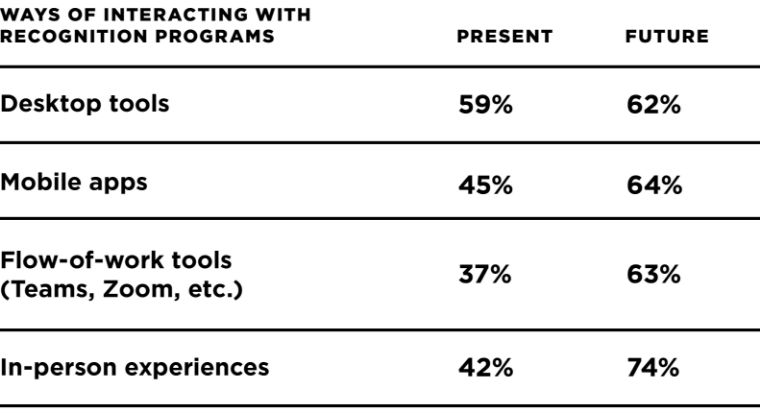
Employees want more human connection, even as they embrace tech. Personalized notes, time to thank others, team celebrations, and shared meals all topped the list of what employees say will matter most in future recognition moments. The message is clear: The best recognition is personal, shared, and real.
Cautious optimism toward AI
The role of AI is particularly nuanced. A majority of employees (55%) believe AI can improve the recognition experience, and 60% say it can help them write better messages. But concerns remain. Nearly two-thirds (63%) fear AI could make recognition less personal, more generic, and merely transactional.
As one focus group participant put it:
“If I sniffed out AI on a congratulatory note, that would probably be a really big turn-off.”
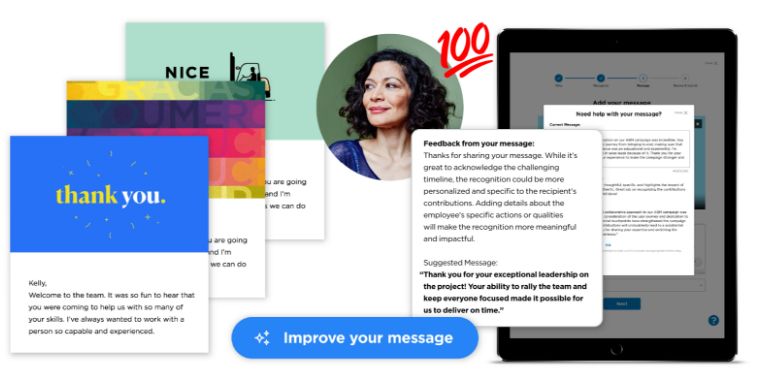
This doesn’t mean employees are anti-AI. In fact, only 12% strongly oppose using AI to help with recognition. The key difference? How AI is used. Employees want AI that enhances, not replaces, the human aspects of recognition. They want AI to coach, not create. To support the message, not become it.
Trust starts with culture and leadership
Interestingly, employee views on AI aren’t just about technology. They’re also deeply tied to culture. When employees feel connected to their leaders and organizations, when recognition feels meaningful and authentic, they’re far more likely to view AI positively.
Cultural factor
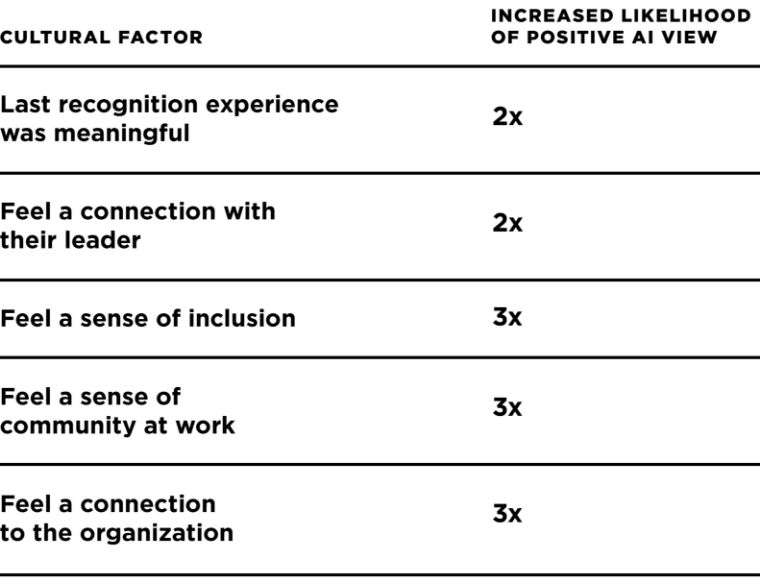
Leaders, in particular, play a pivotal role. Among employees who support the use of AI in recognition, 88% believe their leaders understand how they want to be recognized. Only 45% of those opposed to AI say the same.
When leaders are engaged, recognition feels authentic, even when supported by tech.
Designing for the future
So where do we go from here?
The answer isn’t to choose between high-tech and high-touch. It’s to blend them thoughtfully. Recognition programs must be both efficient and emotional. Digital and deeply human. The best recognition of tomorrow will use technology to scale impact—without losing the authentic connection at the core of the experience.
Key takeaways
In-person matters: Employees want more face-to-face, human-centered recognition.
AI has potential: Used responsibly, it can elevate—but not replace—the recognition experience.
Culture is everything: When leaders are engaged, employees are more open to innovation.
What you can do
Audit your program: Ensure there’s a balance between digital tools and in-person recognition.
Listen to employees: Gather feedback on what types of recognition feel most meaningful.
Empower leaders: Equip managers to model the right balance of tech with human interaction.
How AI can support workplace recognition
When used responsibly, AI adds value to recognition by identifying achievements that may otherwise be overlooked, improving consistency, and making appreciation more timely and relevant. It’s not about replacing the recognition experience—it’s about strengthening it.
Here are some ways organizations are beginning to leverage AI to support a more dynamic and inclusive recognition culture.
Project completion recognition
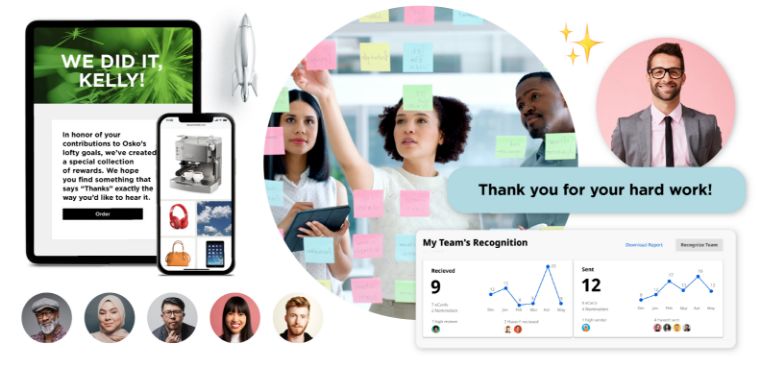
AI can help trigger automatic recognition when a project concludes, ensuring great work is acknowledged without delay. This kind of real-time recognition reinforces momentum and encourages continued effort.
Milestone-based recognition
As employees meet key performance indicators, AI can prompt recognition moments tailored to their individual progress. This keeps performance visible and reminds team members that their day-to-day contributions matter.

Celebrating collaboration
AI tools can also identify cross-functional collaboration—ensuring recognition extends to all contributors, not just the most visible ones. Imagine an AI system that notices when multiple departments complete a project together and sends a thank-you message or initiates a team celebration.
These systems can help foster a sense of belonging, encourage ongoing collaboration, and ensure every achievement—big or small—is seen and appreciated.
Recruitment and talent acquisition
AI is revolutionizing recruitment by simplifying the administrative workload and accelerating the hiring process. Generative tools help craft better job descriptions, while AI-powered platforms target qualified candidates with personalized content. Chatbots handle scheduling and FAQs, and smart screening tools assess resumes and candidates in real time.
Beyond efficiency, AI provides rich insights into hiring trends, like application drop-off rates and time to hire. This gives HR leaders the data they need to refine strategies and improve the candidate experience. The result? Less time on logistics, more time building relationships and strengthening the employer brand.
Employee engagement and retention
AI is giving culture leaders a clearer view of engagement by analyzing communication patterns and feedback. These insights help HR teams spot issues early and take action to boost satisfaction and retention.
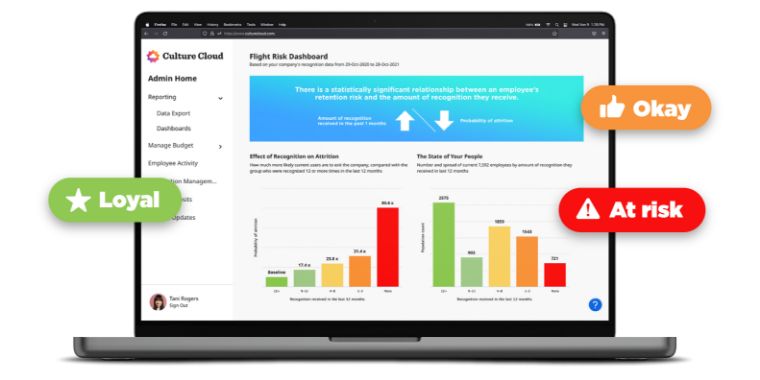
The Culture Cloud platform takes AI-powered engagement and retention analytics to the next level, with features like a Flight Risk dashboard, an AI recognition coach, and other smart tools that help leaders drive connection, appreciation, and loyalty—exactly where it’s needed most.
Thoughtful AI integration starts with people
Of course, no technology can replace the power of human connection. As leaders consider adding AI into their recognition strategy, it’s essential to do so with care and clarity.
1. Keep recognition human
AI can support recognition efforts, but it should never take the place of sincere, meaningful appreciation. A message written entirely by AI might be quicker—but a heartfelt thank you will always be more impactful. Leaders should continue to prioritize real-time conversations, handwritten notes, and public celebrations. These human moments inspire lasting connection.
2. Strengthen social bonds
Recognition thrives in strong workplace cultures. Encourage team-building through informal gatherings, celebrations, or shared meals. These social experiences build trust and openness—creating the kind of environment where authentic recognition naturally happens, assisted by AI or not.
3. Be transparent and inclusive
As with any new tool, transparency builds trust. Be upfront with your teams about how AI will be used in recognition programs. Explain what the system tracks, how it works, and how it’s meant to support—not replace—the recognition experience. Most importantly, invite employee feedback so you can continuously improve and ensure the tool is meeting its intended purpose.

The heart of recognition
Recognition will always be about helping people feel seen and valued. As the workplace evolves, our methods may change. But the heart of recognition must remain the same: a human moment that connects us to each other.
That’s a future worth building.
Ready to elevate recognition at your company? The State of Employee Recognition 2025 is a great place to start.
Turn Recognition Into Real Connection
Top