Updated on
June 26, 2026
26 June 2026
Service workers are the backbone of daily life. From the nurse comforting a patient in pain to the cashier who patiently manages a line of frustrated shoppers, these employees deliver excellence under pressure, with little acknowledgment.
As a result, burnout in frontline and service-based roles is rising. The work is emotionally demanding and often thankless. With turnover on the rise, employees question whether their efforts truly matter.
But there is a way for patients, customers, and clients to help change that. A way for a genuine thank-you to become a lifeline.
External recognition
One powerful way to address this problem is external recognition, a new way for customers to appreciate and validate service workers.
Rather than relying solely on internal channels, external recognition brings in other voices that also matter to these workers: the people they serve and interact with daily. For example, passengers can thank a hard-working flight attendant. Or a patient can express gratitude to a helpful nurse. External recognition offers deeply meaningful affirmation rooted in real-world impact.
This kind of recognition helps bridge the gap between frontline workers and the larger organization. It validates their role, acknowledges their contributions, and reinforces how their work connects to the organization’s purpose.
Employees who regularly hear customer feedback are 2.3x more likely to say their work has purpose.
—Global Culture Report, O.C. Tanner Institute
How external recognition works
At the heart of external recognition is O.C. Tanner’s Say Thanks™, a powerful feature built into the Culture Cloud platform. It’s designed specifically to bring gratitude from customers, clients, patients, or the public directly to your frontline employees.
Here’s a breakdown of how Say Thanks transforms ordinary interactions into meaningful recognition.
Easy access via QR codes or links
After a customer, passenger, or visitor interacts with an employee, they can access a thank-you page through a simple link or a printed QR code on employee badges, signage, or digital materials.
This access is low-friction. No complicated login required. It’s designed so anyone can easily recognize an employee’s hard work.

Instant thanks
The customer writes a quick “thank you” message expressing appreciation for the service or care they received.
That message is submitted through Culture Cloud, turning genuine gratitude into lasting recognition.
Once submitted and approved by a manager, the “thank you” becomes visible inside the employee recognition system. Peers and leaders can see these customer-sent messages of gratitude.
These moments can then be amplified through the same tools used for internal recognition: shared on social feeds, included in award nominations, or even added to an employee’s profile.
Meaningful amplification
Say Thanks doesn’t just capture recognition. It multiplies its impact. When a customer sends a thank-you, leaders and peers can respond or add it to recognition broadcasts so the whole organization can celebrate the employee.
This social amplification helps connect the frontline employee’s work to the broader company culture, reinforcing that their role matters.

Accessible for all employees
Because many frontline workers don’t use email or spend time at a desk, Say Thanks is built to work outside traditional communication channels.
Employees can receive recognition in the way that makes sense for them. Through mobile alerts, printed certificates, or even in-person shout-outs during shift briefings.
Real-time insight & analytics
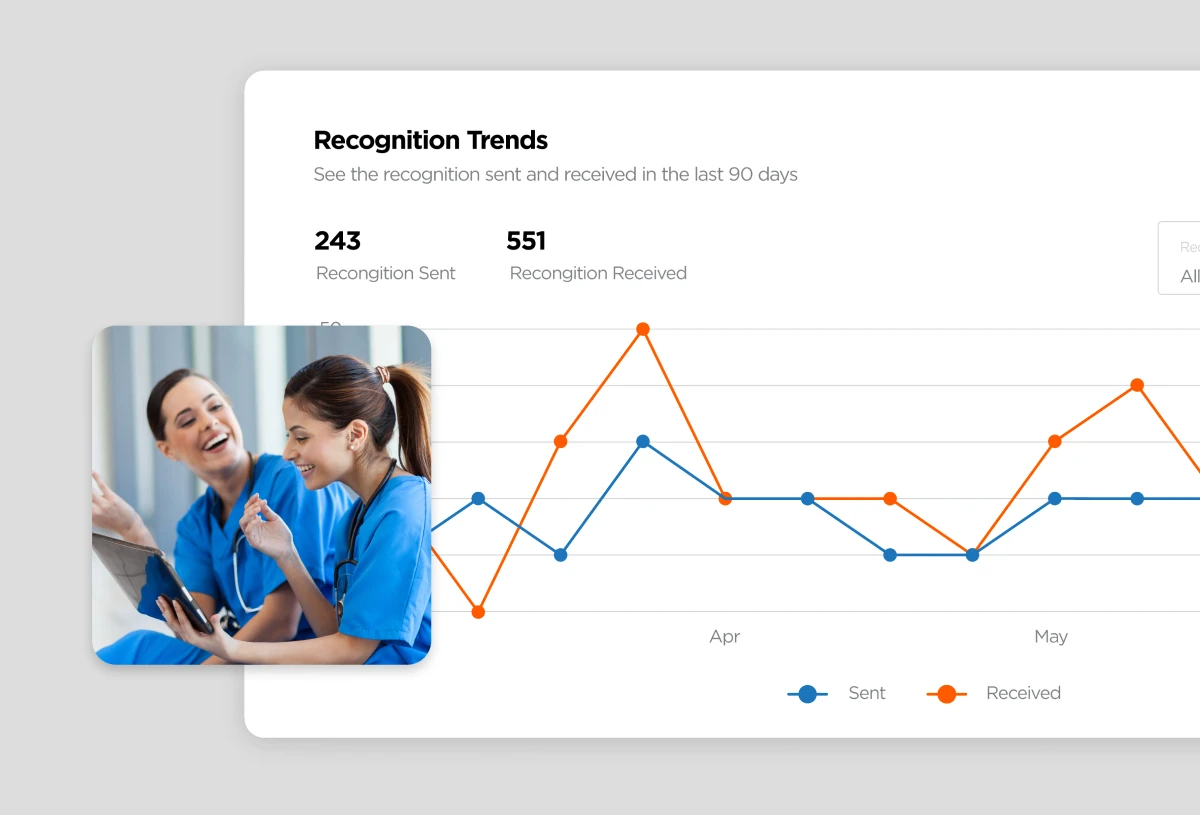
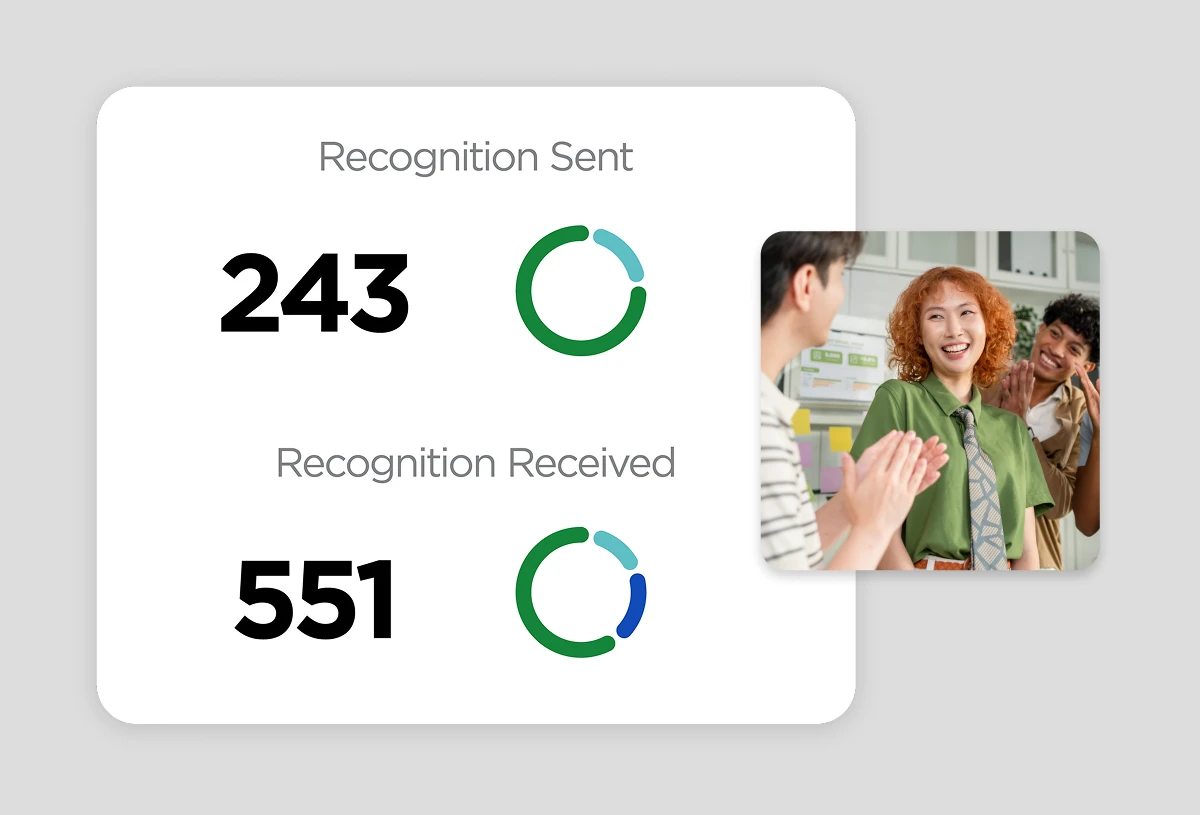
Organizations can track how many thank-you messages come in, which employees are being thanked most, and how these external expressions correlate with performance, retention, and engagement.
This insight enables leaders to see not just what’s going right, but where recognition might be missing, so they can connect with their people.
Say Thanks bridges the gap between external stakeholders and internal culture. It brings voices from outside the company into the recognition ecosystem. That not only validates frontline employees in a deeply personal way, but also strengthens the connection between the work they do and the people they serve.

Why external recognition matters
With Say Thanks, external recognition becomes a strategic cornerstone of a more connected company culture. Here’s why it matters.
Authentic validation from the people who matter most
When customers, patients, or clients take the time to express genuine gratitude, it delivers a level of meaning that internal praise sometimes can’t match. Say Thanks enables those external voices to directly thank frontline workers. This not only personalizes recognition but also helps employees see the real-world impact of their work.
Increases engagement and purpose
According to O.C. Tanner's research, recognition that feels tailored and connected to an employee’s individual contributions creates stronger bonds across the organization.
When external stakeholders highlight what a person does well, it helps move beyond just doing the job. Employees are empowered to feel a part of something bigger.
Builds belonging and inclusion
Recognition is a powerful tool for inclusion. By amplifying recognition from outside the company, Say Thanks reinforces that every role matters, not just to the organization, but to the people they serve. Research from O.C. Tanner shows that integrated recognition, recognition woven deeply into a culture, improves belonging and reduces feelings of invisibility.

Offers real-time feedback for managers & leaders
External thank-yous are more than feel-good moments. When they flow into Culture Cloud, they give leaders and managers live insight into customer sentiment. That feedback loop helps organizations celebrate great service, identify high performers, and act quickly when things go well (or need improvement).
Data-driven insight for strategic decisions
With Say Thanks integrated into Culture Cloud, organizations can track how often customers (or other external stakeholders) send gratitude, which employees are most frequently recognized, and how those patterns correlate with business outcomes like engagement or retention. That kind of analytics helps you fine-tune recognition investments.
Improves retention & reduces burnout
Giving employees a direct line to see how their work affects others gives emotional fuel, especially for frontline workers who may feel under-appreciated. Recognition has been tied by O.C. Tanner to lower burnout and higher retention, because people feel seen, valued, and motivated to keep contributing.
The power of being seen
Burnout doesn’t come from hard work alone. It comes from hard work that feels meaningless.
When employees feel disconnected from impact, when their daily actions are reduced to tasks, transactions, and routines, emotional exhaustion sets in. The purpose that once fueled their energy begins to fade.
Recognition, especially from those outside the organization, can connect hard-working employees to their purpose and value.
And when employees can see that they’re making a difference, even in small, everyday ways, their work feels more meaningful. They feel connected. And connection is one of the strongest ways to prevent burnout.

Recognition that sticks
External recognition has a unique emotional weight. It’s unprompted. It’s real. And it’s deeply personal.
These moments of appreciation come from authentic gratitude. For a service worker who may not get regular praise from peers or leaders, hearing appreciation from the people they serve can be profoundly impactful.
Unlike performance reviews or productivity metrics, external recognition speaks directly to why the work matters. This emotional reinforcement creates a ripple effect:
- It reduces emotional exhaustion by replacing invisibility with validation.
- It lowers turnover by helping employees feel seen, appreciated, and anchored in purpose.
- It strengthens loyalty by building human connection between employees and the people they serve.
Purpose is a retention strategy
Research in the Global Culture Report shows that employees who feel a high sense of fulfillment at work are:
- 90% more likely to plan to stay another year
- 66% less likely to experience burnout
- 578% more likely to feel satisfied with the employee experience
Fulfilled employees are also more likely to go above and beyond, build positive relationships, and report higher well-being. External recognition helps tap into this well of purpose and fulfillment.
Workers can know their work has real-world impact. They’re not just working for a paycheck, they’re also helping people. That shift in mindset transforms even the most routine tasks into something meaningful.

Reframing culture
Organizations often try to solve burnout and retention with internal strategies alone—bonuses, surveys, training programs. While valuable, these tools can miss a crucial dimension: the emotional resonance that comes from being valued by the people you serve.
External recognition reframes culture from the outside in. It invites voices beyond the company walls into the conversation. And those voices carry incredible power.
They don’t just say, “You did a good job.” They say, “You made my day better. You helped me. You mattered.”
That’s a message employees need to hear, especially in the service industry.
Creating a culture of appreciation doesn’t stop at the organization’s edge. It extends into the communities you serve. It opens the door for authentic moments and human connection.
External recognition is yet another powerful tool for retention, well-being, and culture. In a world where burnout threatens to erode the most essential roles, this kind of connection might be the most important reward of all. Get started today.
Turn Recognition Into Real Connection
Top