Updated on
May 26, 2026
26 May 2026
In today’s competitive workplace, a structured employee recognition program has become an essential driver of culture, engagement, and retention. But selecting the right recognition provider can be a daunting task, fraught with potential pitfalls.
With so many options and approaches available, it’s easy to fall into common traps that can undermine the effectiveness of your recognition program. Let’s take a look at six traps to watch out for when choosing a recognition provider, ensuring that your investment leads to a meaningful and impactful employee experience. Being aware of, and avoiding, these common pitfalls can help you create a recognition strategy that improves your work culture and business outcomes.
1. Lack of Customization
A one-size-fits-all approach may seem appealing on the surface, but it often fails to resonate with diverse employee needs and large company cultures. Providers that offer rigid, generic programs may overlook the unique values and preferences of your workforce, leading to ineffective recognition efforts that can’t scale with your organization’s needs.
Customization is crucial because it allows your organization to tailor recognition initiatives that align with your specific goals and employee demographics. When a provider can’t accommodate your desired level of personalization, employees may feel undervalued or disconnected from the recognition process.
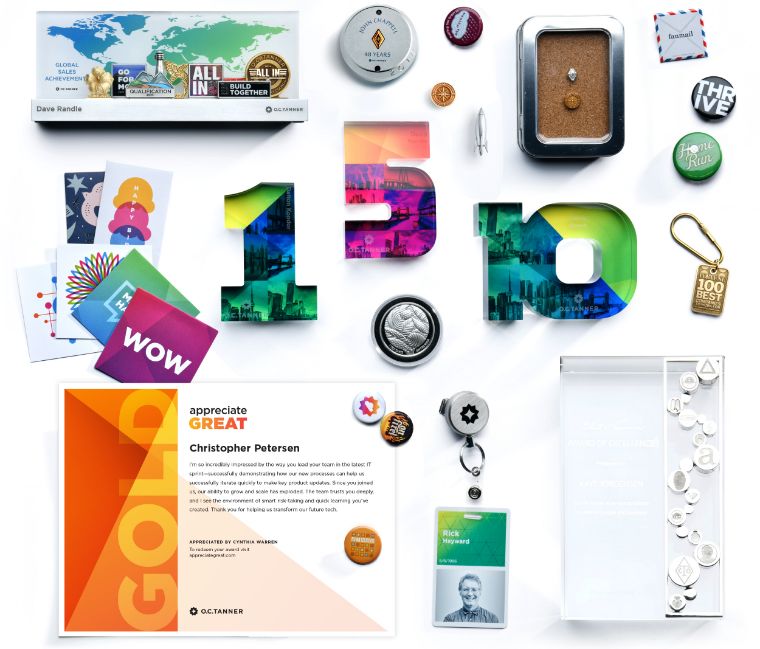
Look for recognition providers that offer extensive customization built into their platform—the storytelling symbols and icons that connect to your culture. This can include personalized awards, career anniversaries, symbolic custom creations, or a selection of meaningful gifts. This ensures that recognition feels personal and authentic to employees.
And don’t forget to make sure your provider has options to connect with and recognize your offline workers, who often go overlooked. A truly modern recognition provider should have a range of ways to recognize that are as dynamic and diverse as your own workforce. That includes:
- Swag boxes and corporate swag
- Physical reward cards with points
- Access to recognition platforms via a mobile app
- Shared recognition kiosks
Questions to consider for customization:
- How does your program scale with a global workforce?
- What personalized, custom awards do you offer?
- What capabilities do you have to recognize offline workers?
2. Shipping
Some providers claim that their network of dropshipping partners offers more award choice and faster fulfillment while avoiding customs and duties.
With drop shipping only, you’re at the mercy of your supplier. As your business scales and receives more orders, you introduce more chances for delays or supplier errors.
Other providers use a more effective, flexible approach: dropshipping when it makes sense and warehousing when it makes sense. Having a proprietary supply chain for certain orders provides stability in times of uncertainty, improves customer service, and enhances the ability to ship custom awards and culture-building swag.
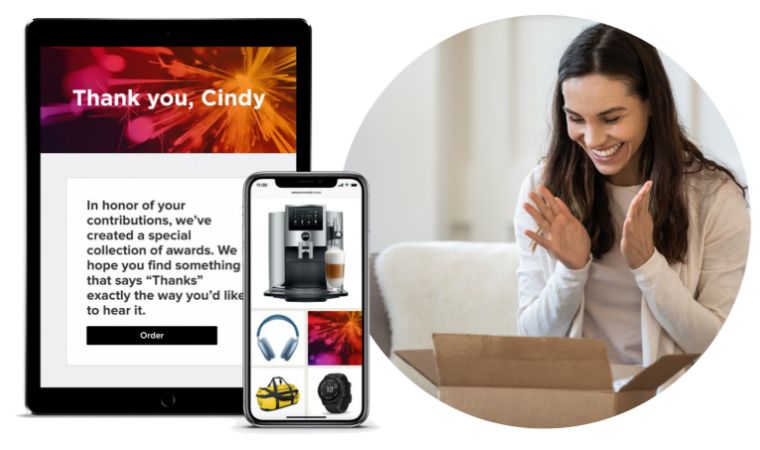
Many providers also like to claim that their shipping is free. But we all know shipping is never truly free. Things like fuel, drivers, and tires all cost money. Your business pays for these costs in some way.
Rather than trying to hide fees, your recognition provider should be transparent about all shipping and handling costs. This allows you to manage every aspect of your budget more effectively—not to mention the relationship of trust and flexibility it builds with your provider.
Questions to consider for shipping:
- What is your backup plan when a dropship vendor fails?
- Who provides the warranty on awards: you or your vendor?
- How did your fulfillment model fare during the pandemic?
3. Hidden Fees
Many employee recognition providers advertise simple, low-cost solutions, but their programs often come with hidden fees that can add up quickly.
These fees might include markups on rewards—the provider keeps a percentage of each gift card or merchandise item redeemed—meaning employees receive less than the full value intended. Additional charges may appear for platform customization, access to premium features, system integrations, or even shipping and handling on physical rewards.
Some providers can be unpredictable and will say whatever’s necessary to win a deal. The bottom line: They only provide a fraction of the capabilities of truly global, scalable recognition providers. It’s better to think about total cost of ownership or price-to-value equations than how much a provider may claim to save you upfront.
Questions to consider for hidden fees:
- Can we conduct a full review of your pricing structure?
- Which features are going to cost us extra?
- Can we get a transparent breakdown of all associated fees?
4. Lack of Consultation & Strategy
If a recognition provider doesn’t offer consultation or a tailored strategic plan, you can end up with a partner that doesn’t ever understand your unique culture and specific needs. Worse than that, you’ll be stuck with a program that can’t evolve or scale with your complex organization.
You’ll want a recognition provider that offers a reliable, scalable, and secure platform. You should have experienced consultants, designers, and strategists who listen to your needs and help you use the platform to achieve your goals.
At the highest level, the best provider will offer strategic guidance, problem-solving, consulting, and world-class awards like trophies, collectibles, custom merch, and other symbolic awards that are essential to build culture.

The odds of retention are 2x higher in the first year if employees receive a symbolic award.
—O.C. Tanner Institute, Global Culture Report
On top of all that, you should have forward-thinking tech that comes with a support team for large, global organizations and powerful AI features incorporated in thoughtful, scalable ways. AI that can help your team improve recognition, as well as help admins go skills mining, identify top performing teams, analyze flight risk, and see the impact of recognition on performance.
You shouldn’t settle for a one-size-fits all approach when you can have all of the above.
Questions to consider for consultation and strategy:
- Can we see a demo of your AI capabilities?
- Can we meet our strategic consulting and support team?
- Do you have plans for incorporating AI?
5. Lack of Metrics & Analytics
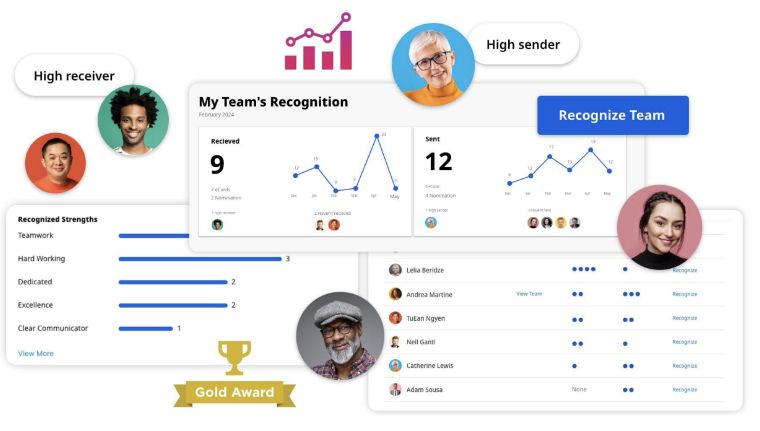
The complexities of large enterprise recognition solutions, brand, and communication needs always require clear metrics and analytics. Without metrics to measure success, organizations struggle to assess the impact of their recognition efforts on employee engagement, morale, and overall performance.
This lack of data can lead to misguided decisions, as companies may continue investing in programs that aren’t delivering positive results.
If recognition efforts aren’t integrated with other HR practices, such as performance management and employee development, they may become isolated initiatives that fail to build a holistic culture of appreciation.
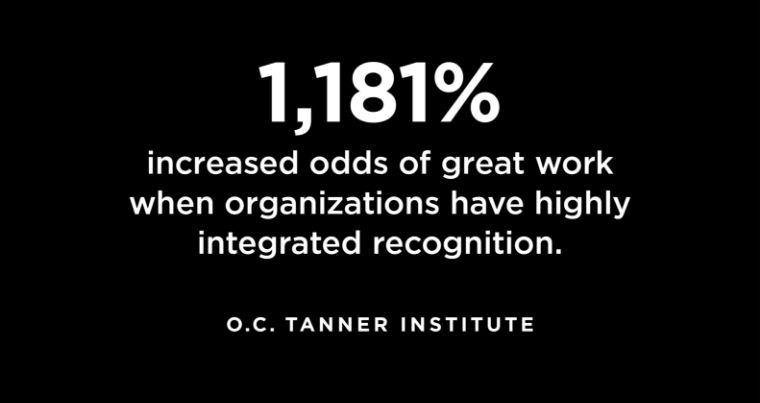
Some providers focus solely on platform usage, but when it comes down to it, they don’t offer any concrete way to measure employee performance, culture impact, or business outcomes. Simply put, you have no way to know if your recognition program is actually working.
By prioritizing providers that offer robust analytics and seamless integration with existing systems, organizations can ensure that their recognition strategies are data-driven, meaningful, and aligned with broader business objectives.
Questions to consider for metrics and analytics:
- Can you show us how you link recognition data to performance goals?
- Can we see your reporting tools and dashboards?
- Does your platform integrate with the apps we use every day?
6. Lack of Custom Awards
Custom awards are a powerful part of a successful recognition program. In a digital world, symbolic awards that tell your story and help employees feel valued are more popular than ever.
Many recognition providers can’t concept, create, or manufacture custom awards in-house. So they try to portray that capability as an old-fashioned novelty.
“We have points. But we also have green apron cards, collectable tokens, MUG award pins—all sorts of special ways to show partners that we see them, we value them, and they're important to us.”
—Starbucks

O.C. Tanner offers custom awards that can’t be found anywhere else. You collaborate with an experienced team of consultants, strategists, and designers who come together to learn your company’s history and create beautiful, bespoke awards exclusive to your story and employee experience.
These thoughtful, unique awards create powerful recognition experiences that resonate with hard-working employees. This type of impact improves everything from belonging to engagement, retention, and overall work culture.
Questions to consider for custom awards:
- Do you have the capabilities to create and ship custom awards?
- What does your in-house consulting team look like?
- Do you have rewards that fit the unique needs of our global and offline workers?

Learn more about Culture Cloud, the world’s most transparent and complete recognition platform, powered by O.C. Tanner.
Turn Recognition Into Real Connection
Top