Mis à jour
5 août 2026
5 août 2026
Points clés :
La reconnaissance qui réside dans les outils que vos employés utilisent déjà, c’est une reconnaissance qui va réellement se produire.
L’adoption dépend de la culture de votre entreprise. La modélisation par les pairs, le comportement du leader et la visibilité stimulent l’engagement et le sens.
Lorsque la reconnaissance fait partie du travail quotidien, les résultats suivent : plus de confiance, meilleure rétention et plus de travail remarquable.
Si un programme de reconnaissance échoue, c’est souvent parce qu’il semble trop compliqué ou inaccessible aux employés.
Quand célébrer un collègue au travail nécessite une connexion séparée ou un bloc de temps non planifié, cela devient une corvée. Les gens veulent le faire, mais le moment passe. La reconnaissance qui réside dans les outils déjà utilisés par les employés enlève cette barrière. L’appréciation devient une partie de la journée de travail plutôt qu’un ajout à celle-ci.
C’est à cela que ressemble la reconnaissance dans le flux de travail , et c’est l’un des leviers les plus pratiques que les dirigeants RH ont pour encourager l’adoption et influencer un véritable changement dans la culture d’entreprise.

Pourquoi les programmes de reconnaissance ont-ils de la difficulté avec l’adoption?
Les meilleures intentions du monde ne changent pas la culture. Les habitudes, oui.
La plupart des programmes demandent aux employés de faire quelque chose de plus. Ils ajoutent une étape, une connexion ou un rappel. Cet effort supplémentaire suffit à empêcher la reconnaissance de devenir une habitude.
Les chiffres le confirment. Selon le rapport 2026 d’O.C. Tanner sur l’état de reconnaissance des employés, 37% des employés utilisent rarement leur reconnaissance plateforme pour apprécier les collègues. Un autre 21% se connecte moins d’une fois par mois. Un programme peut démarrer avec un vrai élan et quand même stagner si les employés n’en font jamais une routine.
L’accès fait partie du problème, mais pas tout. Nos recherches montrent que la reconnaissance reste optionnelle lorsque les dirigeants ne la modélisent pas, que les pairs ne s’y engagent pas, et que l’organisation ne la promeut pas activement. Les systèmes optionnels ne changent pas le comportement.
Lorsque les outils de reconnaissance se connectent aux systèmes que vos employés utilisent déjà chaque jour, l’appréciation s’intègre au travail plutôt qu’à la concurrence.
Que signifie la reconnaissance dans le flux de travail?
Cela signifie que la reconnaissance apparaît là où vos employés travaillent déjà chaque jour. Un message dans Microsoft Teams. Reconnaissance instantanée envoyée directement depuis Gmail. Une notification de jalon dans Workday. Les employés donnent et reçoivent de la reconnaissance sans changer d’onglet ni interrompre ce qu’ils font.
Cette commodité compte plus qu’elle n’en a l’air. Quand la reconnaissance est facile, elle arrive plus souvent. Et plus ça arrive souvent, plus ça façonne la culture.
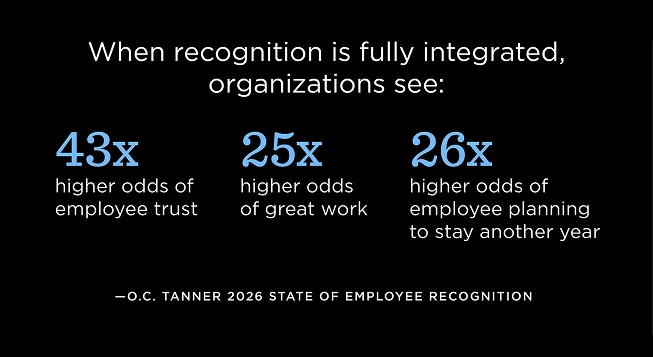
La reconnaissance intégrée signifie aussi quelque chose qui dépasse la technologie. Les employés doivent savoir ce qui est reconnu, qui peut les reconnaître et comment participer. Quand les outils sont accessibles et que les leaders modélisent la reconnaissance de façon cohérente, ça ne ressemble plus à un programme et ça commence à ressembler à la façon dont les choses fonctionnent ici.
Pour en savoir plus sur la façon de rendre la reconnaissance accessible à tous les types d’employés, lisez Intégrer la reconnaissance dans l’expérience quotidienne des employés.
Pourquoi le fait d’intégrer la reconnaissance dans les outils du quotidien change-t-il le comportement?
Notre recherche a révélé que les employés sont deux fois plus susceptibles d’utiliser une reconnaissance plateforme Quand ils voient d’autres l’utiliser. Les gens suivent l’exemple de ceux qui les entourent, surtout leurs gestionnaires et collègues de confiance. La visibilité dans des espaces partagés comme MS Teams, Slack ou un fil d’entreprise fait que l’appréciation fait partie de la routine quotidienne.
83% des employés disent apprécier de voir des collègues reconnus publiquement via un réseau en ligne plateforme. Cette visibilité est ce qui transforme la reconnaissance d’un programme ponctuel en une pratique continue.
Les employés qui utilisent régulièrement des outils de reconnaissance encouragent aussi les autres à participer. Mensuel plateforme Les utilisateurs sont trois fois plus susceptibles d’inviter leurs collègues à participer, et trois fois plus susceptibles de dire que la reconnaissance a renforcé leurs relations au travail.

Comment les intégrations aident-elles plus d’employés à utiliser des outils de reconnaissance?
Lorsque la reconnaissance se connecte aux outils déjà utilisés par votre équipe, cela fait partie intégrante de la journée de travail. O.C. Tanner’s Culture Cloud® est construit en gardant cela en tête.
Intégration d’outils de collaboration en milieu de travail
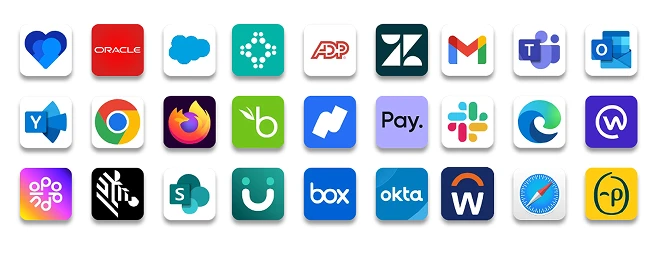
- Microsoft Teams : L’intégration certifiée Microsoft Teams permet aux employés d’envoyer des messages de reconnaissance, de soumettre des candidatures pour des prix et de recevoir des notifications de reconnaissance directement dans Teams. Plus besoin de changer d’application.
- Microsoft Outlook et Gmail : Les employés peuvent envoyer une reconnaissance directement de leur boîte de réception, en même temps que le travail dont ils parlent déjà.
- Mou : La reconnaissance apparaît dans les chaînes Slack, gardant la reconnaissance visible dans les conversations quotidiennes.
- Microsoft SharePoint : La reconnaissance émerge dans votre intranet, ce qui en fait une partie intégrante de la communication à l’échelle de l’entreprise.
- Chrome, Firefox, Edge et Safari : Le Culture Cloud L’extension de navigateur place la reconnaissance au premier plan, peu importe sur quoi travaillent vos employés.
Intégrations SIRH
Culture Cloud par O.C. Tanner se connecte à 75+ systèmes d’information RH, gardant les données de reconnaissance précises et liées aux dossiers de vos employés.
- Journée de travail : L’intégration Workday certifiée par badge synchronise les données des employés en temps réel. L’activité de reconnaissance revient à Workday pour la paie, et les tâches de reconnaissance peuvent apparaître directement dans Workday Journeys.
- SAP SuccessFactors, UKG, ADP, Paylocity et plus encore : Culture Cloud se connecte aux plateformes RH déjà utilisées par la plupart des grandes organisations, réduisant le travail administratif et maintenant les données à jour.
Consultez la liste complète ici.
Intégrations personnalisées avec une API ouverte
Certains moments de reconnaissance surviennent dans des outils que les intégrations standards ne couvrent pas. Culture CloudL’API ouverte vous permet d’intégrer la reconnaissance dans n’importe quel système. Par exemple, Norton Healthcare a utilisé cette capacité pour intégrer la reconnaissance dans son logiciel de rondes cliniques.
À quoi ressemble la reconnaissance intégrée dans de vraies organisations?
Encore plus d’entreprises utilisent les capacités d’intégration d’O.C. Tanner pour intégrer la reconnaissance au quotidien. Voici quelques-unes de leurs histoires.
St. Elizabeth Healthcare
Après avoir regroupé ses médecins, St. Elizabeth Healthcare avait besoin d'une culture commune pour ses 11 000 collaborateurs. L'établissement a intégré la reconnaissance dans le flux quotidien des soins grâce à des messages et à la plateforme Culture Cloud. application mobile et la reconnaissance des événements marquants de la vie, ce qui a permis d'augmenter leur score d'engagement au 86e percentile.
Système de santé Wellstar
Wellstar utilisé Culture Cloud's Initiatives Fonctionnalité qui relie directement la reconnaissance à un objectif : réduire l’âge des réclamations dans les files d’attente de travail des employés. Les employés recevaient des badges et des points à mesure qu’ils atteignaient les objectifs, et les soldes des comptes ont chuté de 3 millions en trois mois.
AAA – Le groupe Auto Club
AAA – Le groupe Auto Club a remplacé un programme de reconnaissance fragmenté par Culture Cloud par O.C. Tanner, ajoutant des intégrations avec Teams et Outlook afin que les 9 000 employés puissent donner et recevoir de l’appréciation de façon constante. Depuis son lancement, 97% des employés ont été reconnus.
Chevron
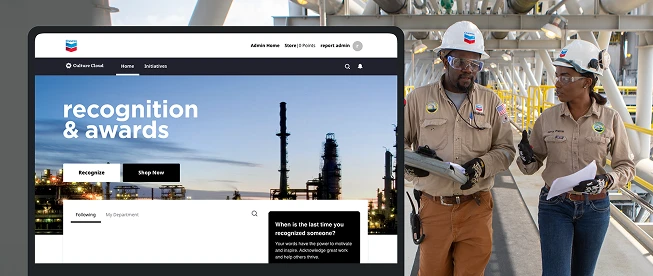
Avec 40 000 employés dans 50 pays, Chevron avait un programme de reconnaissance dans chaque pays, mais aucun moyen de reconnaître au-delà des frontières. Ils ont construit un global plateforme Utilisation Culture Cloud, accessible par n’importe qui, n’importe où. Aujourd’hui, 93% des employés ont été reconnus, avec ~10 moments de reconnaissance par personne.
Que devraient rechercher les dirigeants RH dans une reconnaissance intégrée plateforme?
Si vous voulez que la reconnaissance devienne une habitude quotidienne, la technologie doit fonctionner là où travaillent vos gens. Voici ce qu’il faut surveiller.
- Plateforme Intégrations : Les employés peuvent-ils donner et recevoir de la reconnaissance dans Teams, Slack, Gmail, Outlook et SharePoint sans quitter leur flux de travail?
- Connectivité du SIRH : Est-ce que ça se connecte à Workday, SAP SuccessFactors, UKG ou à vos autres outils RH, pour que les données de reconnaissance restent exactes et à jour?
- Accès API : La reconnaissance peut-elle être intégrée dans vos propres systèmes ou outils industriels au-delà des intégrations standards?
- Accès mobile et hors ligne : Est-ce que le plateforme Travailler pour des employés de première ligne ou sans bureau qui n’ont pas accès à un ordinateur? Les programmes de reconnaissance qui ne touchent que les employés de bureau laissent une grande partie de la main-d’œuvre derrière eux.
- Incitatifs : Initiatives qui stimulent les comportements et résultats souhaités, que ce soit accomplir les tâches à temps, prendre des mesures pour améliorer la santé et le bien-être, ou vivre les principes du leadership d’entreprise.
- Visibilité : La reconnaissance apparaît-elle dans les espaces partagés pour que les employés voient à quoi ressemble la reconnaissance et se sentent encouragés à l’offrir?
- Soutien aux gestionnaires : L’outil facilite-t-il la reconnaissance régulière de leurs équipes par les leaders? La reconnaissance des leaders est l’un des plus grands moteurs d’inclusion et d’appartenance, surtout dans les équipes dispersées.
Les meilleures plateformes de reconnaissance arrivent au bon moment, au bon endroit, donc l’appréciation devient une partie naturelle du travail.
Prêt à apporter de la reconnaissance dans le flux de travail?
Explorez les intégrations O.C. Tanner pour voir comment la reconnaissance peut accompagner vos employés là où ils se trouvent.
Transformer la reconnaissance en véritable connexion
Haut