Comment la reconnaissance contribue à la sécurité physique et psychologique au travail
Par Caitlin Ahne-Hawley, responsable du marketing chez OC Tanner Australie

Par Caitlin Ahne-Hawley, responsable du marketing chez OC Tanner Australie

En Australie, la législation en matière de santé et de sécurité au travail met davantage l'accent sur les risques psychosociaux , la diligence raisonnable et la gestion préventive de la sécurité. Par conséquent, les organisations investissent massivement dans le renforcement de leurs systèmes, politiques, procédures et rapports de sécurité. Toutefois, de nombreux dirigeants ont du mal à traduire ces engagements en actions concrètes pour assurer la sécurité au quotidien.
La solution ? La reconnaissance. Pas seulement les récompenses et les avantages habituels. célébrations mais une pratique pleinement intégrée qui renforce ce à quoi ressemble une performance sûre et saine.
Une reconnaissance opportune et pertinente contribue à mettre l'accent sur les comportements sécuritaires et favorise la création d'un environnement de travail sécuritaire à long terme. Elle aide les organisations à concilier bien-être et rendement tout en renforçant la responsabilisation des équipes.
Bien que liés, le climat de sécurité et la culture de sécurité sont différents, et l'amélioration des résultats organisationnels exige de se concentrer sur les deux. Autrement, les organisations risquent de se contenter de mesurer le ressenti sans s'attaquer aux systèmes et comportements sous-jacents qui influencent la sécurité à long terme.
Le climat de sécurité peut servir d'outil de diagnostic, tandis que la culture de sécurité représente l'objectif à long terme. La reconnaissance est l'un des rares leviers qui agissent sur les deux, immédiatement et durablement.

De nombreuses organisations se soucient vraiment de la sécurité et du bien-être de leurs employés. Cependant, il se peut qu'elles utilisent des systèmes qui, involontairement, envoient des signaux contradictoires.
Par exemple, il arrive que le succès en matière de sécurité soit mesuré principalement par des indicateurs a posteriori tels que les taux de blessures, le temps sans incident et les résultats en matière de conformité. Dans ce cas, la reconnaissance des efforts en matière de sécurité est souvent annuelle, contrôlée par la direction et liée à des périodes sans incident (par exemple, des objectifs « zéro accident »).
Les conséquences imprévues de cette approche sont les suivantes :
Cela affaiblit le climat de sécurité (l'expérience vécue de la sécurité au travail) bien avant que les incidents n'apparaissent dans les données.
« Les distinctions que les organisations choisissent de reconnaître envoient un signal clair sur ce qui compte vraiment et façonnent la culture qui en découle. »
—Nadia Beedeison, stratège principale clientèle chez OC Tanner
La sécurité peut être mesurée de deux façons :
Ensemble, ils offrent un aperçu du rendement d'une organisation en matière de sécurité. Les organisations peuvent facilement se concentrer excessivement sur les indicateurs de résultats, car ils sont plus faciles à mesurer ; cependant, les indicateurs de résultats constituent une mesure tout aussi pertinente d'un milieu de travail sûr.
Bien que la reconnaissance soit souvent perçue principalement comme un facteur de motivation, elle constitue également un outil puissant pour gérer les risques dans les environnements critiques pour la sécurité.
Lorsque la reconnaissance renforce systématiquement des comportements tels que le fait de parler ou de vérifier les commandes, elle constitue un indicateur avancé de la performance en matière de sécurité.
Une reconnaissance efficace renforce les comportements qui préviennent les dommages, notamment :
Ces comportements contribuent à réduire les risques avant même qu'un incident ne survienne. Quand ils sont remarqués et encouragés, les gens les reproduisent.
« L’attention positive est 30 fois plus forte que l’attention négative… Les gens n’ont pas besoin de rétroaction ; ils ont besoin d'attention pour ce qu'ils font de mieux. »
—Marcus Buckingham, HBR

La reconnaissance est une infrastructure de renforcement comportemental qui sous-tend la sécurité en :
La sécurité au sein d'une organisation est façonnée par le comportement de leadership. Ce que les dirigeants privilégient, tolèrent et récompensent est rapidement perçu par les employés comme ce qui compte vraiment. Lorsque ces signaux sont incohérents, la culture d'entreprise se dégrade. En revanche, lorsqu'ils sont alignés, la sécurité s'intègre naturellement aux pratiques de travail.
Les leaders ne se contentent pas de communiquer leurs attentes : ils les démontrent en temps réel.
Les dirigeants devraient s'attacher à réagir de manière constructive aux mauvaises nouvelles, à reconnaître les efforts autant que les résultats, à faire preuve d'humilité et à rendre la sécurité visible dans leurs décisions et leurs communications. C'est dans ces moments du quotidien, notamment lorsque des compromis sont nécessaires, que les dirigeants renforcent ou, involontairement, fragilisent une culture de sécurité.
Au fil du temps, ces signaux répétés façonnent les normes au sein de l'équipe et déterminent en fin de compte si les employés se sentent en sécurité pour s'exprimer, signaler les risques et donner la priorité à la sécurité.
Les systèmes, les politiques et les comportements sont essentiels à la création d'une culture de sécurité inclusive ; cependant, les différences entre ces facteurs n'expliquent pas entièrement pourquoi les pratiques de sécurité se maintiennent dans certains environnements et se dégradent dans d'autres. Les organisations doivent également tenir compte de l'identité sociale et de la façon dont les employés se perçoivent par rapport à la sécurité au travail.
Les comportements ne sont pas seulement façonnés par des règles, mais aussi par des croyances partagées sur notre identité, les pratiques des personnes qui nous ressemblent et les valeurs de l'organisation. Les cultures inclusives et sécuritaires sont des constructions sociales, et la reconnaissance joue un rôle essentiel dans la communication de ce qui est remarqué et valorisé.
Les cultures efficaces qui intègrent la sécurité peuvent être comprises à travers le prisme de l'identité sociale qui relie trois domaines clés :
À ce niveau, il s'agit de la façon dont une personne se perçoit par rapport à la sécurité.
Les gens demandent :
La sécurité psychologique détermine si les individus agissent ou restent silencieux.
Reconnaissance des employés renforce :
Exemple : Reconnaître le fait de prendre la parole, de signaler les risques ou de soutenir les autres.
Cela fait référence à l'identification à un groupe, à la définition de ce à quoi ressemble le « bien », et c'est là que se forment les normes partagées.
Les équipes demandent :
Un décalage à ce niveau peut créer des sous-cultures nuisibles (par exemple, la performance au détriment de la sécurité, la pression pour rester silencieux).
Le rôle de la reconnaissance : elle renforce les normes d’équipe, et pas seulement les attentes.
À ce niveau, la sécurité devient partie intégrante de l'identité organisationnelle, déterminant si elle est réellement importante ou simplement énoncée dans la politique de l'entreprise.
Au sein des organisations, les gens demandent :
L’incohérence dans ce domaine risque de créer un décalage entre les messages et les expériences vécues, engendrant du cynisme (« Ils disent que la sécurité est importante, mais… »).
Le rôle de la reconnaissance :

Le rapport 2026 d'OC Tanner sur l'état de la reconnaissance des employés révèle que ces derniers sont sept fois plus susceptibles de rester dans une entreprise lorsque la reconnaissance favorise des relations de travail solides. Ces relations sont essentielles : elles instaurent la confiance nécessaire pour que les employés se sentent à l'aise de s'exprimer, d'intervenir rapidement et d'agir avec discernement sous pression.
Les risques psychologiques sont de plus en plus pris en compte dans les règlements de sécurité à travers le monde. Les organisations ont besoin de moyens concrets pour démontrer comment elles gèrent les risques au quotidien, et pas seulement de les consigner dans leurs politiques.
Lorsque les gens ont le sentiment d'être écoutés, respectés et appréciés, ils sont plus enclins à exprimer leurs préoccupations, à admettre leurs incertitudes ou leurs erreurs, et à intervenir lorsqu'ils ne se sentent pas en sécurité.
La reconnaissance contribue à créer ce climat en faisant passer la sécurité des règles à la responsabilité partagée et à la fierté.
Traditionnellement, la sécurité relevait souvent d'équipes dédiées à la sécurité, distinctes des ressources humaines. Or, la sécurité physique et la sécurité psychologique sont étroitement liées. La sécurité ne peut plus être l'apanage d'une seule fonction ; elle doit être mise en œuvre à tous les niveaux de l'organisation.
Bien que la sécurité et les ressources humaines jouent des rôles essentiels et complémentaires, ce sont en fin de compte les chefs d'équipe qui déterminent si la sécurité est priorisée, mise en pratique et maintenue dans le travail quotidien.
Au sein des organisations, la responsabilité partagée en matière de sécurité comporte trois niveaux :
Lorsque ces différents niveaux fonctionnent de concert et amplifient l'expérience et la voix des employés, la sécurité s'intègre naturellement au flux de travail.
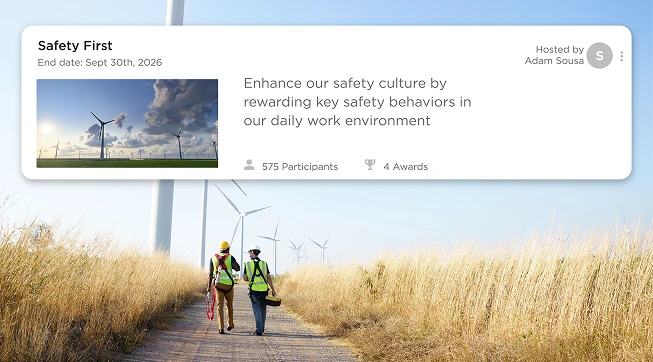
Certaines organisations craignent que la reconnaissance des comportements bienveillants n'entraîne une diminution de la responsabilisation. Or, une étude du Rapport mondial sur la culture 2026 d'OC Tanner démontre que prendre soin des employés est un gage de dynamisme et de pérennité au sein des équipes. La santé mentale s'améliore lorsque les organisations offrent du soutien, et les employés bénéficiant d'un soutien important présentent un risque moindre de dépression (–47 %) et d'épuisement professionnel (–88 %).
Les organisations performantes combinent des attentes élevées (clarté, normes et responsabilisation) avec un soutien important (attention, reconnaissance, confiance et ressources). Cet équilibre permet une performance durable sans épuisement professionnel. La reconnaissance devient alors le mécanisme qui relie les efforts à des résultats concrets sans abaisser les exigences.
Comment la reconnaissance peut-elle aider à ancrer la sécurité dans la culture d'entreprise ? Avant de pouvoir accorder des marques de reconnaissance, il est nécessaire de définir clairement les comportements sécuritaires, d'aligner les programmes de reconnaissance sur ces comportements et de suivre les indicateurs clés parallèlement aux résultats.
À partir de là, vous pouvez former les employés et les dirigeants à reconnaître efficacement :
Les cadres intermédiaires et les superviseurs jouent un rôle essentiel dans ce processus, en traduisant les attentes organisationnelles en signaux quotidiens qui déterminent le niveau de sécurité ressenti pour s'exprimer et agir avec prudence.

Treasury Wine Estates (TWE) utilise la reconnaissance pour favoriser une culture du bien-être au travail, tout en privilégiant la sécurité et la performance. Dans le cadre de son engagement continu envers le bien-être de ses employés, l'entreprise :
En conséquence, les enquêtes annuelles de TWE sur l'engagement et l'inclusion ont révélé que la sécurité et la bienveillance sont des facteurs souvent très appréciés. Cette approche démontre comment la reconnaissance et la visibilité de la bienveillance peuvent transformer la sécurité, d'une simple obligation de conformité, en une valeur culturelle partagée, garantissant ainsi que les comportements proactifs en matière de sécurité deviennent une pratique quotidienne.

« Il s'agit de créer un environnement qui favorise la santé mentale et physique des employés. Dans une culture de haute performance, le bien-être est souvent relégué au second plan par l'exécution et la réalisation des objectifs. La pandémie a mis en lumière pour nous la nécessité de rééquilibrer les choses et d'évoluer vers une culture où sécurité psychologique et responsabilisation coexistent. Lorsque les employés se sentent en sécurité et valorisés, ils sont plus enclins à remettre en question l'ordre établi, à partager leurs idées et à innover. »
—Leon Butler, directeur mondial de la performance et des récompenses chez Treasury Wine Estates
Les organisations ne construisent pas leur culture uniquement par le biais de politiques. La culture est façonnée par ce qui est remarqué, renforcé et répété au quotidien.
Lorsque la reconnaissance met systématiquement en lumière les comportements qui protègent les gens, elle envoie un signal fort. Elle indique aux employés que la sécurité n'est pas incompatible avec la performance, mais qu'elle la favorise.
Dans les environnements où le risque est réel et la pression constante, la reconnaissance stratégique devient plus qu'un simple encouragement. Elle devient une infrastructure, intégrant discrètement la bienveillance dans la performance et la performance dans la bienveillance.
La plateforme de reconnaissance des employés Culture Cloud® d'OC Tanner plateforme reconnaissance des employés choix de premier plan pour les entreprises d'Australie et de Nouvelle-Zélande qui cherchent à renforcer leur culture d'entreprise grâce à une reconnaissance significative.
.svg)